The essentials
- Comino has an official population of 4 and is a nature reserve and bird sanctuary, so expect paths, cliffs and water rather than shops and crowds.[1]
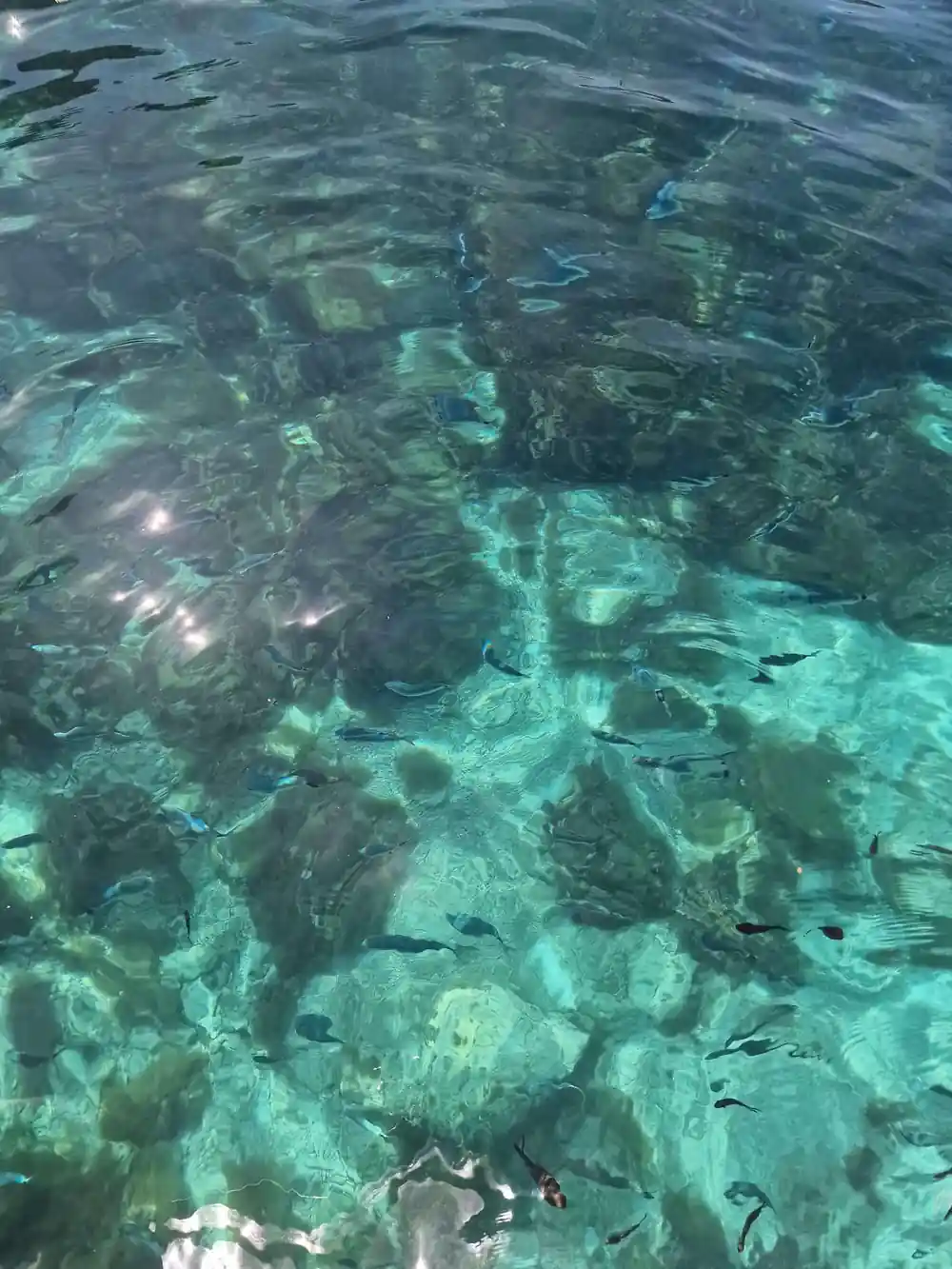
- The bay is shallow and clear, and the turquoise colour comes from light reflecting back up through the water from the white sand below.[2]
- In peak summer, July and August, the Blue Lagoon receives between 2,500 and 3,500 visitors per day, so early and late boats see a calmer island.[3]
- Ebsons ferries run from Ċirkewwa on Malta and Mġarr on Gozo to the Blue Lagoon, and the crossing takes approximately 15 minutes each way.[4]
- Paths are rough limestone with almost no shade, so bring shoes you can walk in, water, sun protection and something warm for the ride home.
- Top choice Private Comino boat from US$195 Duration2 - 4 hours[5]Ratingrated 4.98 from 117 reviews[5]GuideLive tour guide: English[5]CancellationCancel up to 24 hours in advance[5] Check availability
- Gozo and Comino tour from US$35 Duration7 hours[6]Ratingrated 4.45 from 20,111 reviews[6]GuideAudio guide included[6]CancellationCancel up to 24 hours in advance[6] See this tour
- Catamaran day trip from US$63 Duration5 - 6 hours[7]Ratingrated 4.68 from 6,838 reviews[7]GuideHost or greeter: English[7]CancellationCancel up to 24 hours in advance[7] See this tour
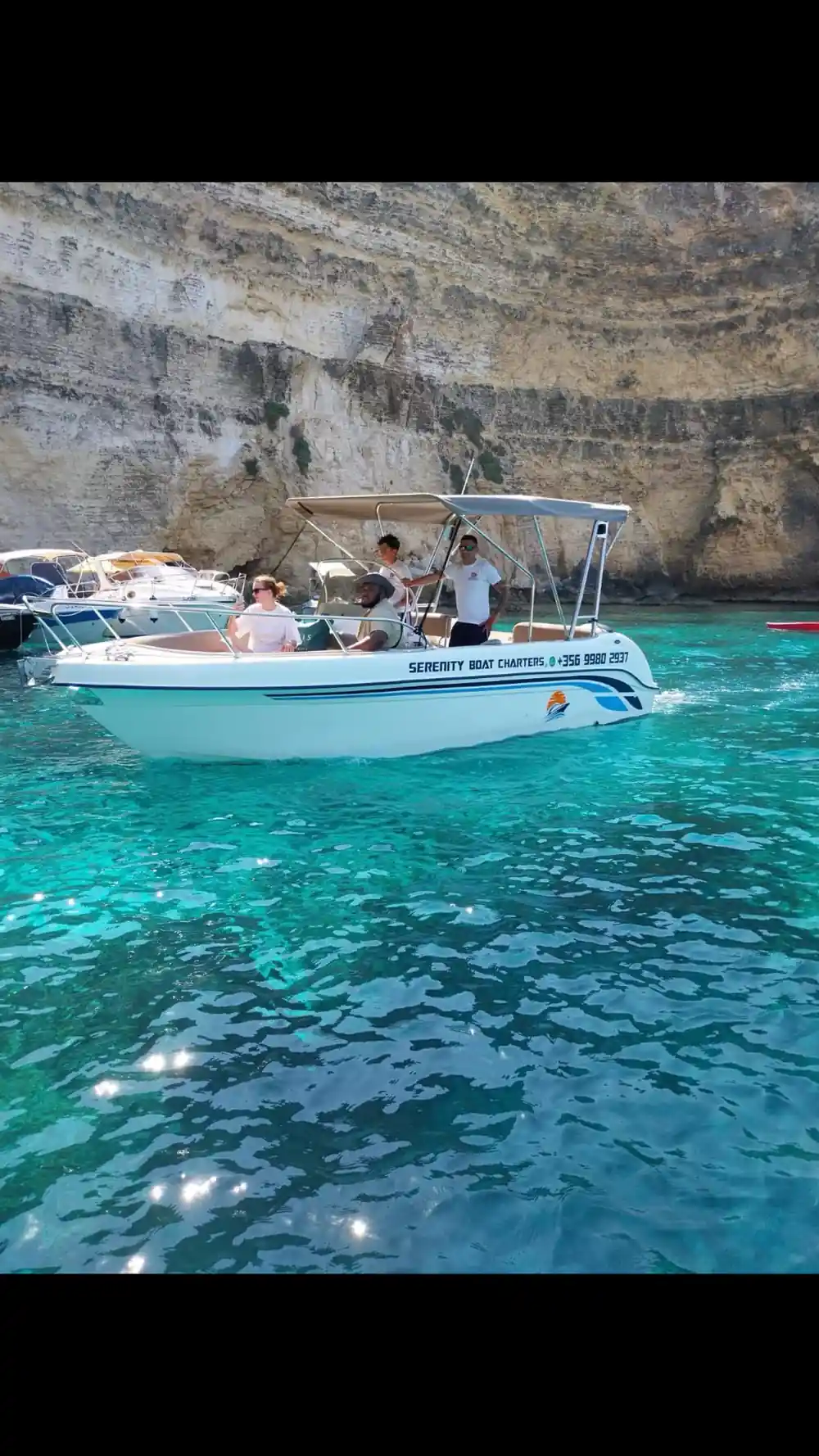
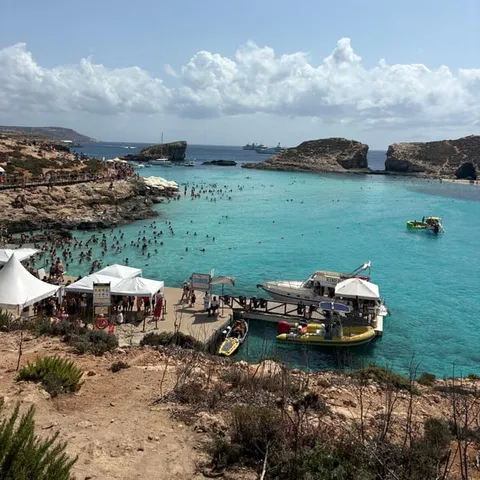
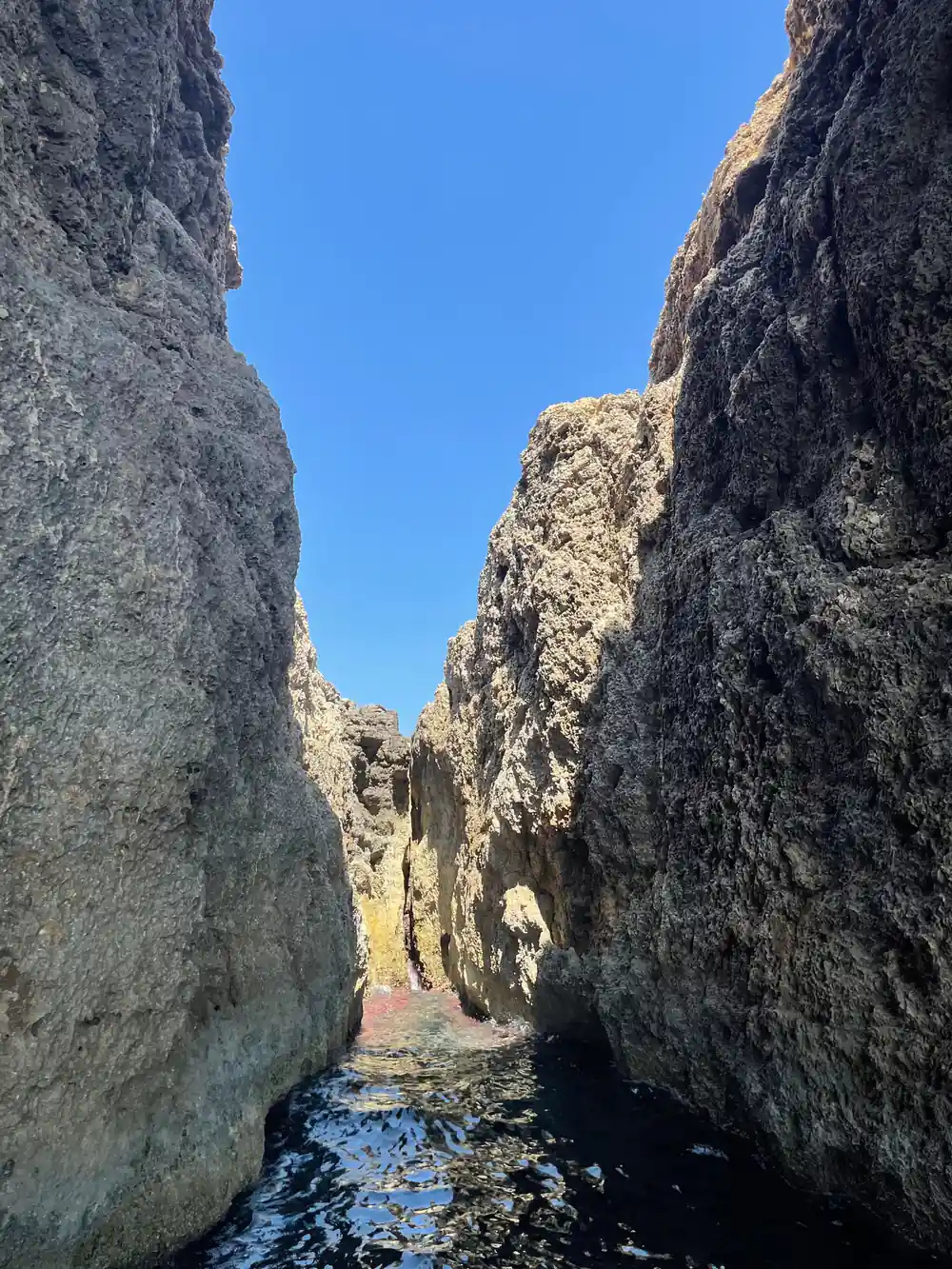
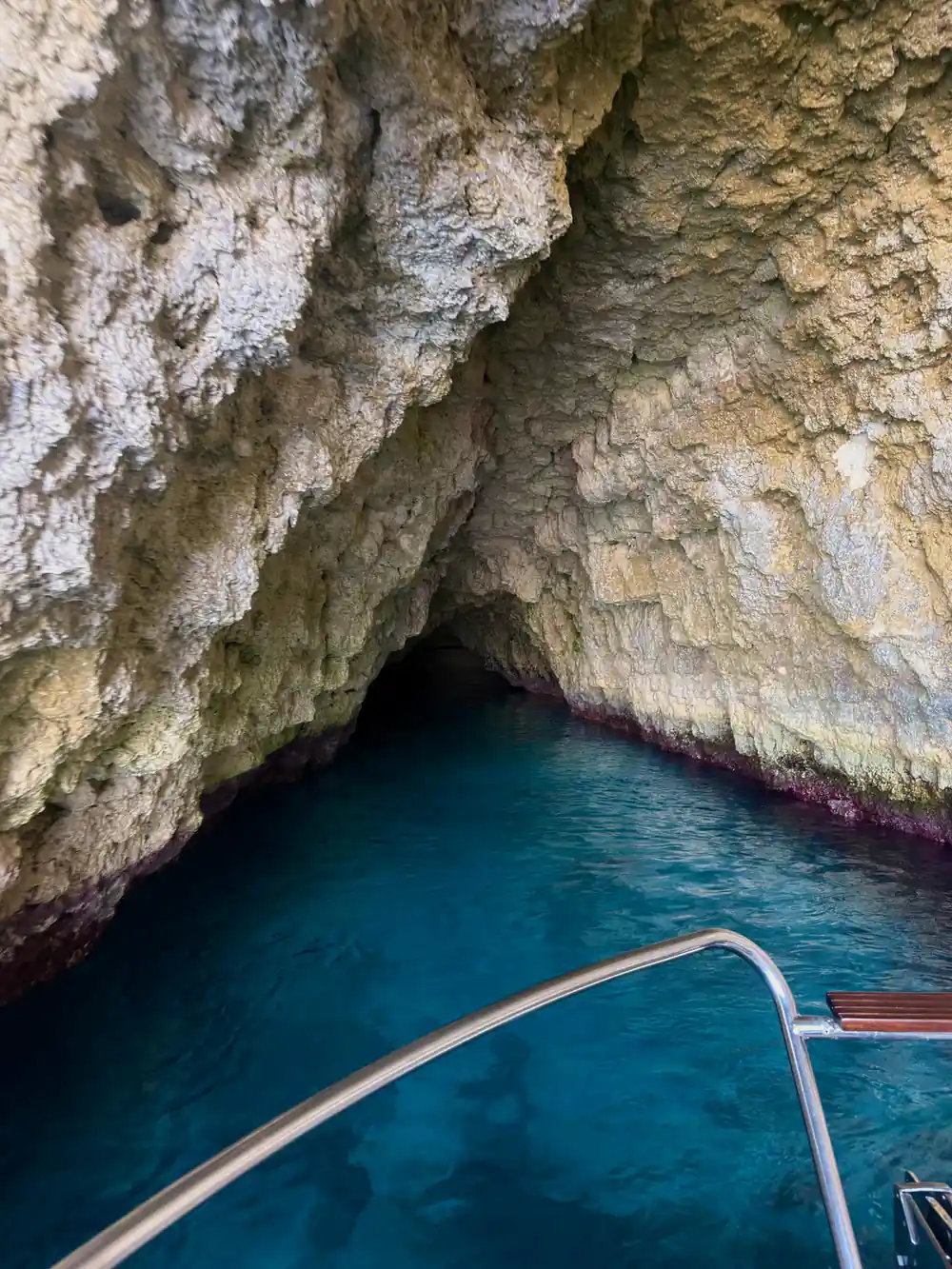
The Santa Maria Caves consist of five caves located on the island of Comino, one of the Maltese islands in the Mediterranean Sea.
Is a private boat worth it on Comino?
Booking tips
Comino island Malta and the scale of the place
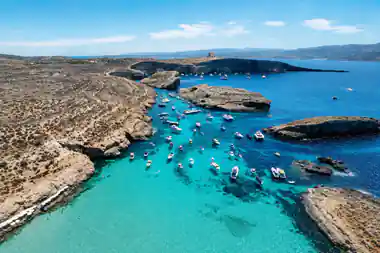
Comino is the small island in the channel between Malta and Gozo, a low shelf of honey-coloured limestone with rocky edges, a couple of sandy inlets and far more footpaths than roads. You can walk across it in an afternoon. That smallness is what makes a boat day work so well here: the boat covers the distance and you spend your time in the water rather than on the move. There is no airport, no town and no traffic, just a landing stage, a chapel, a tower on the ridge and a long, scrubby coast. For a Comino island Malta day out, that is the whole appeal.
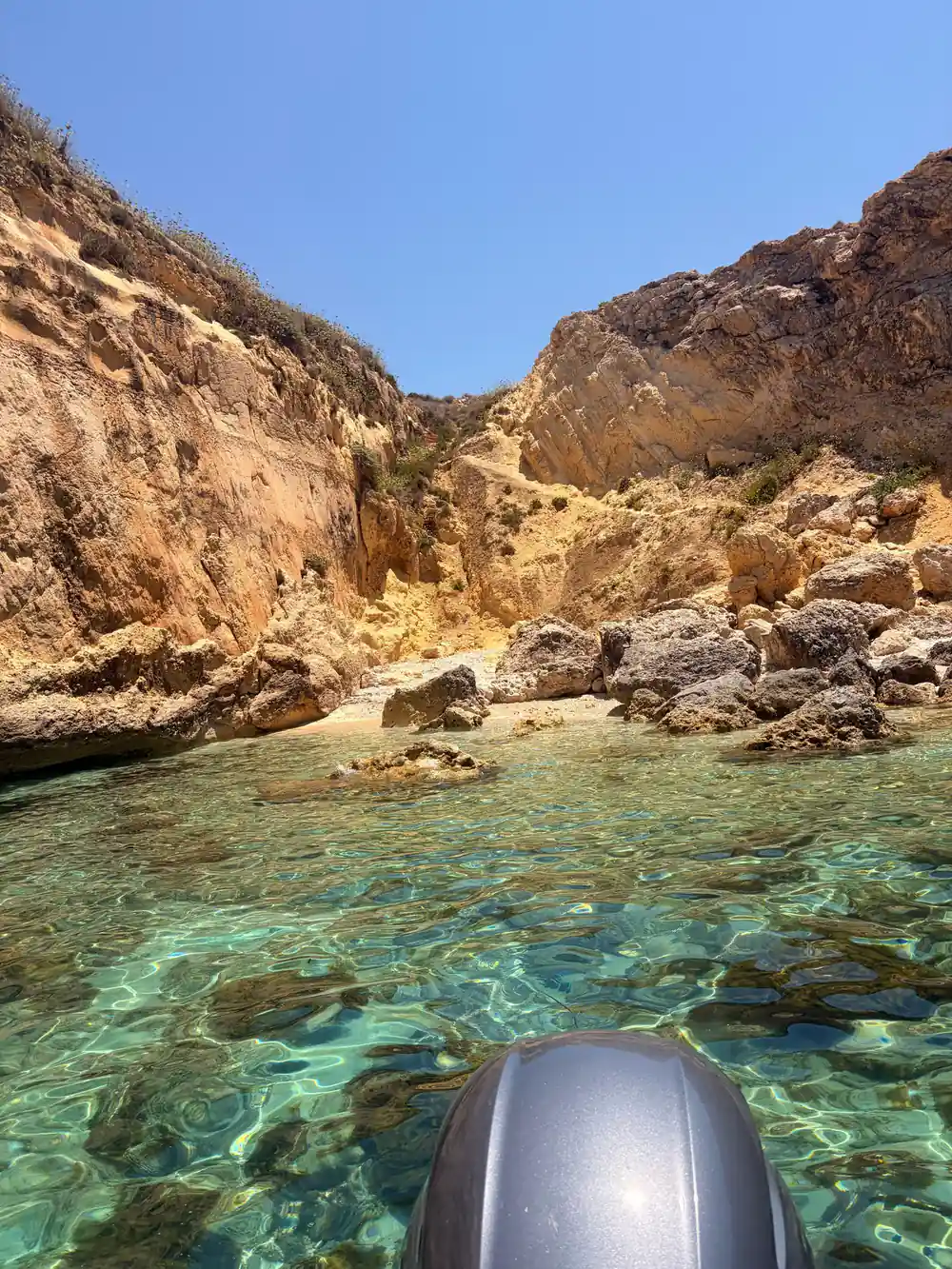
From the water the island looks bare and scrubbed at first, then it opens into the bright, shallow bay of the Blue Lagoon on Comino island, which is what most people have come to see. Around it the coast turns rough and cave-riddled, with cliffs, arches and dark rock pools. Nothing is far away. A morning swim, a short walk uphill for the view, a slow loop along the cliffs and you have the shape of the place. Bring a hat, because shade is scarce and the limestone throws the heat back at you.
Who lives on Comino island
Comino has an official population of 4, and the island is a nature reserve and bird sanctuary.[1] That number makes sense the moment you step ashore: a few low buildings near the landing place, a chapel, and long stretches of coast where the loudest thing is a gull. Come expecting water, quiet and light rather than shops and nightlife, and bring whatever you need for the day with you.
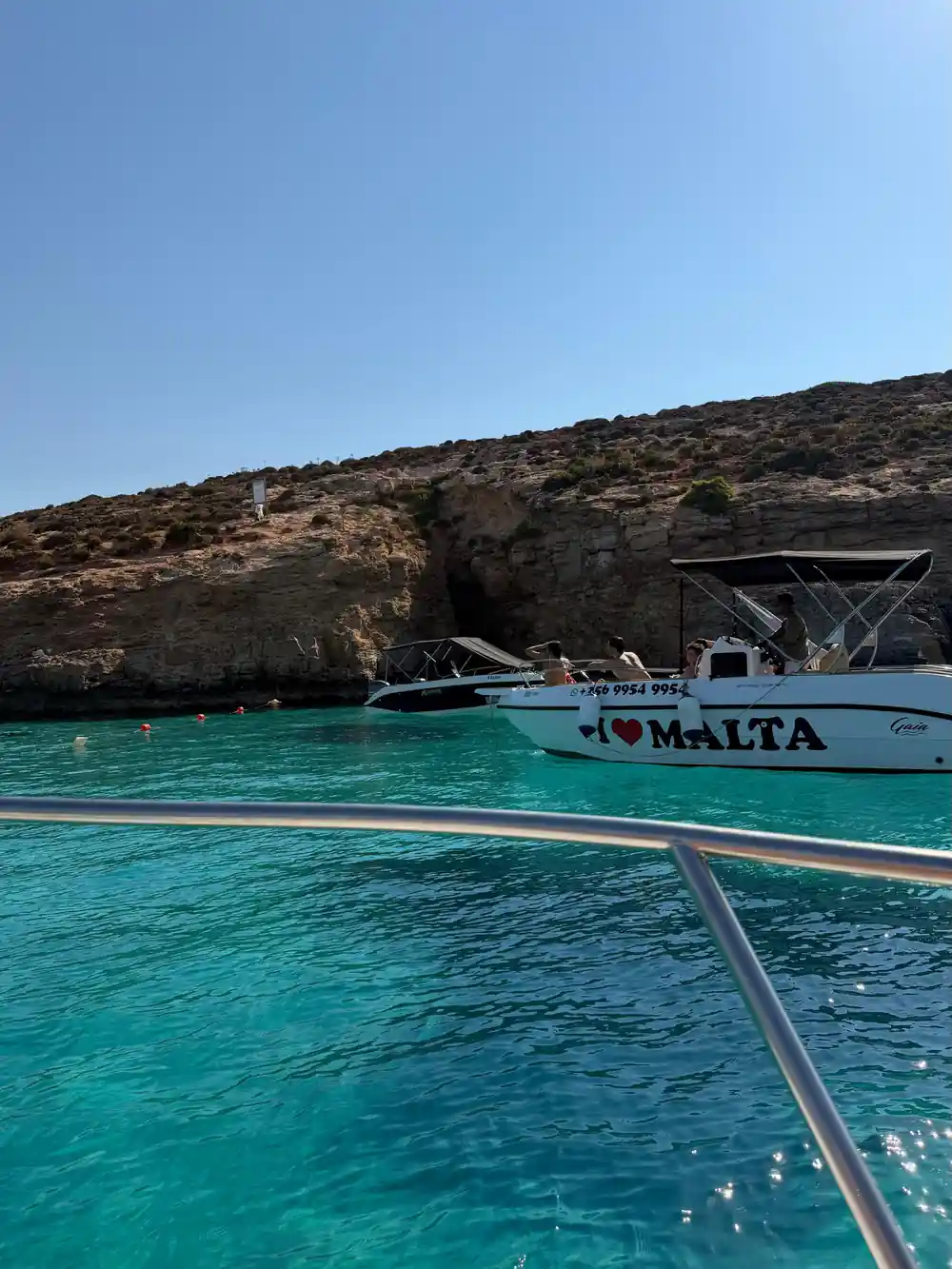
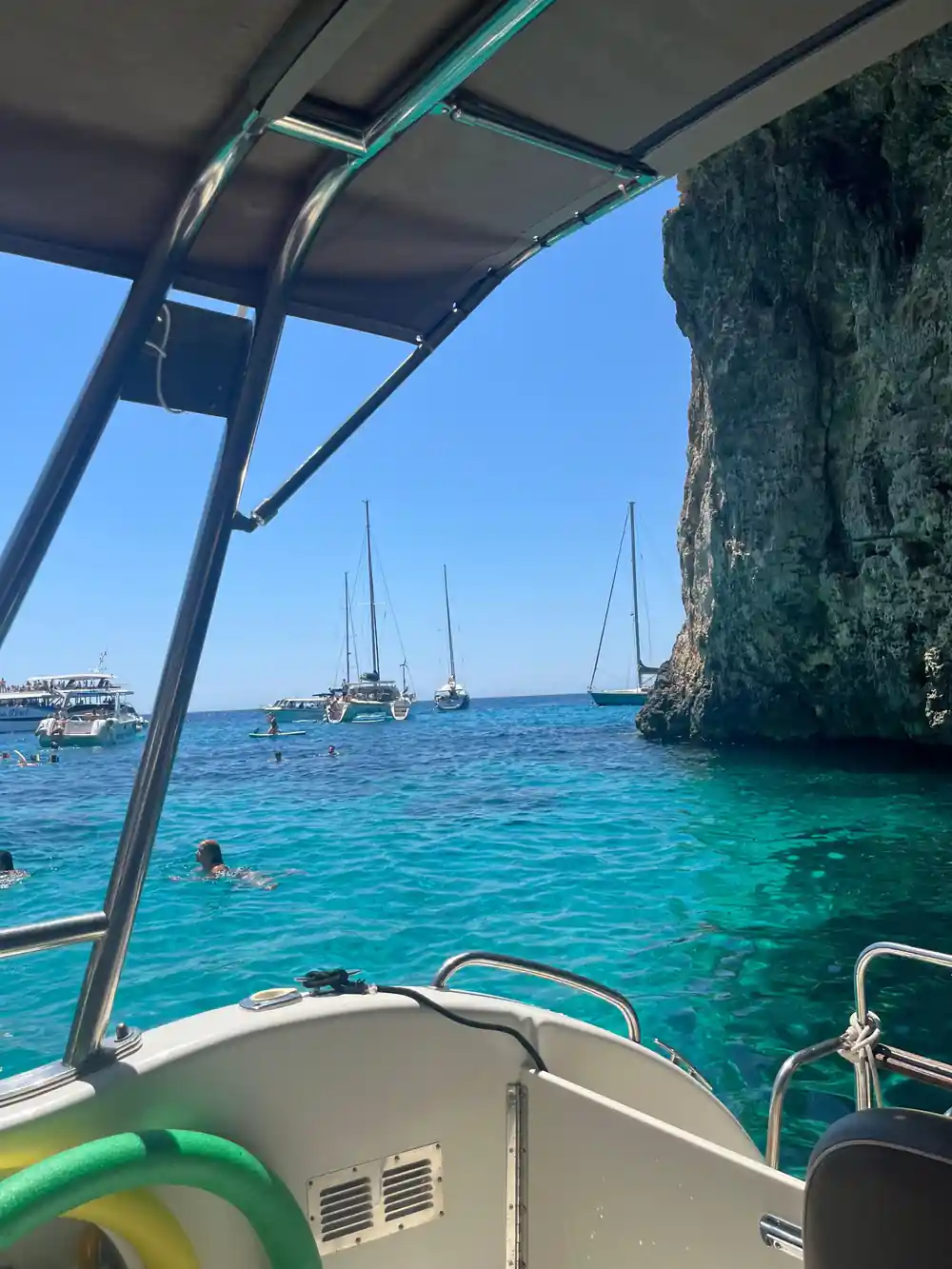
What you will meet, on any summer day, is a crowd of visitors rather than residents. In peak summer, in July and August, the Blue Lagoon receives between 2,500 and 3,500 visitors per day.[3] That is the number to plan around. Boats that arrive early or leave late see a completely different island, and a private boat gives you the freedom to choose your own timing rather than joining the queue at the jetty. It also lets you swim at the quieter bays along the coast while the lagoon is at its fullest.
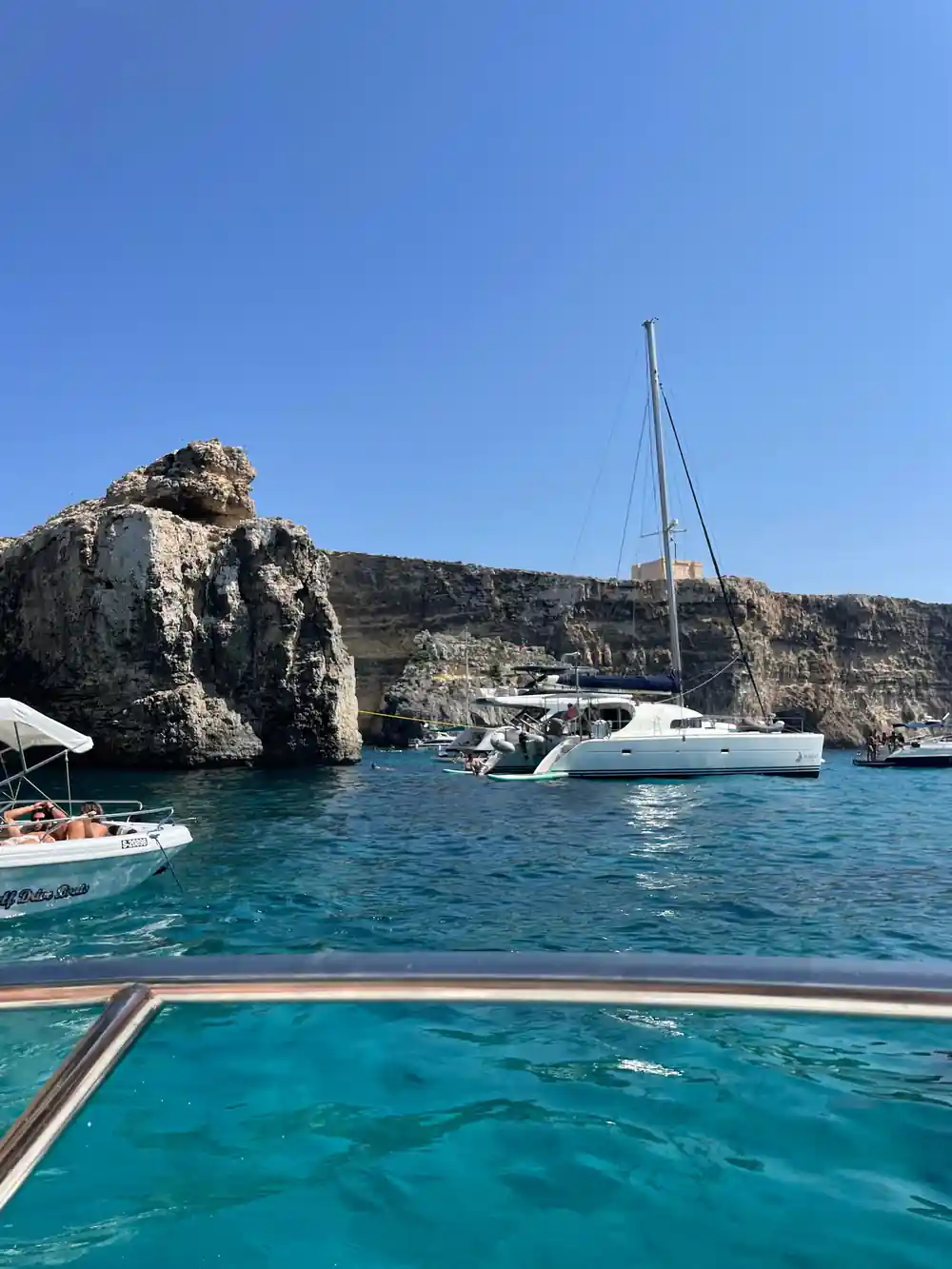
Boats fill the Blue Lagoon by mid-morning, so the first and last crossings get the calm water.
Santa Marija Tower and the island's fortifications
Santa Marija Tower on Comino is a defensive structure built in the 17th century as part of the Knights of St. John's fortification efforts, and it was completed in 1618, during the reign of Grand Master Alof de Wignacourt.[11] It stands on the high ground, watching the channel between the two larger islands. From a boat you spot it long before you land, a squat square tower on a bare ridge, and on foot it gives you the best wide view on the island.
The tower is a reminder that this channel has always been watched, whether for shipping, defence or the simple fact of being the shortest crossing between Malta and Gozo. Walking up to it takes you away from the lagoon and into the quieter, scruffier middle of the island, past low rubble walls, patches of thyme and the odd carob tree. It is a good way to stretch your legs between swims, and the view back over the water makes the climb worth it.
No roads, no cars, and how a day here works
Comino has no roads to speak of and no cars, so everything happens at walking pace or from the deck of a boat. Paths link the landing stage, the tower, the chapel and the coves, and the distances are short enough that you never need a plan more complicated than walking until you find water you like. Wear shoes you can walk in over rough limestone, not just flip-flops, and carry more water than you think you need.
There is very little shade and almost no shelter, so sun protection matters from spring onwards. Take a light long-sleeved top for the ride home, a dry bag for phones, and a snorkel if you have one, because the shallow sandy bottom is made for looking at. If someone in your group uses a wheelchair, check the boat rather than the island: one of the private boat listings is wheelchair accessible, and a private charter is usually the easiest way to sort out access.[5]
from US$195
Private group, live English guide, swim stops and sea caves, and the boat is listed as wheelchair accessible.[5]
What is protected on Comino
Comino is a bird sanctuary and nature reserve, and the sea around it is a Natura 2000 marine protected area.[12] That protection shows in how the island looks: no marina, no sprawl of new building, no clutter on the skyline. The rules that come with it are mostly about wildlife and boats. Keep your distance from nesting cliffs, do not anchor on seagrass, and leave the rock pools exactly as you found them.
The cliffs are home to the Yelkouan shearwater, the seabird that breeds on Kemmuna, with an estimated 150-220 pairs nesting there.[13] Almost 10% of the species' total population nests on the Maltese Islands.[13] Shearwaters nest in burrows and crevices and move mostly at night, so most visitors never see one, though you may hear them calling after dark. If a skipper keeps the boat a little way off a cliff, give the birds the room.
Comino island in winter
Winter changes the island completely. The daily mean air temperature in Malta ranges from 12.6°C in February to 27.5°C in August, with an annual average of 19.5°C.[14] Sea temperature in Sliema is warmest in August at about 26.1°C and coldest in February at about 15.4°C.[10] That makes a winter visit a walking and looking trip rather than a long swimming one, with the tower and the paths more or less to yourself.
Malta gets almost 3000 hours of sunshine a year, making it the sunniest country in Europe,[9] and in 2024 the country received roughly 3.6 million international tourists.[15] The winter months sit at the quiet end of that. Days are short and the sea can be choppy, so watch the forecast and pick a boat that suits the conditions. A private charter makes it easy to move your day when the weather turns. Bring a windproof layer, because the ride back can feel much colder than the shore.
Seeing Comino island and Blue Lagoon from a boat
There are three ways to reach the lagoon. The ferry crossing from Ċirkewwa on Malta or Mġarr on Gozo to the Blue Lagoon takes approximately 15 minutes each way.[4] Shared cruise boats run full and half days from several harbours and carry the most people. Then there are private charters, where the Blue Lagoon Malta Comino island run happens in a small boat of your own, with a skipper who knows where the caves, the quiet coves and the best swim stops sit.
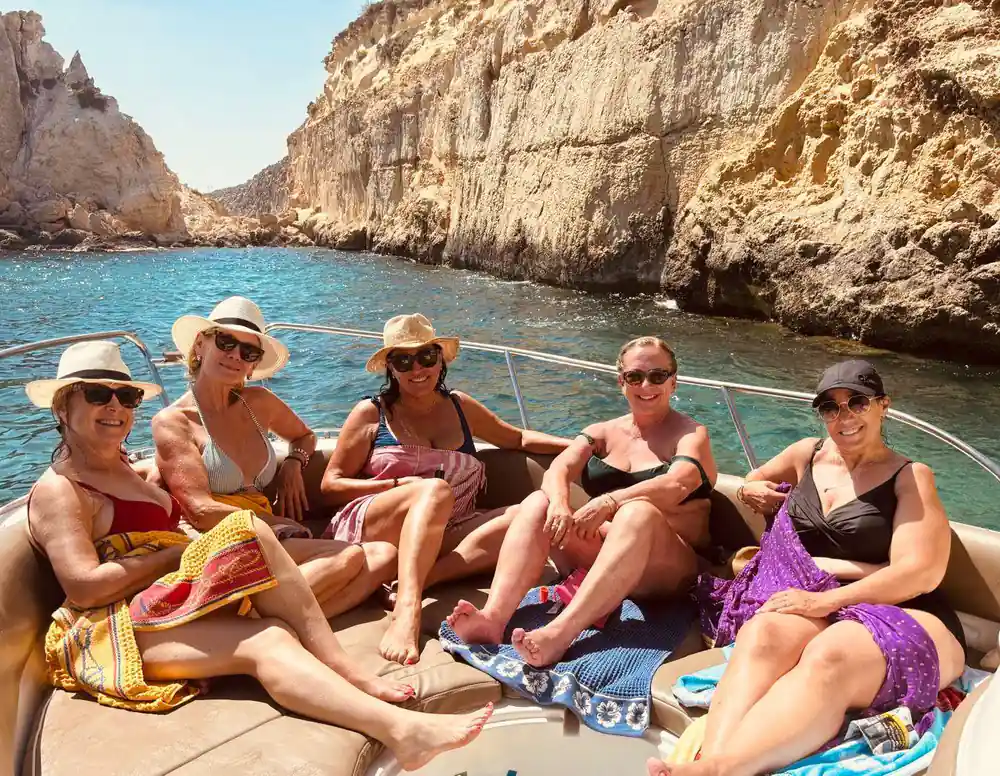
The private boat tour with swim stops is from US$195, runs 2 - 4 hours and is a private group, with a live tour guide in English and skip the line through a separate entrance.[5] It is wheelchair accessible, you can reserve now and pay later, and free cancellation up to 24 hours in advance gives you a full refund.[5] On the private option the Comino island Blue Lagoon stop is yours to time, which matters on a busy day: swim before the tripper boats arrive, or stay out in the calm after they leave.
Daily mean air temperature in Malta by month
Daily mean air temperatures for Valletta, Malta, from 1991-2020 climate data.[14]
What a Comino boat trip costs
From-prices in US dollars per person as listed on GetYourGuide:[5][6][7][16]. Child rates are not shown on these listings, so the child column repeats the from-price.
When to go to Comino
How to plan your Comino day
Pick your boat
Ferry, shared cruise or private charter. Each one lands you at the Blue Lagoon, but the timing and the freedom differ a lot.
Book the early slot
The first boats reach the lagoon before the crowds, and the water is at its calmest in the morning.
Pack light and bright
Shoes for rough limestone, plenty of water, sun cream, a hat and a dry bag for your phone.
Walk up to the tower
A short climb from the middle of the island gives you the wide view over the channel, then back down for another swim.
Save time for the caves
The Santa Maria Caves and the cliffs are the other half of the day, and a skipper can slot them in on the way home.
See the Blue Lagoon before the day trippers arrive
from US$195Reserve now & pay later