The essentials
- The daily mean air temperature in Valletta runs from 12.6°C in February to 27.5°C in August, with an annual average of 19.5°C.[1]
- Sea water off Sliema is warmest in August at about 26.1°C and coldest in February at about 15.4°C.[2]
- Malta gets almost 3000 hours of sunshine a year, making it the sunniest country in Europe.[3]
- In July and August the Blue Lagoon receives between 2,500 and 3,500 visitors per day, so early and late are calmer.[4]
- The Ebsons ferry from Mġarr on Gozo or Ċirkewwa on Malta to the Blue Lagoon takes approximately 15 minutes each way.[5]
- Top choice Private lagoon boat from US$195 Rated4.98 from 117 reviews[6]Duration2 - 4 hours[6]GuideLive tour guide: English[6]CancellationFree cancellation up to 24h[6] Check availability
- Catamaran bays day from US$63 Rated4.68 from 6,838 reviews[7]Duration5 - 6 hours[7]GuideHost or greeter: English[7]CancellationFree cancellation up to 24h[7] See this tour
- Crystal Lagoon cruise from US$40 Rated4.53 from 7,774 reviews[8]Duration5.5 - 7.5 hours[8]GuideDriver: English[8]CancellationFree cancellation up to 24h[8] See this tour
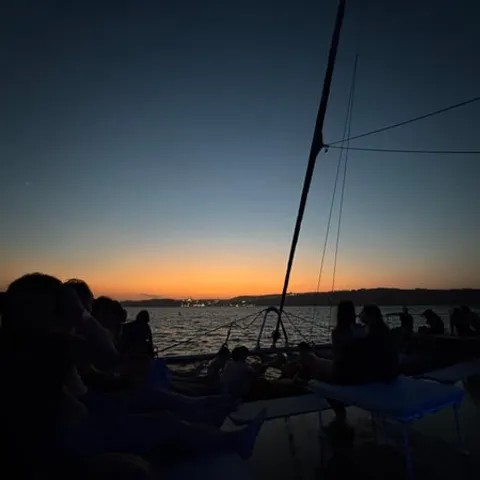
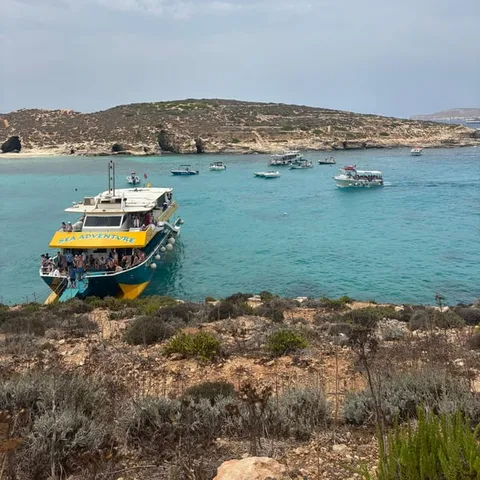
Malta is the sunniest country in Europe, basking under almost 3000 hours a year of sunshine.
The best months for a Blue Lagoon boat trip
Weather and water
What the numbers say about Comino weather
Malta has a textbook Mediterranean climate: long, hot, dry summers and short, mild winters, with most of the rain arriving between autumn and spring. Official 1991-2020 climate data for Valletta puts the daily mean air temperature at 12.6°C in February and 27.5°C in August, with an annual average of 19.5°C.[1] Sunshine is the other headline number: Malta gets almost 3000 hours of sunshine a year and is the sunniest country in Europe.[3]
Those averages hide plenty of day-to-day variety. A winter morning can be bright and still, and a summer day can be cooled by a breeze coming off the water. What matters for a boat trip is not only the air temperature but the wind and the state of the sea, so many travellers treat the shoulder months as the smartest time to be out on the water. Comino itself is tiny, with an official population of 4, and the island is a bird sanctuary and nature reserve.[9][10]
Reading the numbers is the easy part. Comino sits in the channel between Malta and Gozo, and the lagoon is shallow and enclosed, so its water warms and cools a little differently from a deep bay on the mainland. Forecast tools such as AccuWeather, or a marine forecast for the Blue Lagoon in Malta, are worth checking the day before you go. Treat any forecast as a guide for the day, not a promise.
The sea, which lags behind the air
Water holds its heat and gives it back slowly, so the sea around Malta is at its warmest weeks after the air temperature has peaked. Average sea water temperature at Sliema is warmest in August at about 26.1°C and coldest in February at about 15.4°C.[2] In practice that means comfortable swimming without a wetsuit through the warmest weeks of the year, and a bracing dip for anyone who enjoys cold water in winter and early spring.
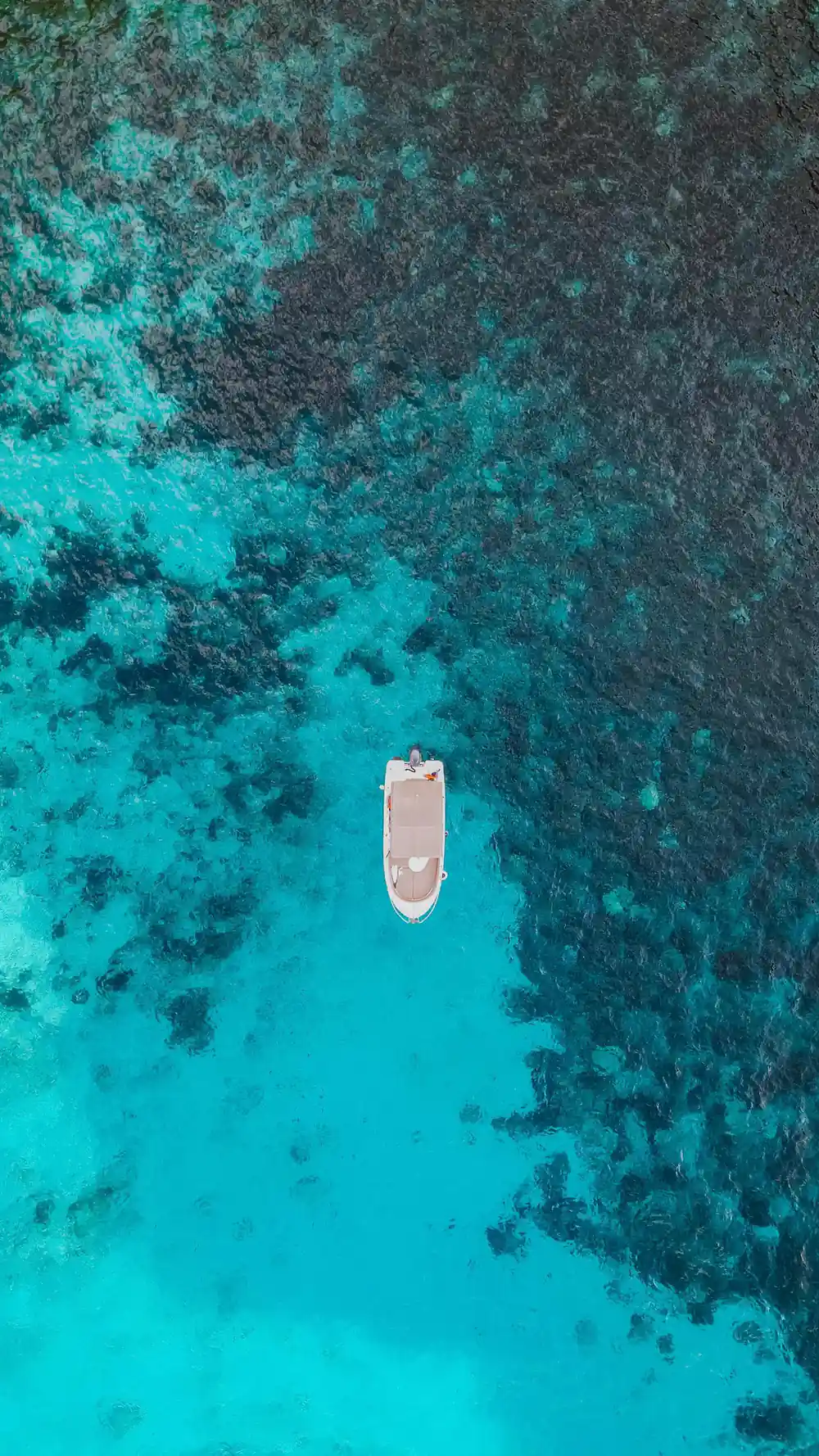
The Blue Lagoon's colour is a shallow-water effect rather than a weather one. Light reflects back up through shallow, clear water from the white sand below, and that is what gives the lagoon its turquoise look.[11] On a bright day the shallows glow and the sand shows through; under cloud the same water looks flatter and greener. Either way it stays clear, and the first swimmers usually appear well before the day boats do.
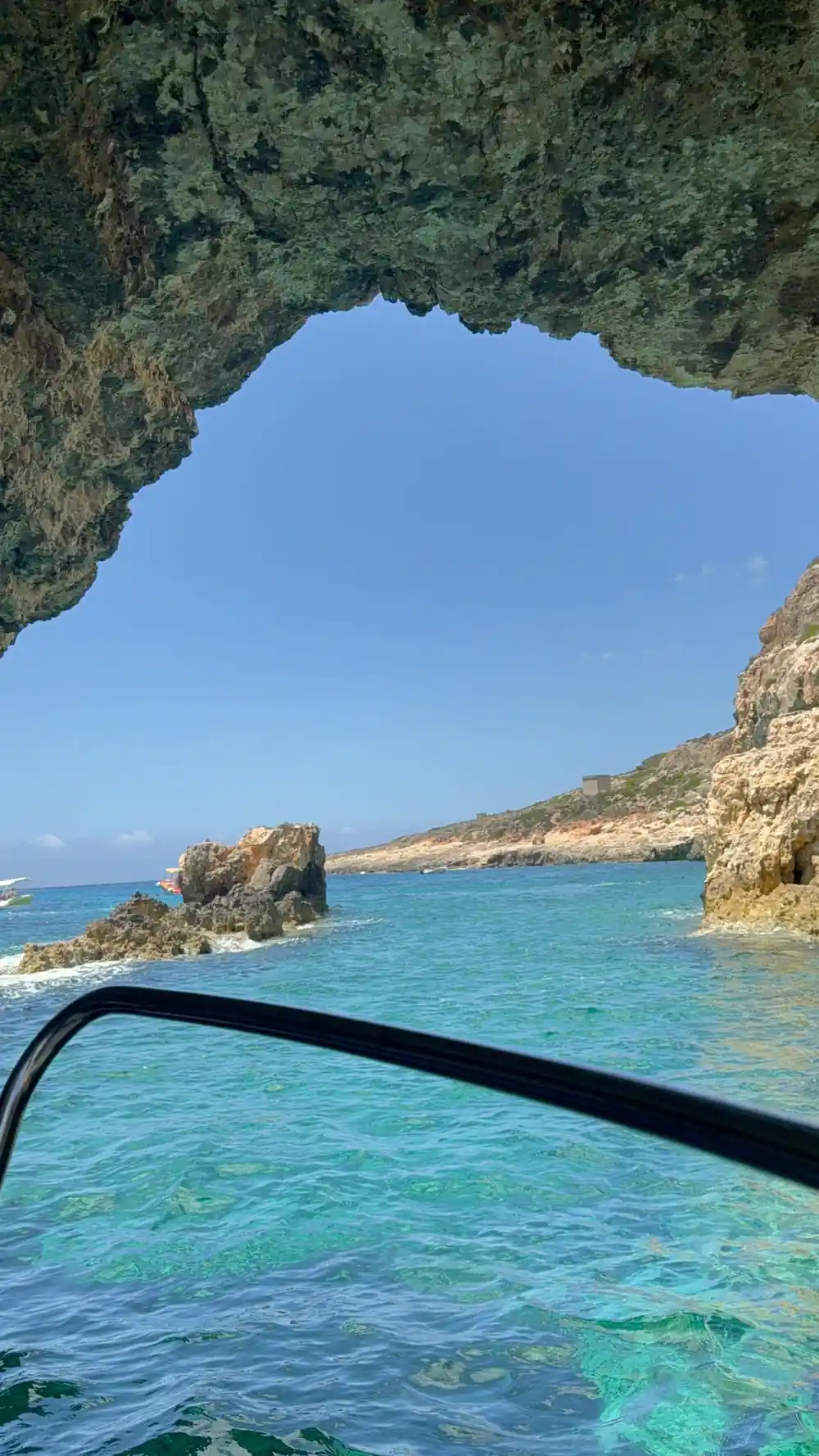
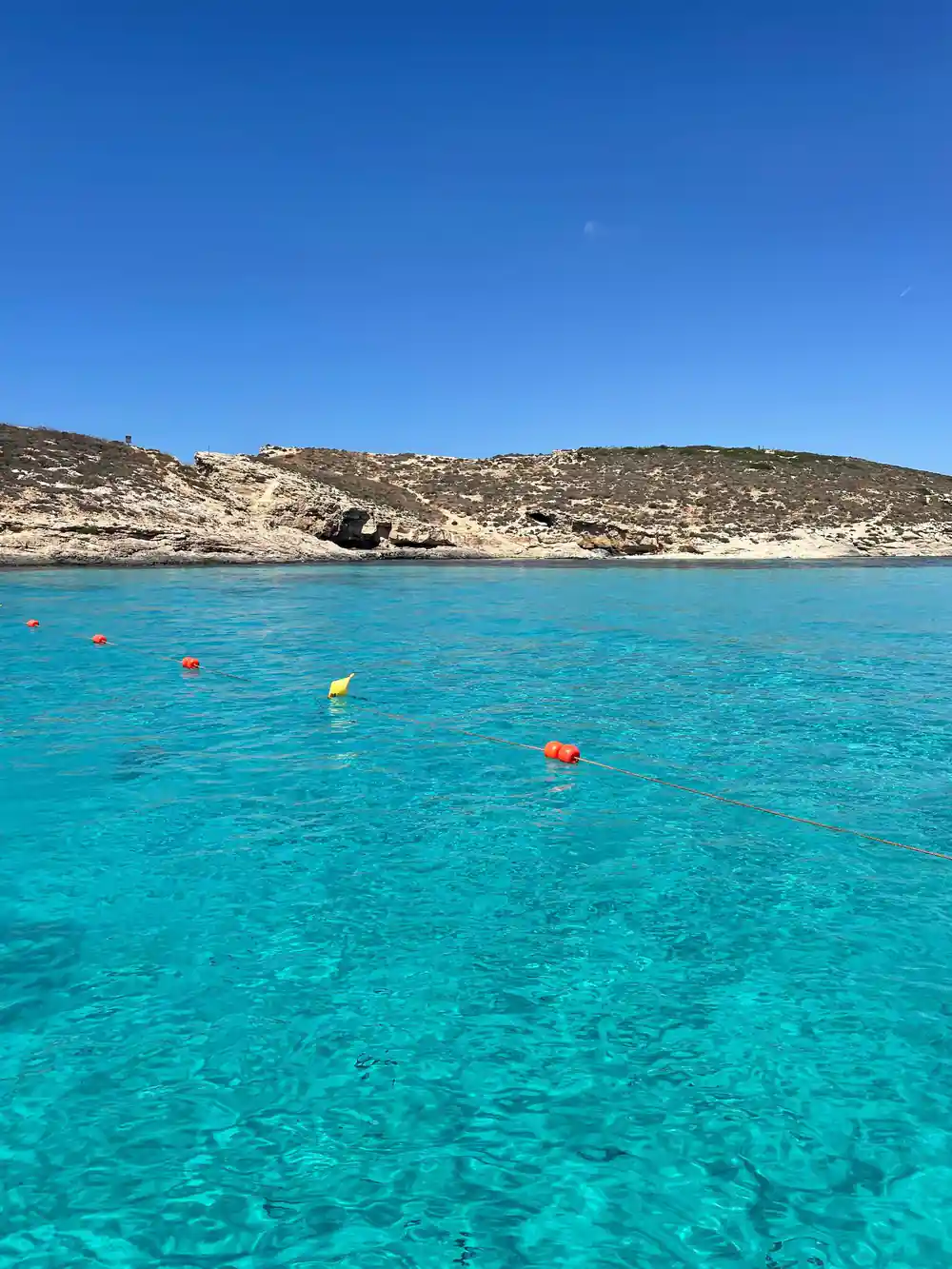
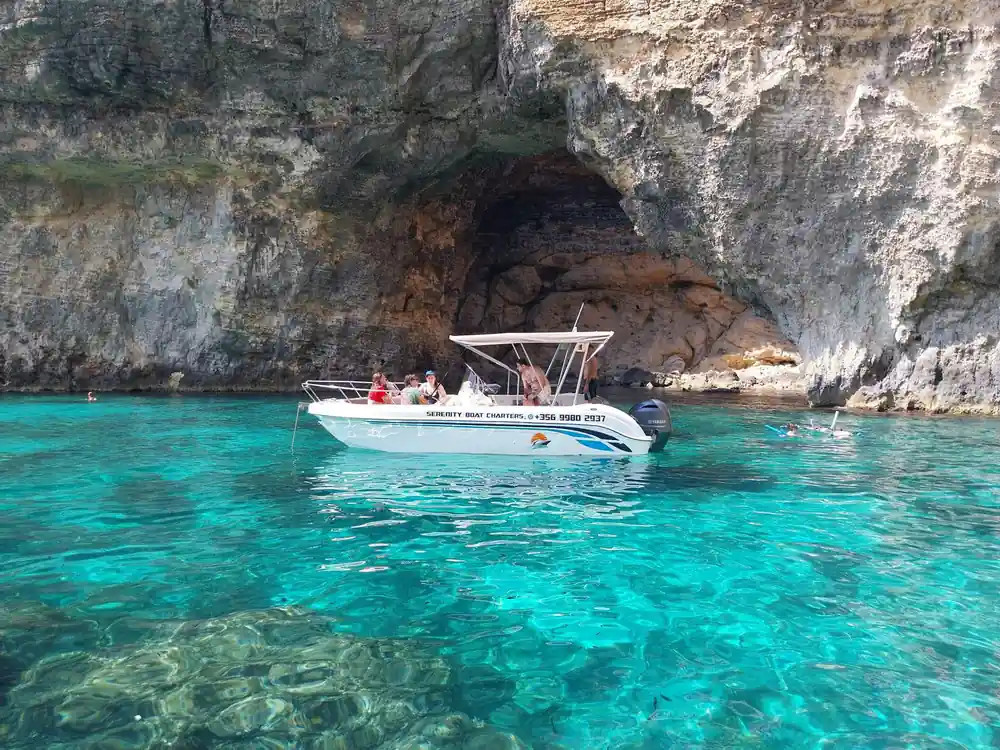
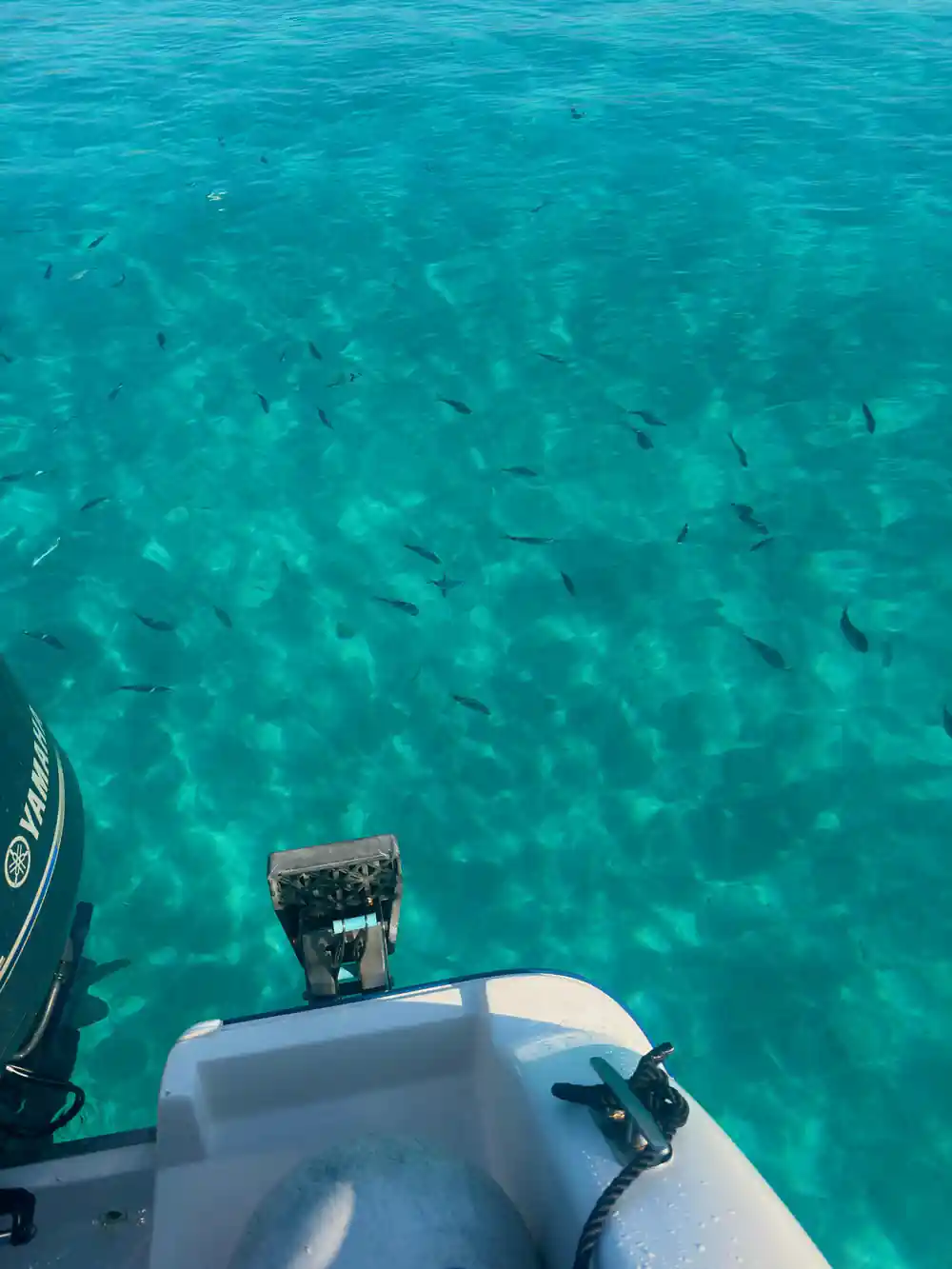
Turquoise shallows and pale rock off Comino, seen from the deck on a still morning.
Wind, and what it does to a small boat
Wind is the variable that decides how a day at the lagoon actually feels. The water between Malta and Gozo can be glassy at breakfast and choppy after lunch, and one side of Comino is often calm while the other is white-topped. Island forecasts are a useful guide, but what you meet on the water comes down to the wind direction and strength on the day, and to how exposed the route is.
This is where a small private boat works in your favour. With your own group you can change plans halfway through, sit out a squall in a bay, or visit the Santa Maria Caves when the swell is low and skip them when it is not. That cave system consists of five caves on Comino.[12] Calm mornings are when the caves are at their most inviting, and a skipper who knows the island will read the water and pick the side that is working.
Weather also decides where you swim rather than whether you swim. A sheltered bay on the leeward shore can be flat while the open channel is not, and a boat that can move to a quiet corner is a very different proposition from a fixed itinerary. If your dates are fixed, keep your plans loose and let the skipper choose the anchorage.
Through the year at the Blue Lagoon
The year opens at the Blue Lagoon in Malta at its quietest, with a daily mean air temperature of 12.9°C, and February is the coolest month at 12.6°C.[1] The sea sits at about 15.4°C.[2] Days can still be bright and dry, with long, empty views from the cliffs, and the island is quiet apart from the birds: the Yelkouan shearwater is the seabird that breeds on Comino, with an estimated 150-220 pairs nesting there.[13]
The spring months warm up quickly, from a daily mean of 14.1°C to 16.4°C, and the early summer weeks are a sweet spot, warm without being fierce, at 20.1°C and 24.2°C.[1] The lagoon is busy but not yet packed, and the sea is pleasant for longer swims. The hottest and driest stretch of the year follows, at a daily mean of 26.9°C and 27.5°C.[1]
Early autumn stays warm enough for long swims, with a daily mean of 24.9°C and then 21.8°C, and the closing weeks of the year bring 17.9°C and 14.5°C.[1] Rain tends to come in short, heavy showers rather than all-day drizzle. Malta received roughly 3.6 million international tourists in 2024, and winter visits are for people who like their viewpoints empty and do not mind a coat.[14]
from US$195
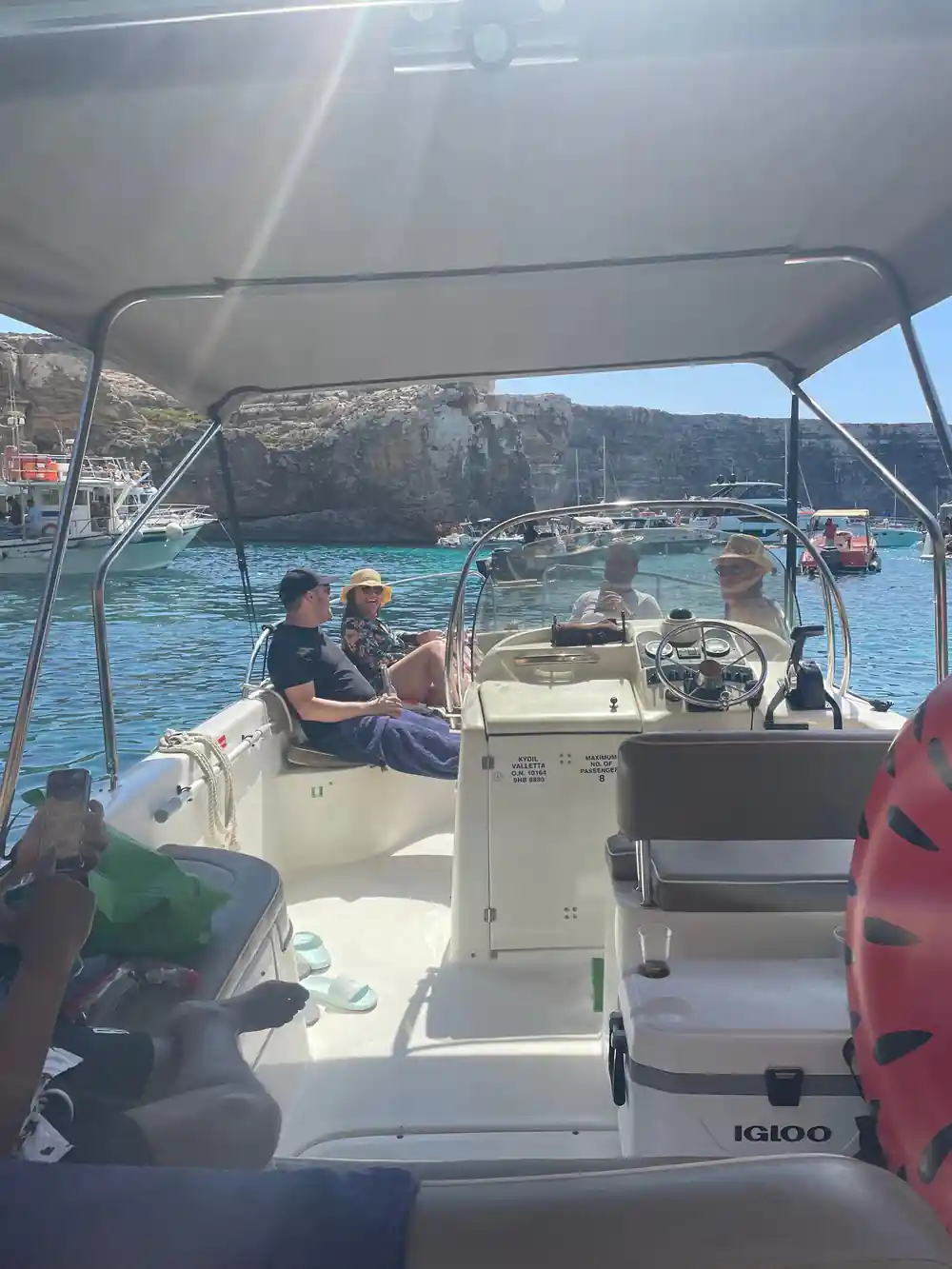
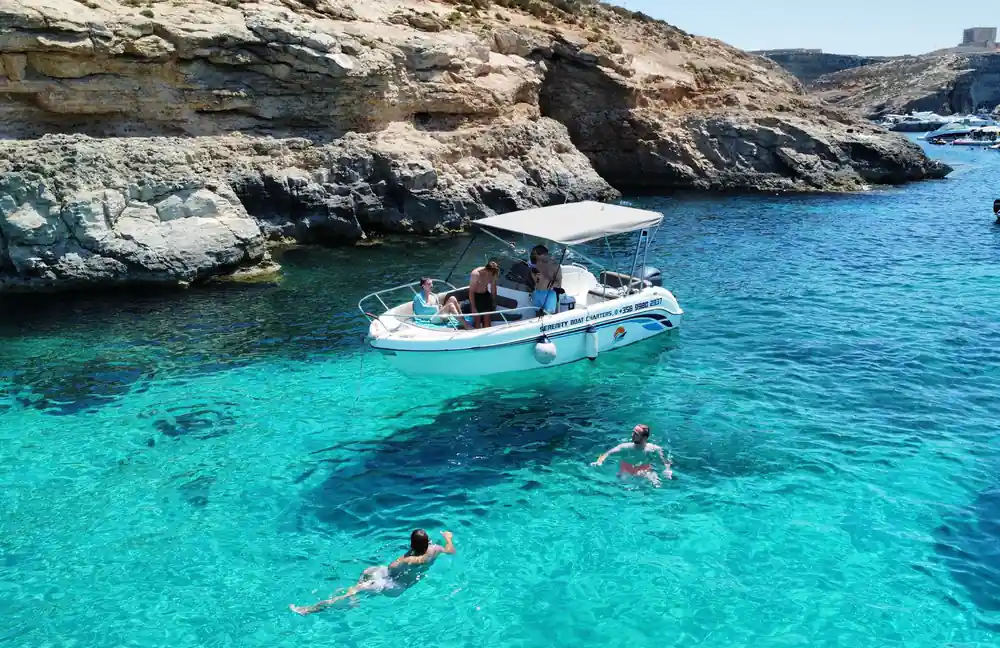
A private group with a live English guide, 2 - 4 hours on the water and free cancellation up to 24 hours in advance.[6]
July and August, fairly
Peak summer at the Blue Lagoon is genuinely busy. In July and August the lagoon receives between 2,500 and 3,500 visitors per day.[4] Ferries run through the middle of the day, day boats arrive in waves, and the narrow strip of sand fills early. None of that makes it a bad place to be, it simply changes how you use it.
The workaround is timing and a different kind of boat. Come early, leave late, or arrive by private boat and anchor away from the main beach. A private group means no queue for a spot on deck and the freedom to swim at Santa Maria Bay or in the Crystal Lagoon while the main lagoon is at its fullest. In the middle of the day, shade, water and a hat matter more than anywhere else on the island.
If midsummer is the only window you have, book ahead so you are not choosing from what is left. An early departure gets you calm water and an empty lagoon, and a late afternoon boat brings you back as the day trippers head for the ferry.
The autumn window, and winter after it
Early autumn is the classic shoulder season. The sea is still warm, the light softens, and the lagoon is calmer than in high summer. Daytime temperatures stay comfortable, evenings need a light layer, and the water is often at its most inviting just after the crowds have thinned. Anyone who wants the turquoise water without the crush should aim here.
Winter is a different island. The sea drops to about 15.4°C in February and the air is cooler, with rain arriving in bursts.[2] What you get in return is space and a landscape that shows its bones. Santa Marija Tower is a defensive structure built in the 17th century and completed in 1618 during the reign of Grand Master Alof de Wignacourt.[15] On a clear winter day the views across to Gozo and Malta are as much the point of the trip as the swimming.
Choosing a month for your boat trip
If you want warm water and reliable sunshine, the warmest stretch of the year is the safe bet. If you want fewer people, aim for the edges of the season, before the peak and after it. If you want the island almost to yourself and do not mind a jumper, the winter weeks are rewarding, and you will not be fighting for space at the lagoon.
Whichever month you choose, build some flexibility into the plan. Sea conditions matter more than the air temperature, so check the wind as well as the forecast high, keep a spare day in the itinerary, and pick a trip you can move. The private boat tour with swim stops lasts 2 - 4 hours, runs as a private group with a live English-speaking guide, and offers free cancellation up to 24 hours in advance for a full refund.[6] For the ferry option, the crossing from Mġarr or Ċirkewwa to the Blue Lagoon takes approximately 15 minutes each way.[5]
Daily mean air temperature, Valletta
Daily mean air temperatures for Valletta, Malta, based on 1991-2020 climate data, with an annual average of 19.5°C.[1]
What the boat trips cost
US dollar from-prices for these boat tour listings, all of which run to Comino.[6][7][8][16]
When to book your Comino boat trip
Plan your Comino boat day
Look at wind, not just heat
Air temperature tells you what to wear; wind and swell decide whether the boat leaves and where it can go.
Keep a spare day
A flexible itinerary lets you swap a windy Tuesday for a still Wednesday without losing the trip.
Choose your side of the island
Comino has sheltered water on more than one side, so a skipper can usually find calm somewhere.
Book a boat you can move
Look for free cancellation up to 24 hours in advance and reserve now, pay later options.[6]
Start early in high summer
Mornings are cooler, the lagoon is emptier and the sea is calmest before the afternoon breeze fills in.
Pick a calm week and book your private Blue Lagoon boat
from US$195Reserve now & pay later