The essentials
- A ferry place, a seat on a group boat trip or a private charter for your own group are the three ways onto the water, and every price here is a from-price.
- Shared cruises start from US$16 for a short Comino run and from US$35 for longer routes with audio guides or swim stops.[1][2]
- Private charters start from US$22 for a short run and from US$195 for a private boat tour with swim stops.[3][4]
- August has the warmest sea water at about 26.1°C, and July and August bring between 2,500 and 3,500 visitors a day to the lagoon.[5][6]
- The private boat tour can be reserved now and paid for later, with free cancellation up to 24 hours in advance for a full refund.[4]
- Top choice Private boat tour from US$195 Rating4.98 from 117 reviews[4]Duration2 - 4 hours[4]GuideLive tour guide: English[4]CancellationFree cancellation up to 24 hours[4]Good forSmall groups and swim stops Check availability
- Gozo and Comino islands from US$35 Rating4.45 from 20,111 reviews[2]Duration7 hours[2]GuideAudio guide included[2]CancellationFree cancellation up to 24 hours[2]Good forIsland sightseeing with audio guide See this tour
- Blue Lagoon catamaran from US$63 Rating4.68 from 6,838 reviews[7]Duration5 - 6 hours[7]GuideHost or greeter: English[7]CancellationFree cancellation up to 24 hours[7]Good forA relaxed day on the water See this tour
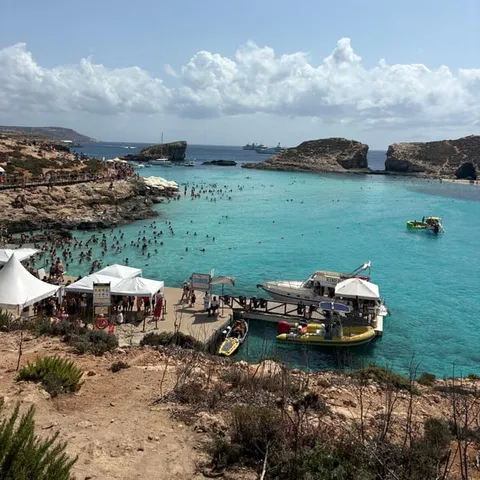
Ebsons provides a pick up and drop off ferry service from Mġarr (Gozo) and Ċirkewwa (Malta), to the Blue Lagoon, Comino every hour.
Which Blue Lagoon boat trip suits you
Before you board
- Book a seat on a group cruise or a whole boat if you want your own timetable
- Check availability before you fix the rest of your day, since starting times move with the season
- Every price on this page is a from-price in US dollars for the listed tour
- Free cancellation up to 24 hours in advance for a full refund on the private boat tour[4]
On the day
- Ferries leave Mġarr on Gozo and Ċirkewwa on Malta every hour for the Blue Lagoon[9]
- Malta gets almost 3000 hours of sunshine a year, so shade and sunscreen matter[10]
- Sea water in Sliema runs from about 15.4°C in February to about 26.1°C in August[5]
- In peak summer the Blue Lagoon receives between 2,500 and 3,500 visitors per day[6]
Why the Blue Lagoon looks the way it does
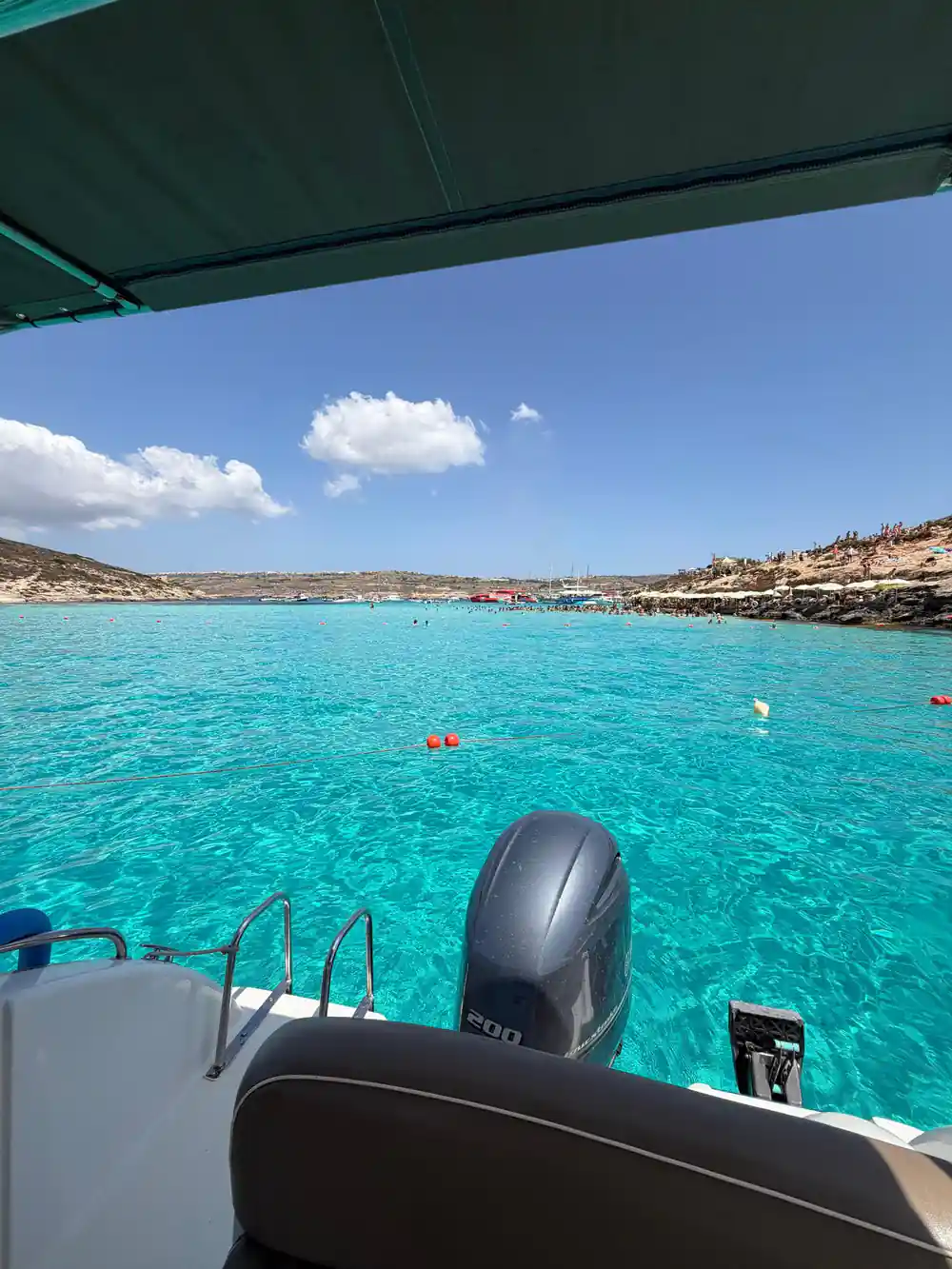
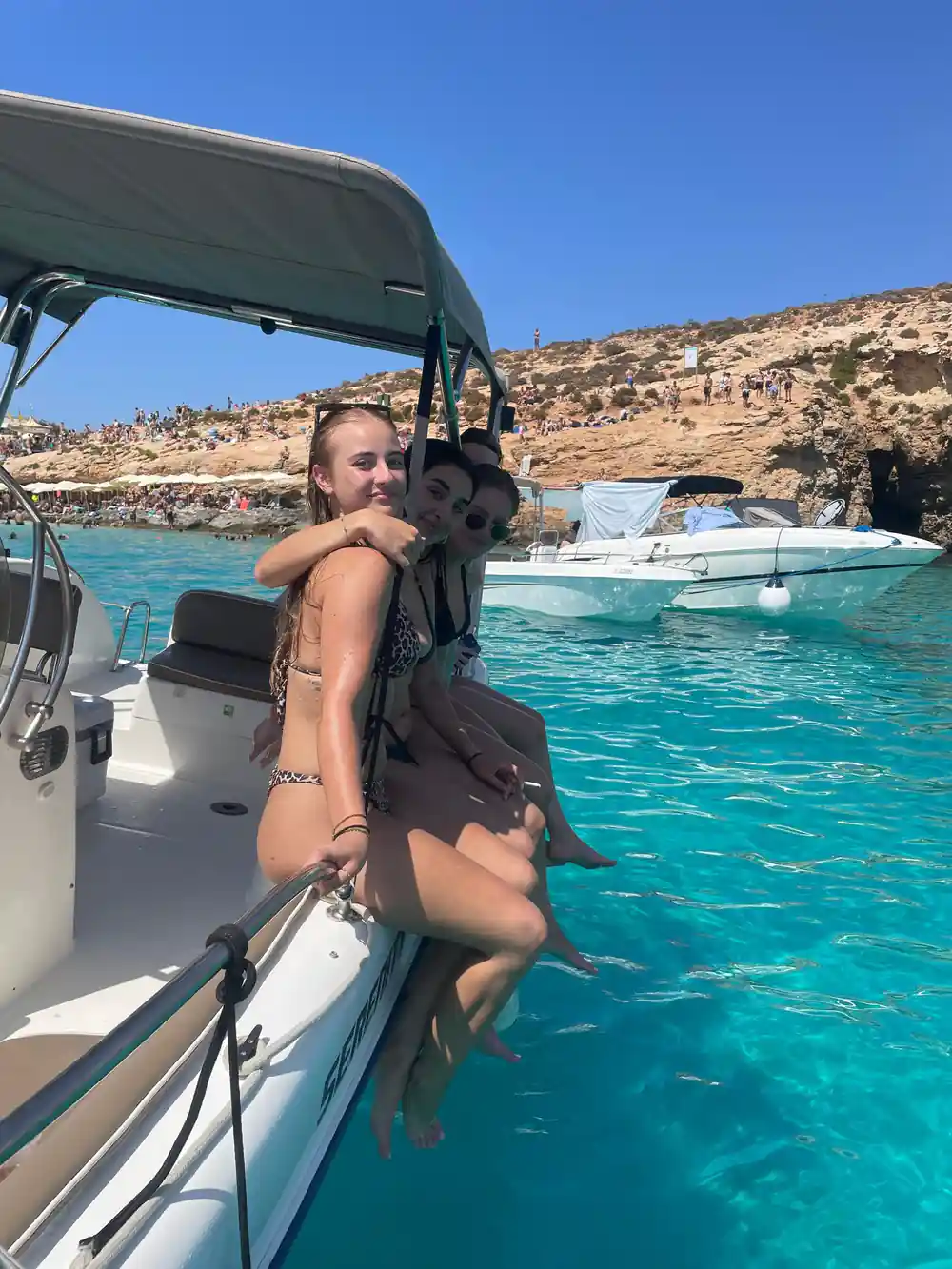
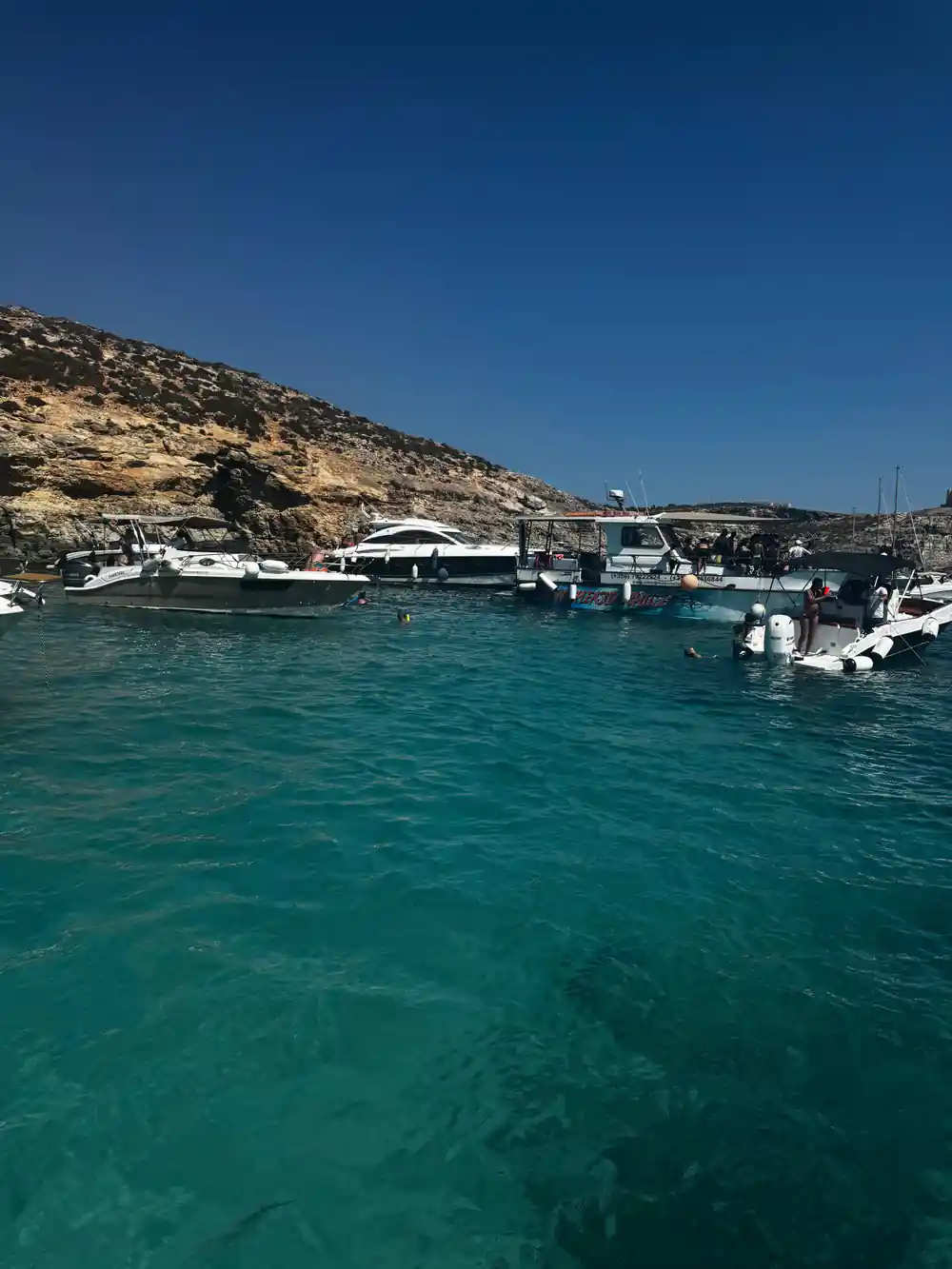
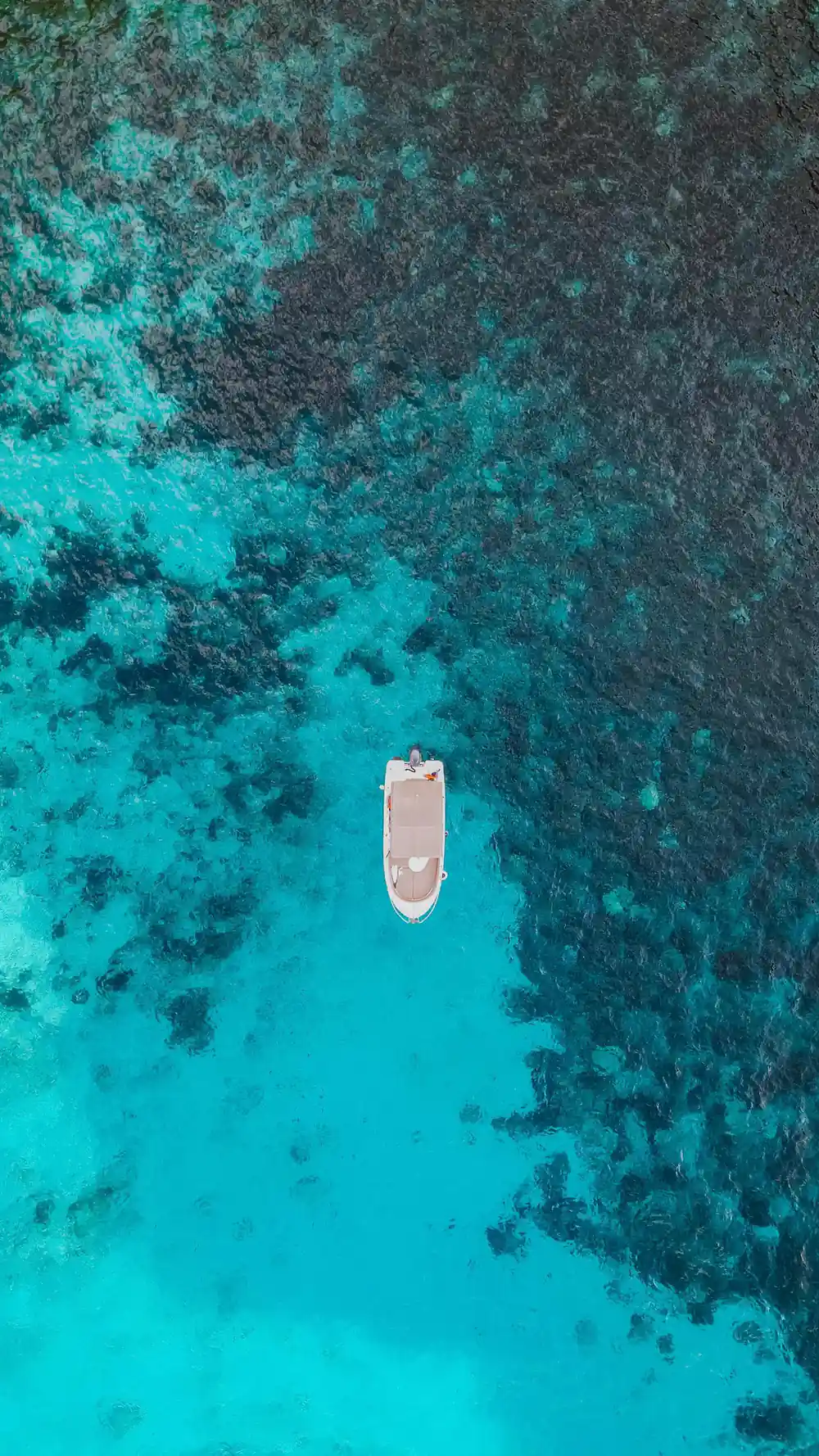
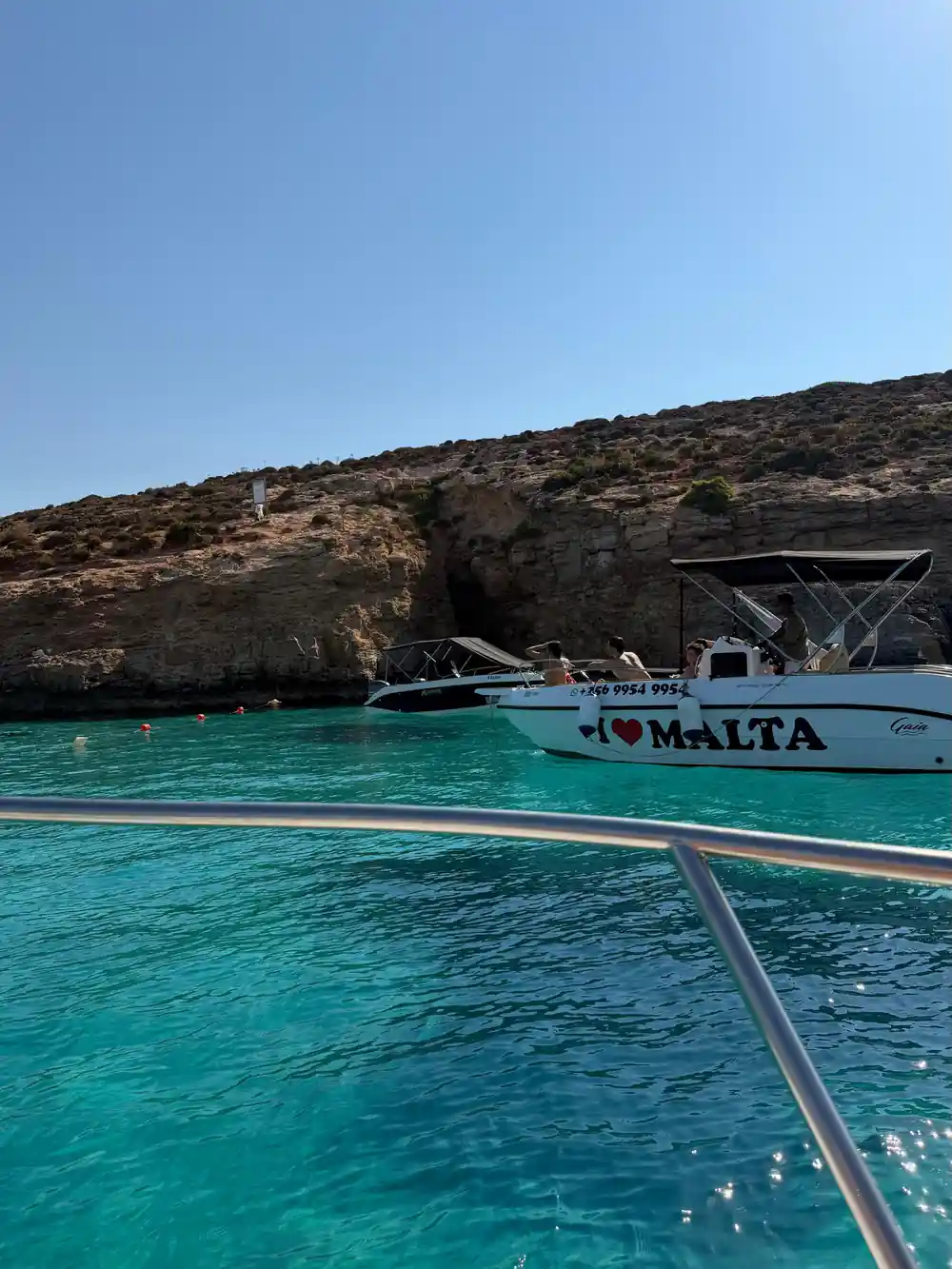
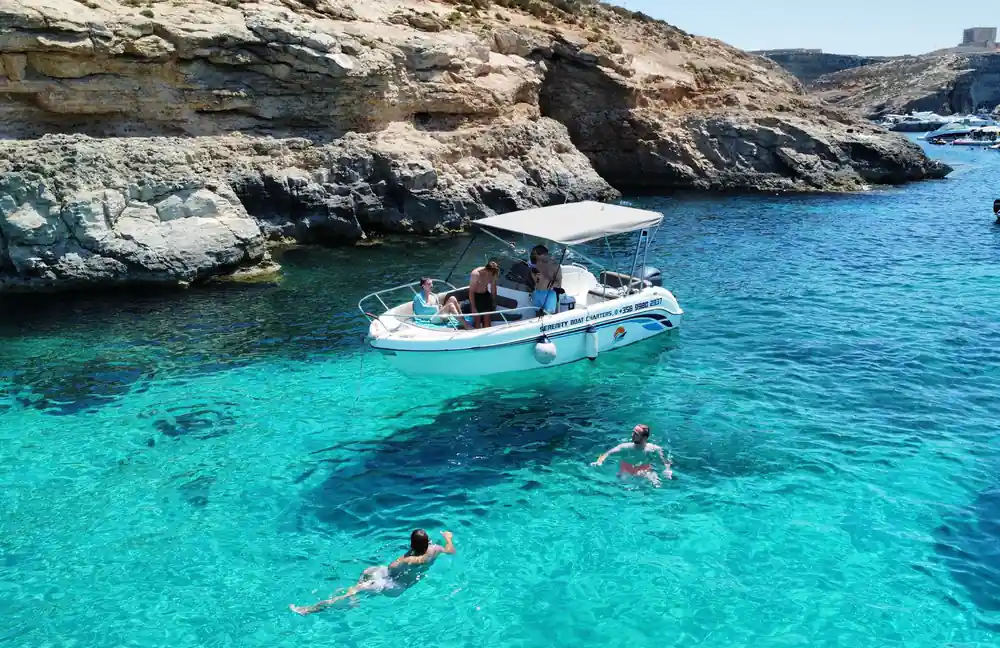
The Blue Lagoon lies in the shallow channel between Comino and the small islet of Cominotto, and its colour is the first thing anybody notices. The sandy sections give the water its famous turquoise colour, light reflecting back up through the shallow, clear water from the white sand below.[11] The glow holds across the whole bay through the middle of the day, and the seabed stays visible under your own feet a long way out from the rocks. Boats moor along the edges, swimmers fan out across the middle, and the water is usually flat enough for an easy swim.
The island behind the lagoon is almost empty. Comino has an official population of 4,[12] and it is a bird sanctuary and nature reserve.[13] The buildings are few and the traffic is on water rather than tarmac. The jagged cliffs are home to the Yelkouan shearwater, with an estimated 150-220 pairs nesting on Kemmuna.[14] A busy blue bay on one side and a quiet protected island on the other is what makes a day here feel different from a day on a resort beach.
Getting to Comino by ferry or by boat
Ebsons runs a pick up and drop off ferry service to the Blue Lagoon from Mġarr on Gozo and Ċirkewwa on Malta, leaving every hour, and the crossing takes approximately 15 minutes each way.[9] This is the simplest way to arrive under your own steam: turn up, cross, and step off beside the lagoon. What you do next is up to you. You can swim, walk the paths or sit on the rocks and watch the boats come and go, then take a later ferry back when you are ready.
Organised trips cover the same water on a fixed route. A catamaran trip around the beaches and bays of the north coast runs 5 to 6 hours and starts from US$63.[7] A Comino cruise that calls at the Blue Lagoon, Crystal Lagoon and the sea caves runs 5.5 to 7.5 hours from US$40.[15] The classic Gozo and Comino islands tour takes 7 hours from US$35, with an audio guide in English, French, German, Italian and Polish.[2] Some listings name their stops in order, which makes it easy to see whether your day includes Gozo, the caves, both lagoons or the Blue Lagoon alone.
Swimmers spread out across the shallow turquoise water off Comino.
Group boat trips or a private charter
Shared trips are the cheap way onto the water. A Blue Lagoon and Comino island tour starts from US$16,[1] and a Malta boat trip around Comino, the Blue Lagoon, Crystal Lagoon, Gozo and the caves starts from US$29.[8] Several longer cruises start from US$35.[2][16] You share the boat with other travellers, the route is fixed, and the price covers the crossing and the swim stops. Two listings keep the numbers down: a small-group boat tour limited to 10 participants,[17] and a semi-private half-day cruise with a maximum of 15 passengers.[18]
A private charter changes the arithmetic. You book the boat rather than a seat, and the timetable belongs to you. Private trips cover a wide range: a short one-to-two-hour run starts from US$22,[3] and a private boat tour with swim stops to the Blue Lagoon, Comino and Gozo starts from US$195.[4] A three-hour private charter to the Crystal and Blue Lagoons starts from US$287.[19] Short charters suit a fast swim and a look at the caves, while longer private trips leave room for a slow lunch at anchor, and for a group the price per person narrows quickly.
What a day on the boat looks like
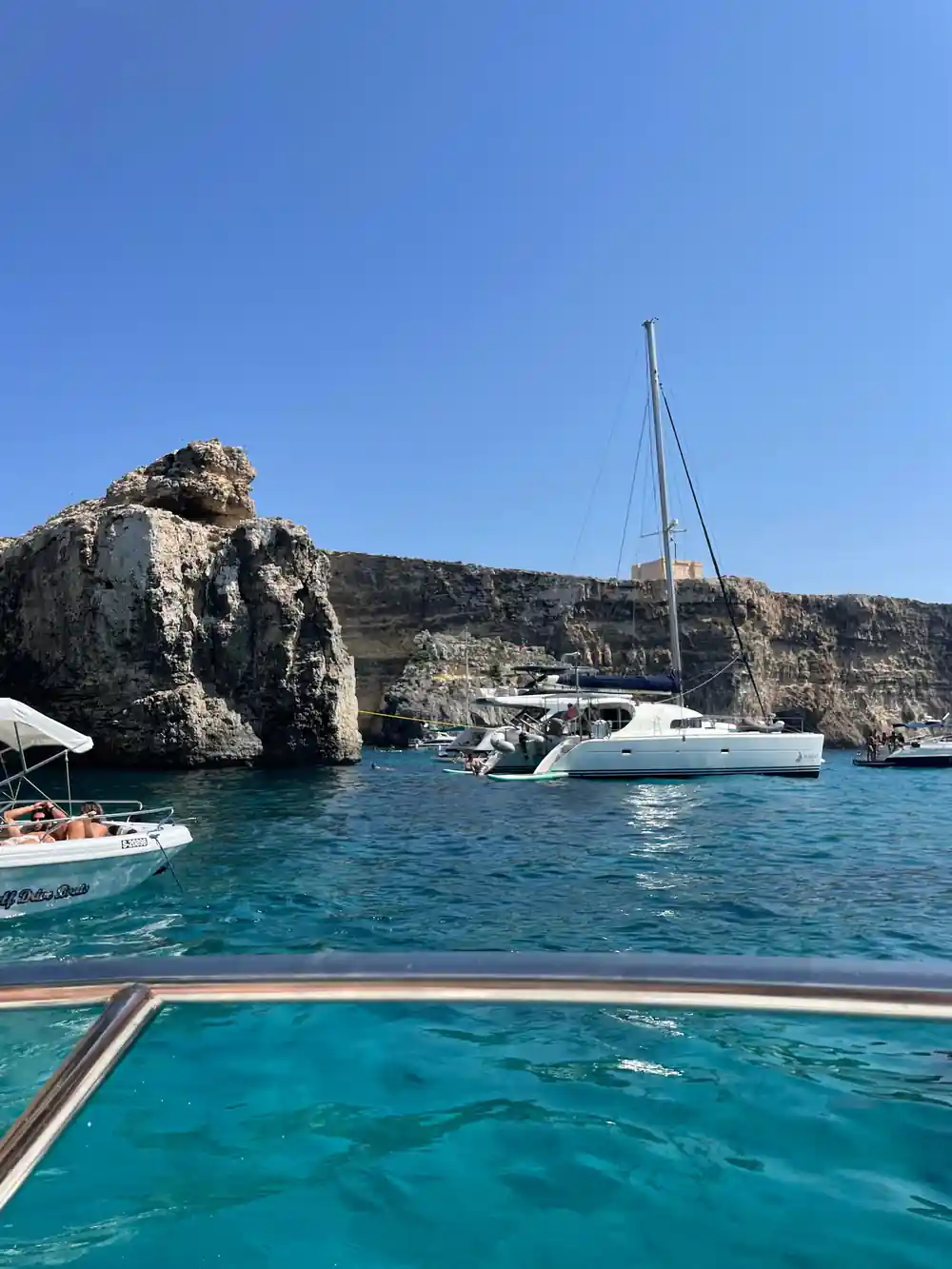
A typical boat day follows a settled rhythm. You board in the morning, motor out past the northern bays, and stop at the sea caves first. The Santa Maria Caves on Comino consist of five caves,[20] and boats nose in slowly enough for you to see the rock overhead. Above the water, Santa Marija Tower was built in the 17th century as part of the Knights of St. John's fortification efforts and was completed in 1618.[21] It is easy to spot from the water on the way past, along with the cliffs and the salt pans on the Gozo shore.
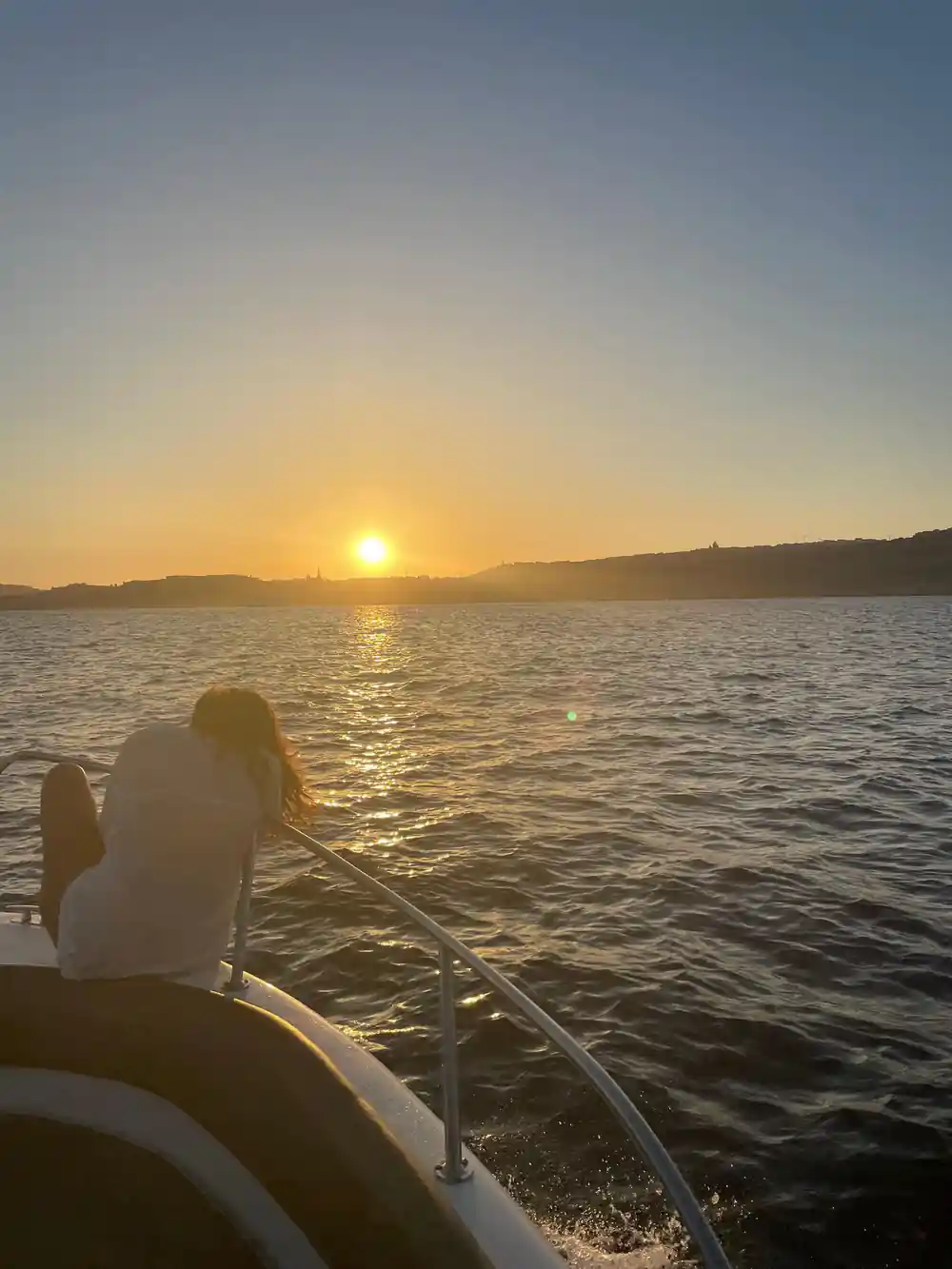
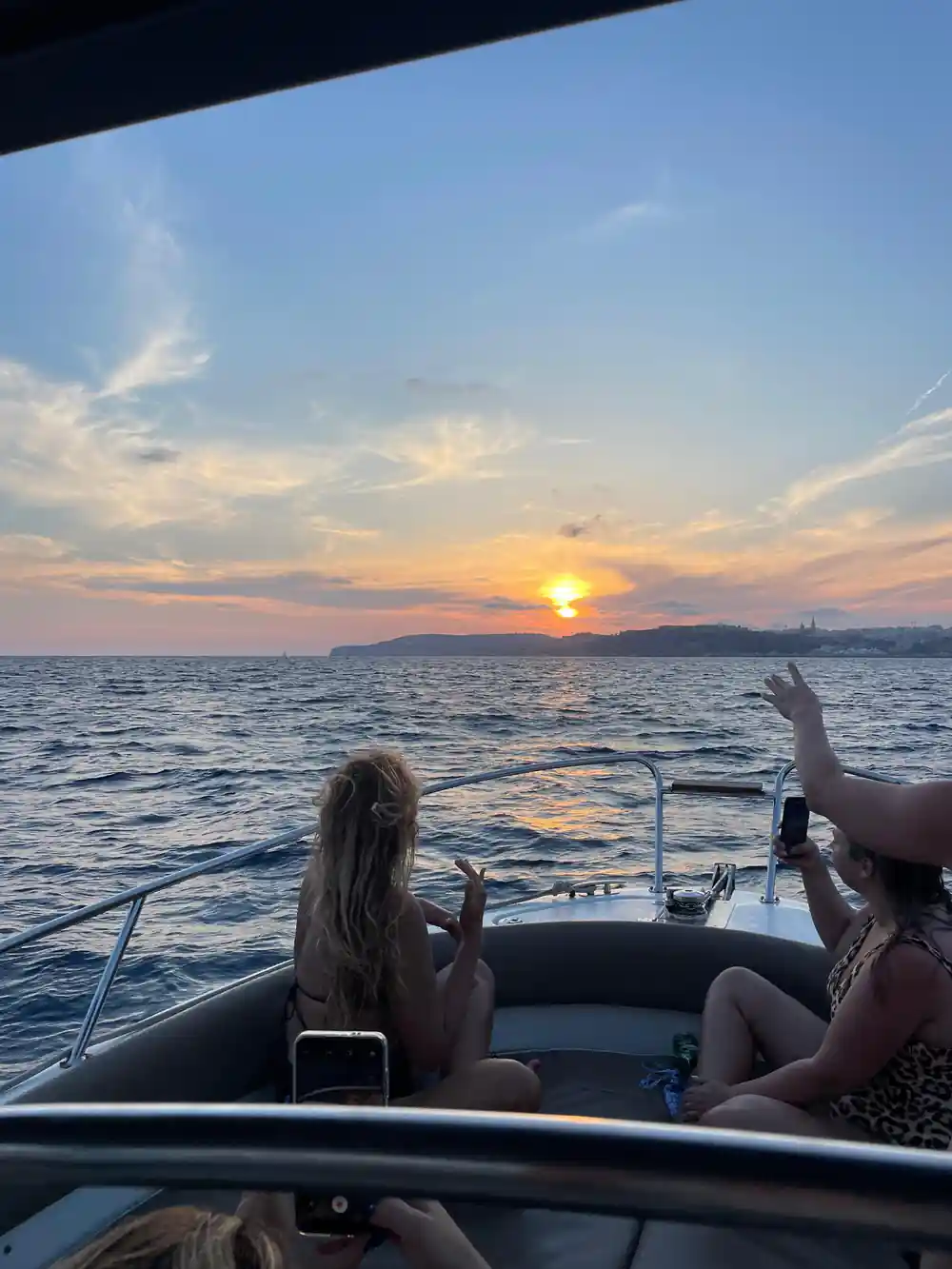
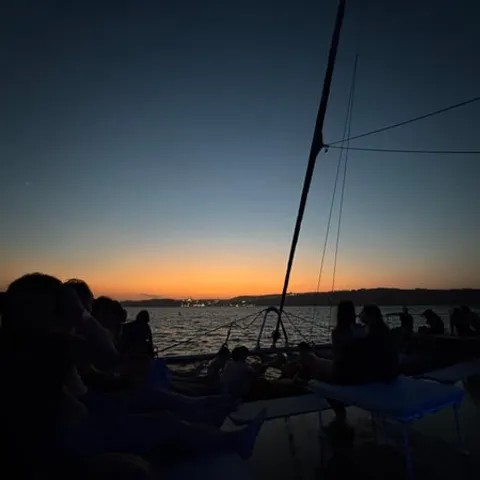
Then the anchor goes down at the Blue Lagoon for a long swim, and often again at Crystal Lagoon a little further along. Some trips carry snorkelling gear and a slide; a Blue Lagoon and Comino cruise with snorkelling, a slide and swim stops runs 4 to 7 hours from US$35.[22] If you would rather end the day on the water, an evening catamaran cruise lasts 5 hours from US$63,[23] and a Blue Lagoon sunset cruise with swimming, snorkelling and a slide runs 3.5 hours from US$29.[24] Morning departures reach the lagoon early, and evening departures catch the light as it drops behind Gozo.
from US$29
A shared Blue Lagoon boat trip around Comino, Gozo and the sea caves starts from US$29 and runs 4 to 7 hours.[8]
Weather, crowds and the seasons to aim for
Summer is glorious and it is busy. In peak summer, in July and August, the Blue Lagoon receives between 2,500 and 3,500 visitors per day.[6] Malta gets almost 3000 hours of sunshine a year, making it the sunniest country in Europe,[10] and in 2024 the country received roughly 3.6 million international tourists.[25] On the busiest summer days, aim for the first departure of the morning.
Water temperatures run from about 26.1°C in August, the warmest month, down to about 15.4°C in February, the coldest.[5] Air temperatures track the same curve: the daily mean is 12.6°C in February and 27.5°C in August, with an annual average of 19.5°C.[26] Late spring and early autumn land between the two extremes.
What to bring and how to book
The private boat tour with swim stops can be reserved now and paid for later, with free cancellation up to 24 hours in advance for a full refund.[4] That flexibility suits a boat day, where wind and swell decide more than any plan does. Starting times vary through the season, so check availability to see the times on offer before you fix the rest of your day.[8]
Pack more water than you think you need, plus a hat and a light long-sleeved top for the crossing. Water shoes help on the pebbly entries, and a dry bag keeps phones and cameras safe when the deck gets wet. Shade on board varies, and the glare off the water is strong, so bring high-factor sunscreen and reapply during the day. A quick-drying towel and a spare swimsuit take up almost no room, and a light waterproof jacket is worth packing out of season.
Pairing Comino with Gozo and the sea caves
Comino takes a morning, and pairing it with Gozo is easy to arrange. A full-day Gozo trip whose listing names the Ggantija Temples and a lunch runs 9 hours from US$92.[27] A Gozo city sightseeing hop-on hop-off bus tour starts from US$25 and is valid for 1 day from first activation.[28] If you want to cover more ground, a Gozo quad bike tour with a Comino boat trip and lunch takes 7 hours from US$133.[29]
The Blue Lagoon has been used as a film location in several big-screen productions,[30] and the shape of the bay may already look familiar before you see it from the water. Sailing past the cliffs of Comino on the way back, with the tower on the ridge above, is the version that stays with you. The crossing back is short, and the light on the water changes through the late afternoon. Book the crossing, keep the afternoon loose, and let the timetable bend around the swimming.
Malta daily mean air temperature by month
Daily mean air temperature by month for Valletta, from 1991 to 2020 climate data.[26]
From-prices in US dollars for Blue Lagoon boat trips
GetYourGuide from-prices in US dollars for the tour listings above.[2][3][4][7][22]
When to book a Blue Lagoon crossing
Plan your Blue Lagoon day
Pick your crossing
Decide between the hourly ferry from Mġarr or Ċirkewwa and a booked trip that leaves from one of the northern harbours.
Choose your hours
Morning departures reach the lagoon early, evening cruises finish on the water, and both avoid the middle of the day.
Check what is included
Some listings include snorkelling gear, a slide, an audio guide or lunch, and others are a bare crossing between the islands.
Pack light and dry
Swimsuit, towel, water, sunscreen and a dry bag cover most boat days, and water shoes help on the rocky entries.
Keep the date flexible
Free cancellation up to 24 hours in advance for a full refund leaves room to change your date.[4]
Pick your boat to the Blue Lagoon and book your seat
from US$195Reserve now & pay later