The essentials
- Pale sand under shallow, clear water reflects light back up, and that returning light is the turquoise you see from the boat.[1]
- The sandy middle is the wadeable part and the edges fall away. Take a mask for the rock at the sides, not the bare sand.
- Average sea temperature at nearby Sliema is warmest in August at about 26.1°C and coldest in February at about 15.4°C.[2]
- Midday light makes the lagoon glow, while the edges of the day are quieter, since peak summer brings 2,500 to 3,500 visitors a day.[3]
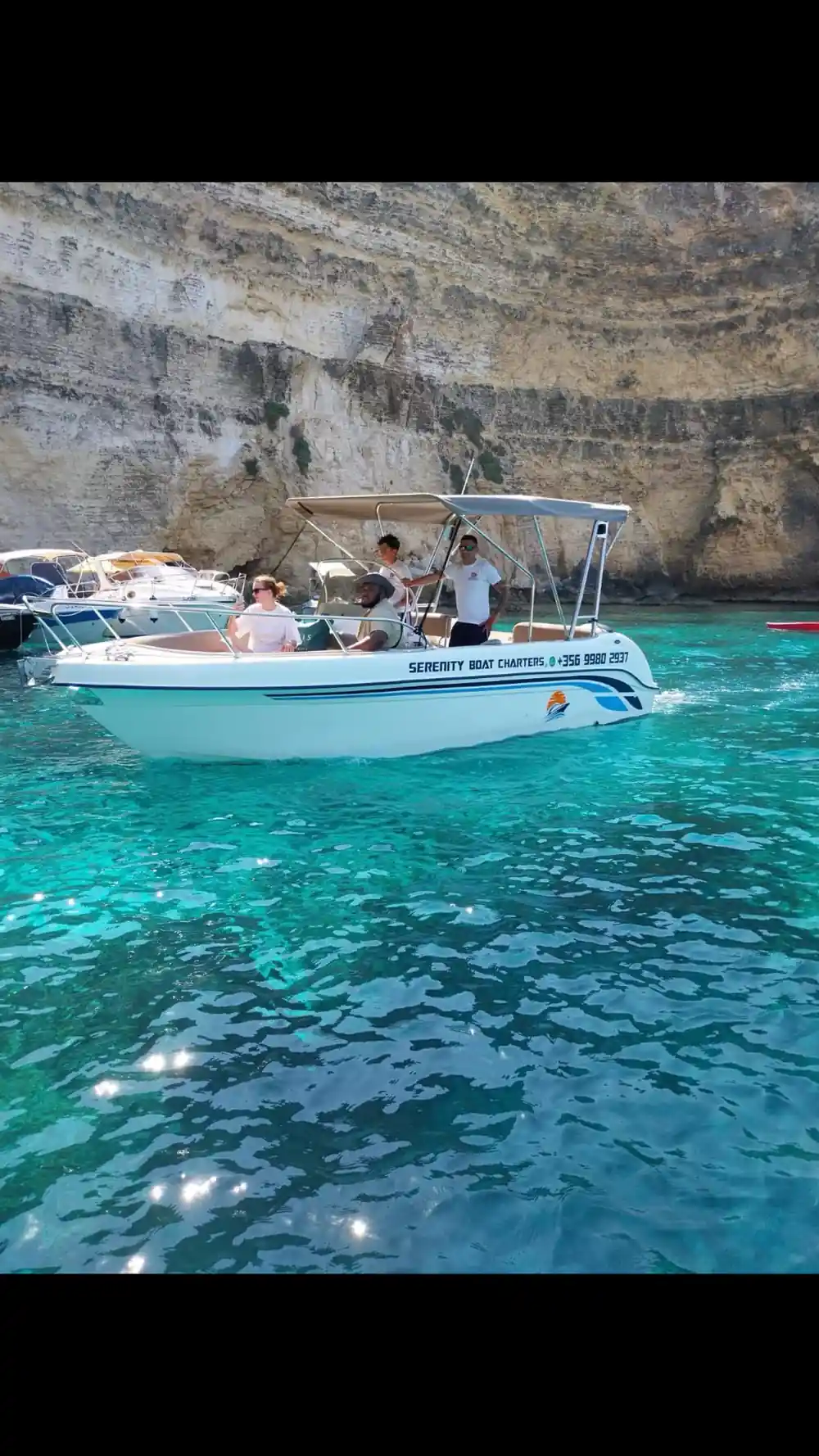
- A private boat tour covering the Blue Lagoon, Comino, Gozo and the sea caves with swim stops starts from US$195.[4]
- Top choice Private boat tour from US$195 Duration2 - 4 hours[4]Rating4.98 from 117 reviews[4]GuideLive guide, English[4]CancellationUp to 24 hours in advance[4] Check availability
- Gozo and Comino day from US$35 Duration7 hours[5]Rating4.45 from 20,111 reviews[5]GuideAudio guide, English[5]CancellationUp to 24 hours in advance[5] See this tour
- Catamaran bays trip from US$63 Duration5 - 6 hours[6]Rating4.68 from 6,838 reviews[6]GuideHost or greeter, English[6]CancellationUp to 24 hours in advance[6] See this tour
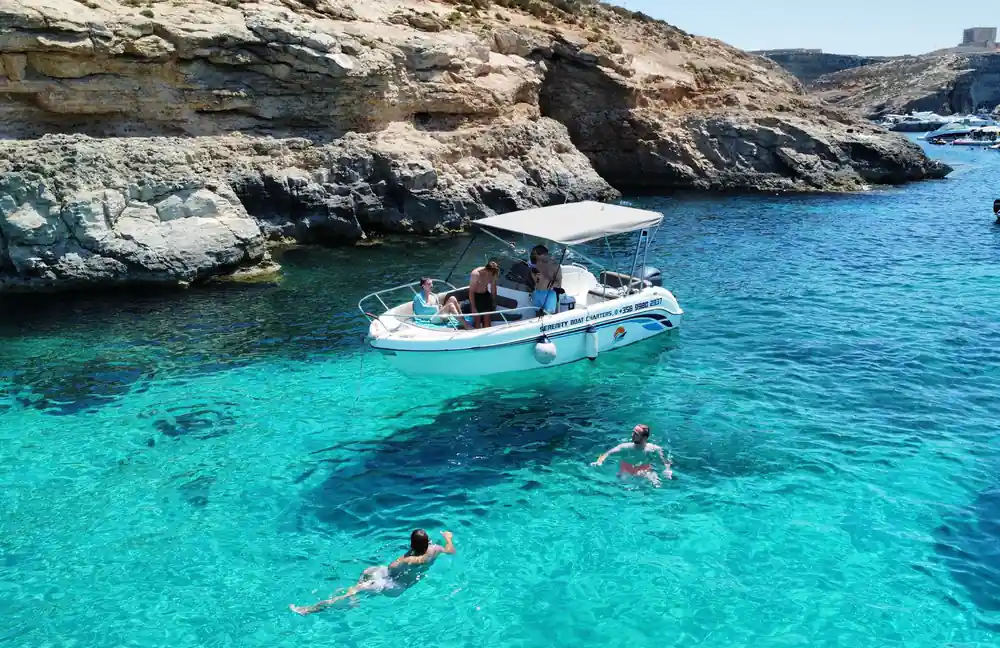
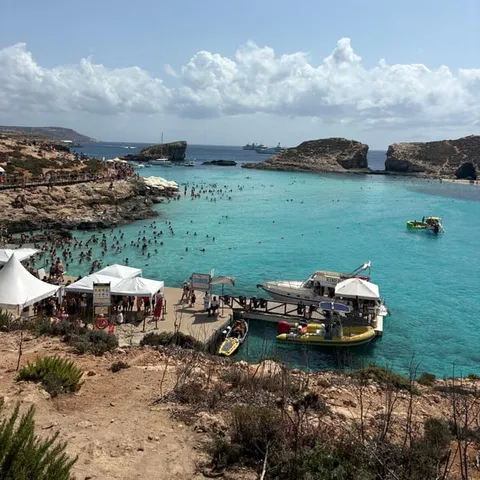
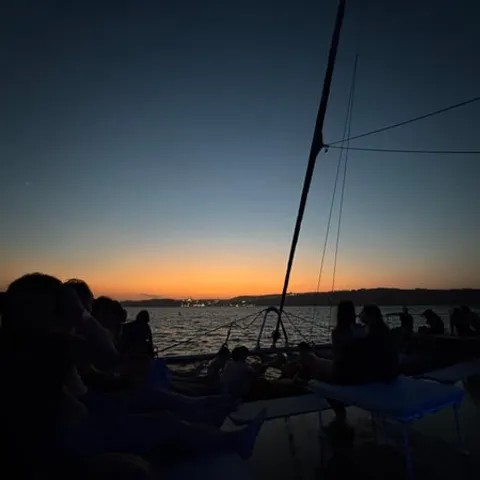
The Santa Maria Caves consist of five caves located on the island of Comino, one of the Maltese islands in the Mediterranean Sea.
Why the Blue Lagoon looks the way it does
Booking tips
Why the Blue Lagoon is that colour
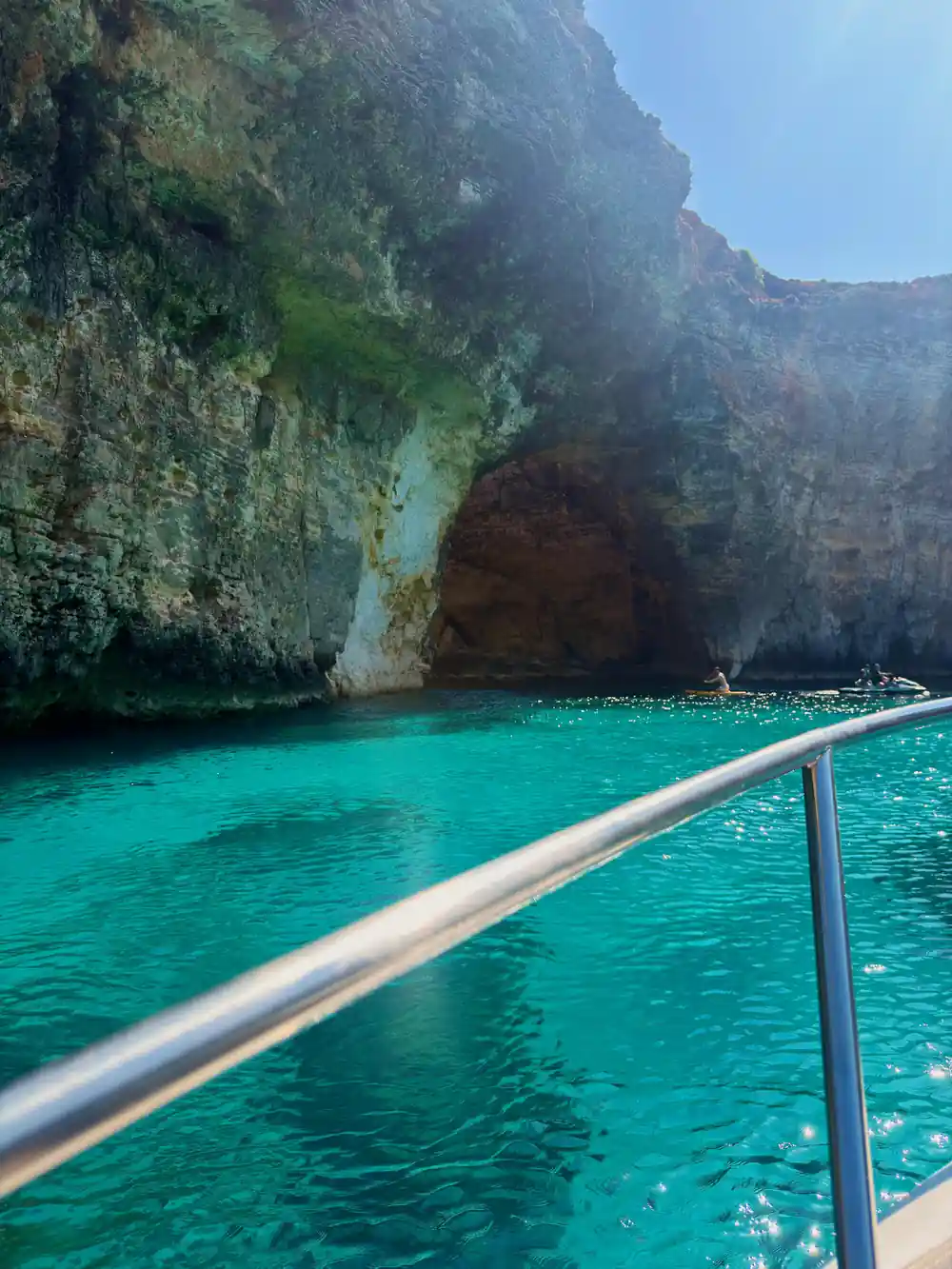
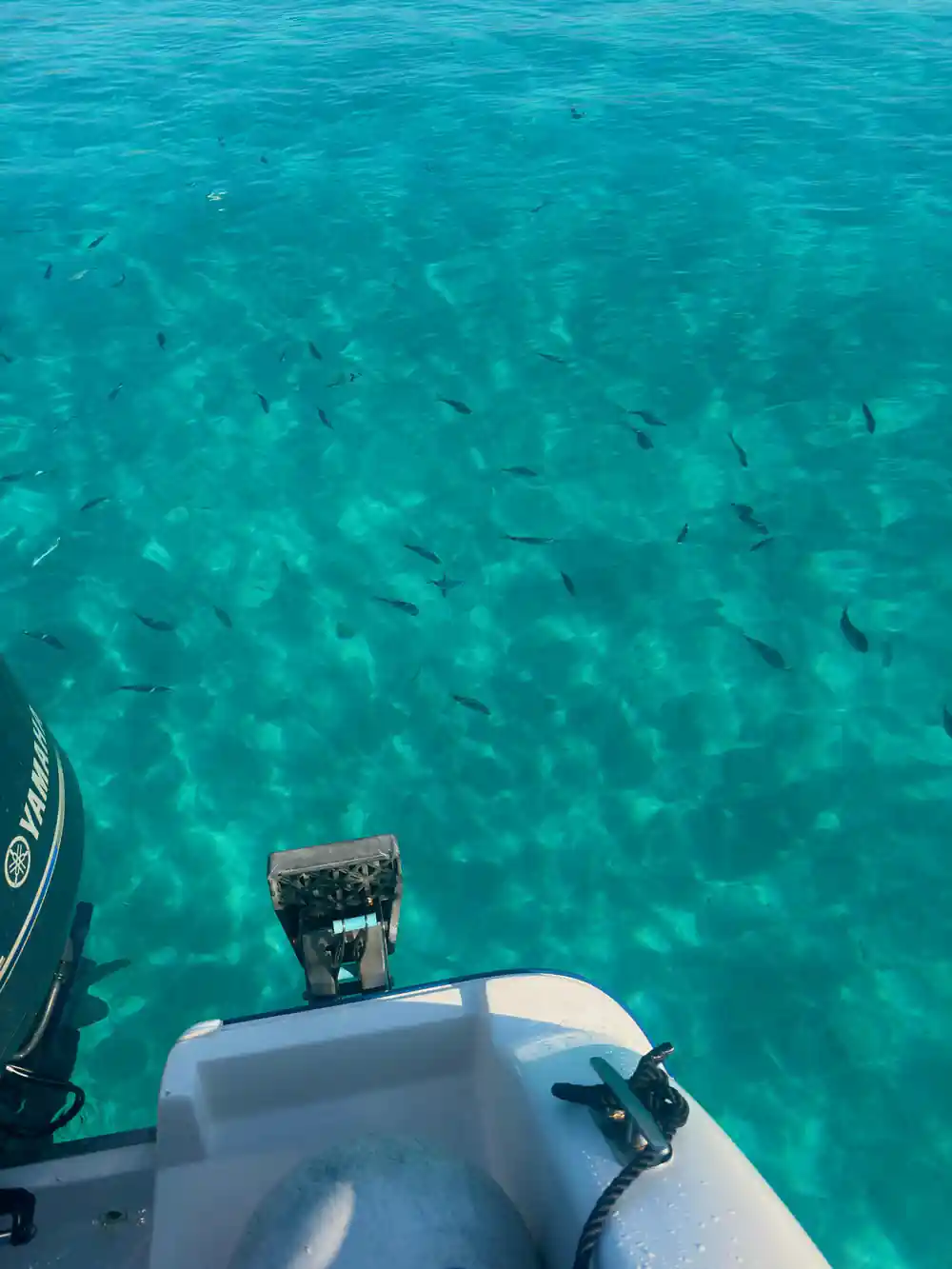
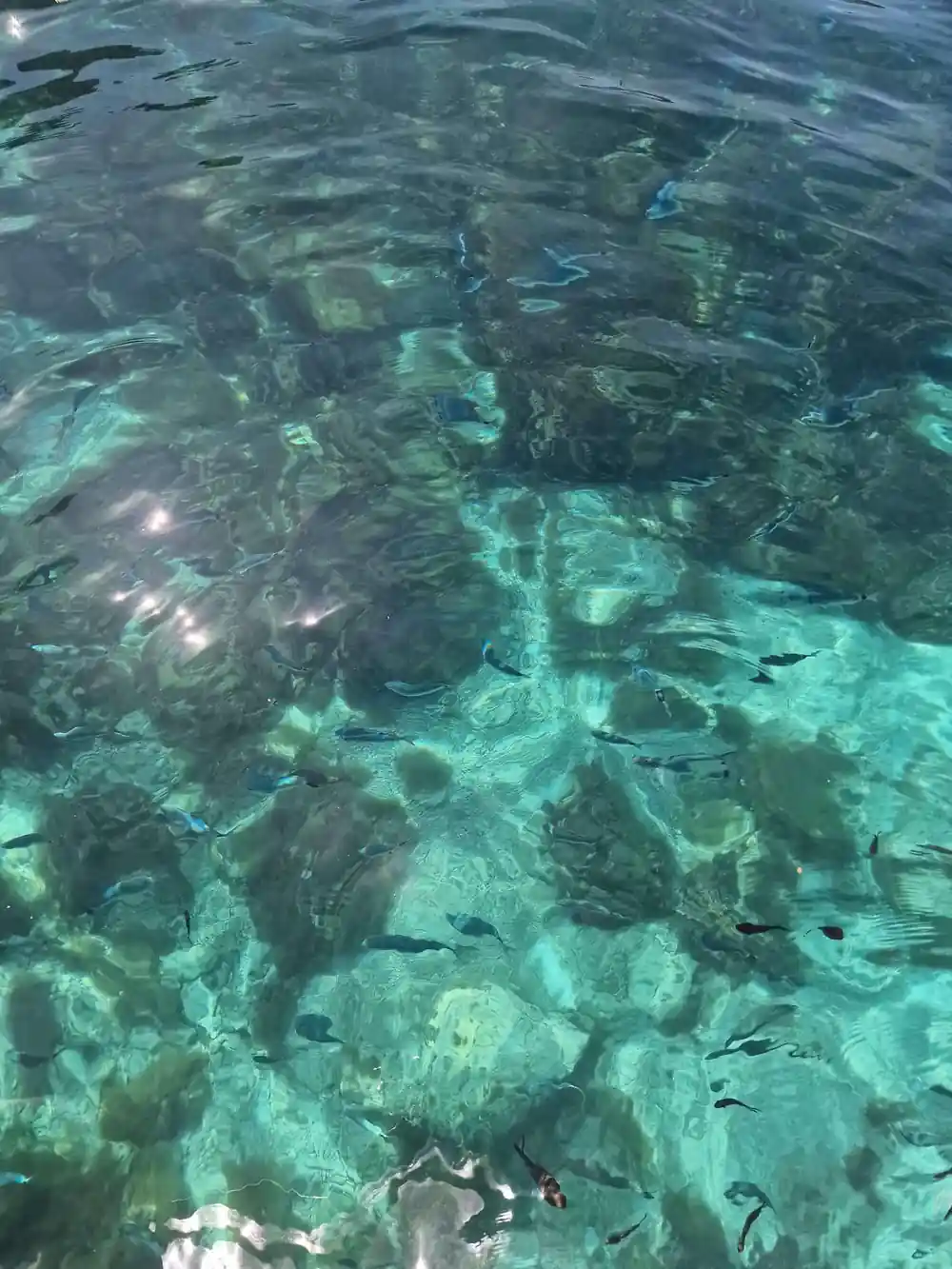
The colour is not a filter and it is not dye in the sea. The Blue Lagoon sits over a floor of pale, almost white sand, and the water above it stays shallow and clear. Sunlight travels down, hits that bright sand and reflects back up through the water to your eye. The turquoise you see is that returning light.[1] It is the question guests ask from the boat: why is Blue Lagoon Malta so blue? The seabed already has the answer.
Shallow water also warms quickly, so the same conditions that make the colour also make the lagoon a place people want to get into. On a still morning the surface goes glassy and the turquoise deepens. Add a breeze and the whole bay turns to glitter. The colour is strongest when you look across the water with the sun behind you, and weakest when you stare straight down into your own shadow.
Blue Lagoon Malta water depth and what lies under it
Blue Lagoon Malta water depth is not one neat number. The sandy middle is the shallow part, the sort of water you can wade through with a bag held above your head, while the edges fall away towards rock and the open channel. That shallowness is exactly what produces the colour: light bounces off the bottom and comes back up to reach your eye.[1]
In practice this shapes your day more than any map does. You do not need to be a strong swimmer to enjoy the sandy shelf, and children can paddle beside the boat. If you book a swim stop, ask to be dropped over the pale sand rather than the darker patches, and take a mask anyway; the bare sand is empty, while the rock at the edges is busy with fish.
One more thing worth knowing: the shallows can be crowded at the same time of day as they are at their most beautiful. If you swim from a boat, your skipper can usually find clear water a short hop from the busiest patch, which is the single biggest advantage of going out on a private boat rather than joining the queue at the shore.
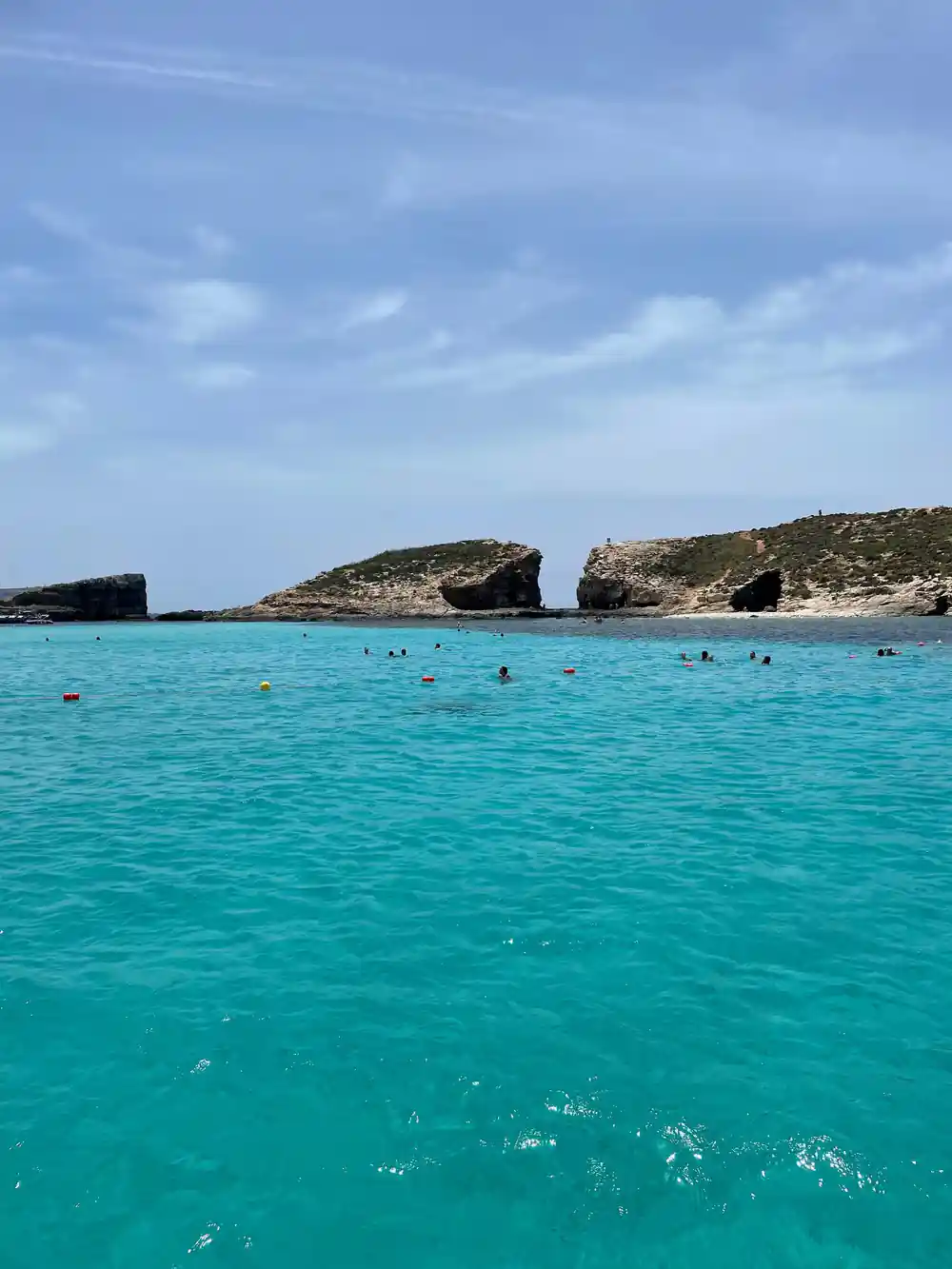
Turquoise shallows over pale sand between Comino and the islet opposite
Why the photographs look unreal
Phone cameras push blues and greens hard, and a wide lens flattens the water into one bright sheet. Drone and cliff-top shots compress the whole bay into a small frame, so the sand, the shallows, the boats and the deeper water crowd together. Your eye separates them instead: the glare on the surface, the wobble of the water, the chill at your ankles. The Blue Lagoon Malta water is at its clearest when the wind drops, since a chop scatters light and mutes the colour.
Nothing about the colour itself is exaggerated, but timing and vantage point do a lot of work. A shot taken at midday with the sun high and the water calm will look more saturated than the same view later, when shadows from the cliffs cross the sand. If you want the postcard version with your own eyes, swim in the bright middle hours rather than waiting for the golden hour, which flatters the sky more than it flatters the water.
Why the hour changes what you see
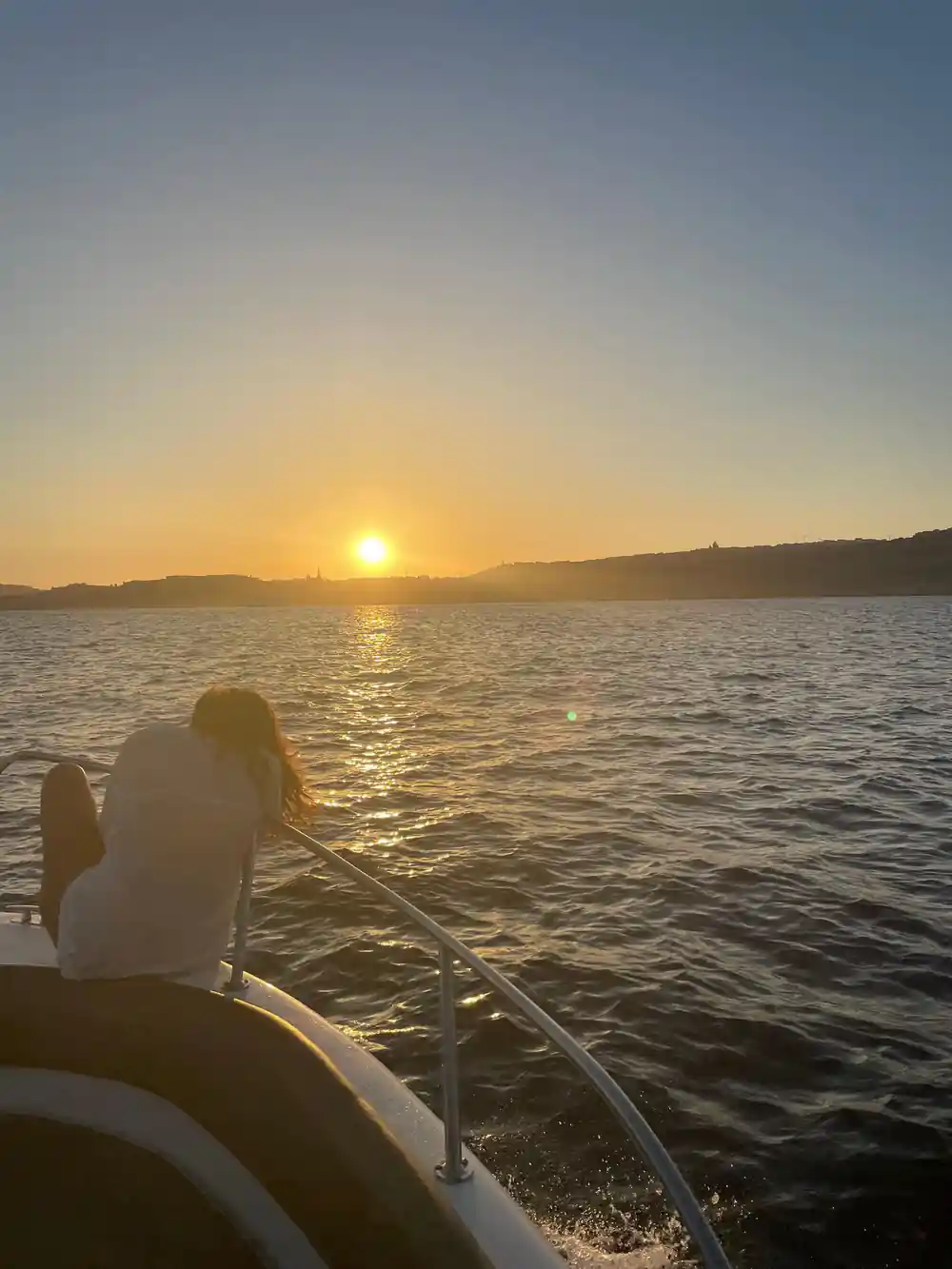
Malta gets almost 3000 hours of sunshine a year and is the sunniest country in Europe, so light is rarely in short supply.[7] What changes through the day is the angle. With the sun high overhead the lagoon is at its most luminous, and the sandy bottom shows through as a wide pale patch. Early and late, light comes in sideways, the water takes on a harder blue, and the cliffs throw long shadows across the shallows.
Crowds follow the same clock. In peak summer the Blue Lagoon receives between 2,500 and 3,500 visitors per day, so the quietest hours sit at the edges of the day rather than in the middle.[3] A private boat gives you the freedom to arrive before the big groups build up, to move across to Crystal Lagoon or Santa Maria Bay when the main lagoon fills, and to come back when it empties again.
If you are planning photographs, think about the direction you will be facing rather than the clock alone. Morning light comes across the water and lights the cliffs on the far side, while afternoon light warms the sand and turns the moored boats gold. Either way, the colour is at its most intense in the middle of a bright, still day.
from US$195
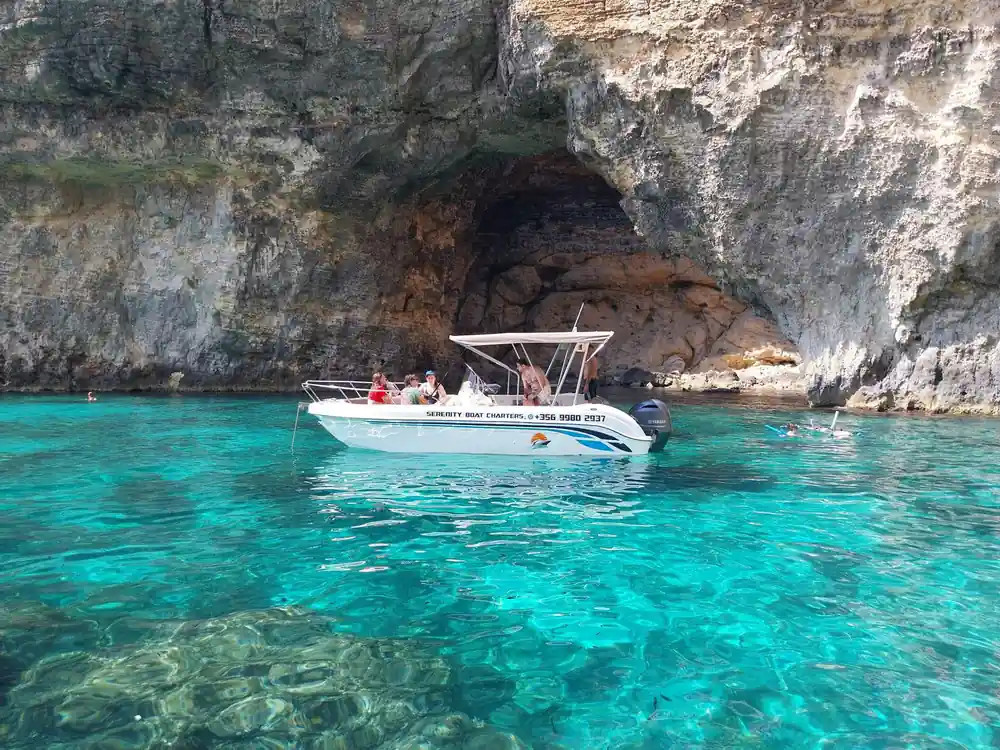
Private boat tour Malta: Bluelagoon Comino Gozo & Sea Caves with swim stops, private group, live English guide.[4]
Through the year: water and air temperature
Blue Lagoon Malta water temperature swings a long way between winter and summer. The average sea temperature at Sliema, the nearest reference point on the Malta side, is warmest in August at about 26.1°C and coldest in February at about 15.4°C.[2] That leaves a long, comfortable stretch for swimming either side of high summer, and a bracing dip for the brave in the cold months.
Air temperature follows the same rhythm. Daily mean air temperature in Valletta runs from 12.6°C in February to 27.5°C in August, with an annual average of 19.5°C.[8] Sunshine is rarely the problem on these islands; wind is. A brisk breeze can take the shine off a summer afternoon on the water, while a still, calm day earlier in the season often feels warmer than a gusty one at the height of summer.
Cominotto and the caves opposite
The Blue Lagoon is not quite one bay. Cominotto, the low islet across the channel, shelters it on one side, and the water between the two islands is the calm, pale part everybody photographs. Comino itself has an official population of four and is a bird sanctuary and nature reserve, protected as a Natura 2000 marine protected area, so what you are looking at is mostly rock, scrub, cliffs and birds.[9][10]
The cliffs and the sea caves are the other half of the story. The Santa Maria Caves on Comino consist of five caves, and boats nose into them on calm days when the swell allows.[11] Yelkouan shearwaters breed on the island's cliffs, with an estimated 150-220 pairs nesting there, so the rock faces are busier than they look from the water.[12] Higher up, Santa Marija Tower was completed in 1618 as part of the Knights of St John's coastal defences.[13] The lagoon has also appeared in several big-screen productions.[14]
How it compares with the rest of Comino
The Blue Lagoon's colour comes from sand and shallows, and plenty of Mediterranean coves have neither. Crystal Lagoon, round the corner on Comino, is deeper and greener, with rock rather than pale sand under the boat. Santa Maria Bay is quieter and often calmer. Malta's own beaches, from Mellieha round to the south coast, mix sand, pebbles and flat rock, and their water reads differently from one bay to the next.
Getting there is straightforward. Ebsons provides a pick up and drop off ferry service from Mġarr on Gozo and Ċirkewwa on Malta to the Blue Lagoon, and the trip takes approximately 15 minutes each way.[15] Ferries keep to a timetable and do not detour to the caves, which is where a boat trip earns its place. The private boat tour from this site covers the Blue Lagoon, Comino, Gozo and the sea caves with swim stops, from US$195.[4]
One last piece of planning advice: the lagoon, the caves, Crystal Lagoon and Santa Maria Bay all sit within a short boat ride of each other, so the order you see them in matters less than how much time you leave between them. A morning start gives you calmer water and more room on the sand before the day boats arrive.
Valletta daily mean air temperature by month
Daily mean air temperatures for Valletta, Malta, based on 1991-2020 climate data.[8]
What a boat day costs
From-prices of the GetYourGuide listings shown.[4][5][6][16]
When to go, hour by hour and month by month
How to plan a lagoon day
Choose your base
Start from where you are staying. Ferries leave from Ċirkewwa on Malta and Mġarr on Gozo, and the crossing takes approximately 15 minutes each way.[15]
Decide ferry or boat
The ferry drops you at the Blue Lagoon and keeps to its timetable. A boat trip adds the sea caves, Crystal Lagoon and Santa Maria Bay.
Book the private boat
This site's private boat tour covers the Blue Lagoon, Comino, Gozo and the sea caves with swim stops, from US$195.[4]
Pack for water
Bring a mask, a rash vest, drinking water and something dry to sit on. Sand is soft, rock is sharp and shade is scarce.
Time your swim
Swim in the bright middle hours for the strongest colour. Starting times are confirmed when you check availability.[4]
See the colour from the water, not from the car park
from US$195Reserve now & pay later