The essentials
- The turquoise colour comes from light reflecting back up through shallow, clear water from the white sand below.[1]
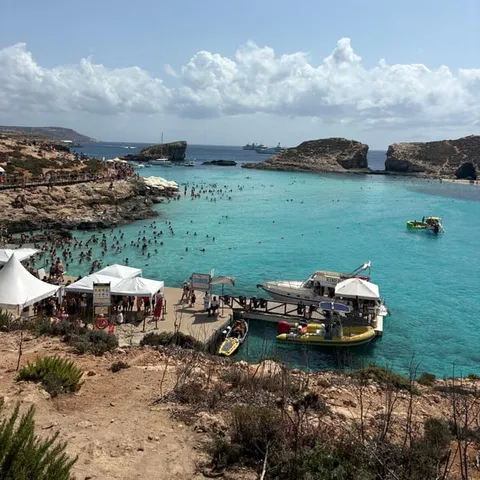
- In July and August the Blue Lagoon receives between 2,500 and 3,500 visitors per day. Come early, or outside peak season, for calmer water.[2]
- The Ebsons ferry crossing from Mġarr on Gozo or Ċirkewwa on Malta to the Blue Lagoon takes approximately 15 minutes each way.[3]
- Average sea water at Sliema is warmest in August at about 26.1°C and coldest in February at about 15.4°C.[4]
- The private boat tour to the Blue Lagoon, Comino and Gozo runs 2 - 4 hours, with a live English guide and free cancellation up to 24 hours in advance.[5]
- Top choice Private boat & swim stops from US$195 Rating4.98 from 117 reviews[5]Duration2 - 4 hours[5]GuideLive tour guide: English[5]CancellationFree cancellation, 24 hours[5] Check availability
- Gozo & Comino day tour from US$35 Rating4.45 from 20,111 reviews[6]Duration7 hours[6]GuideAudio guide included[6]CancellationFree cancellation, 24 hours[6] See this tour
- Comino cruise from Sliema from US$40 Rating4.53 from 7,774 reviews[7]Duration5.5 - 7.5 hours[7]GuideDriver: English[7]CancellationFree cancellation, 24 hours[7] See this tour
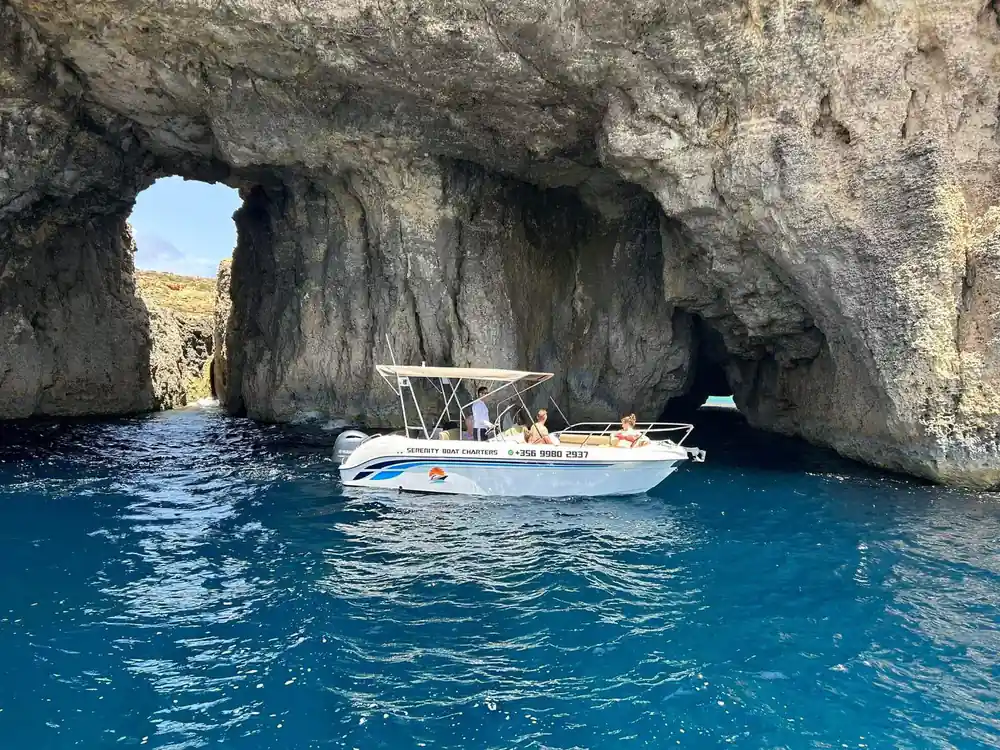
The Santa Maria Caves consist of five caves located on the island of Comino, one of the Maltese islands in the Mediterranean Sea.
Snorkelling the Blue Lagoon: is a private boat worth it?
Trip prep
What the Blue Lagoon is like underwater
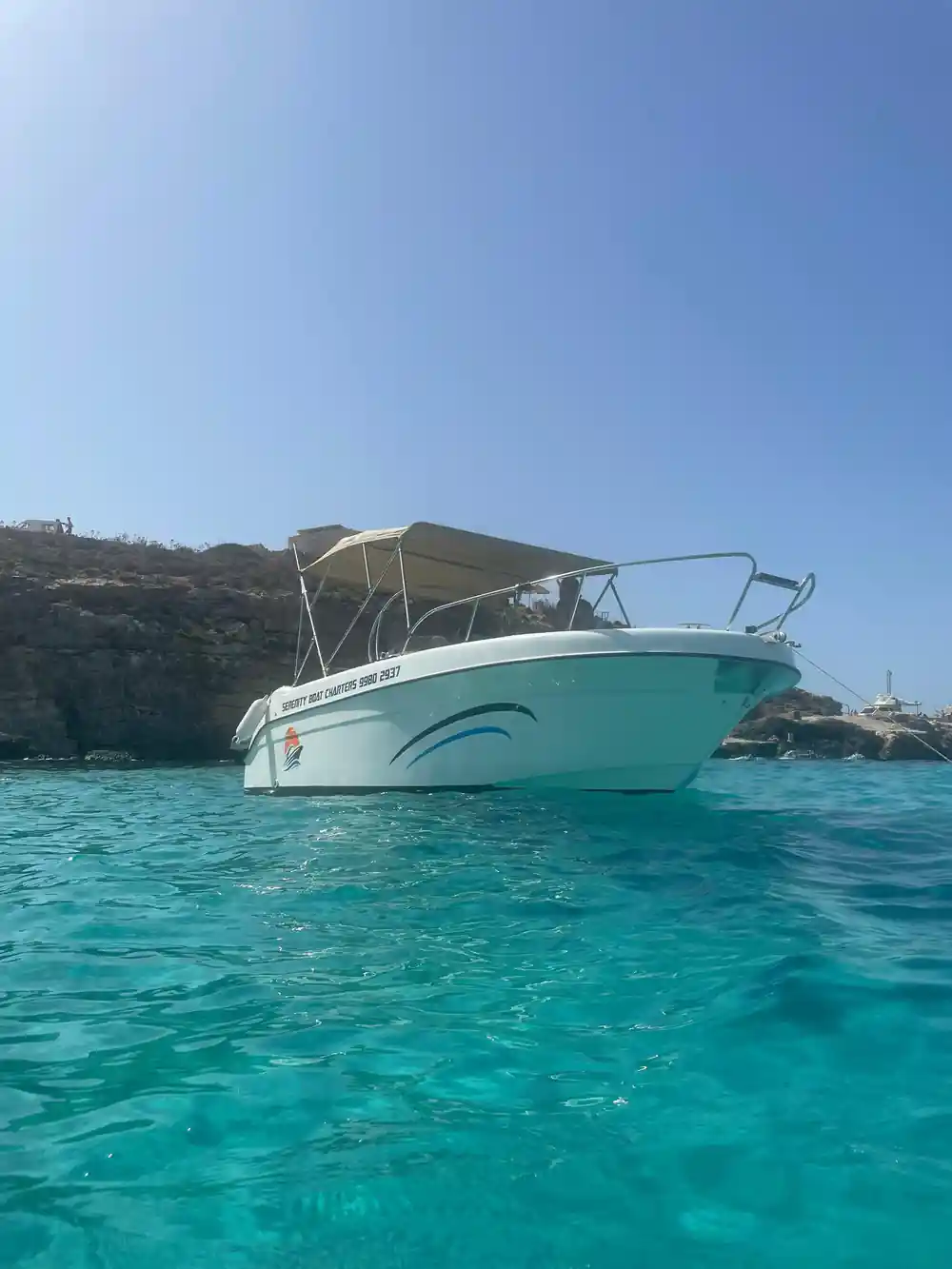
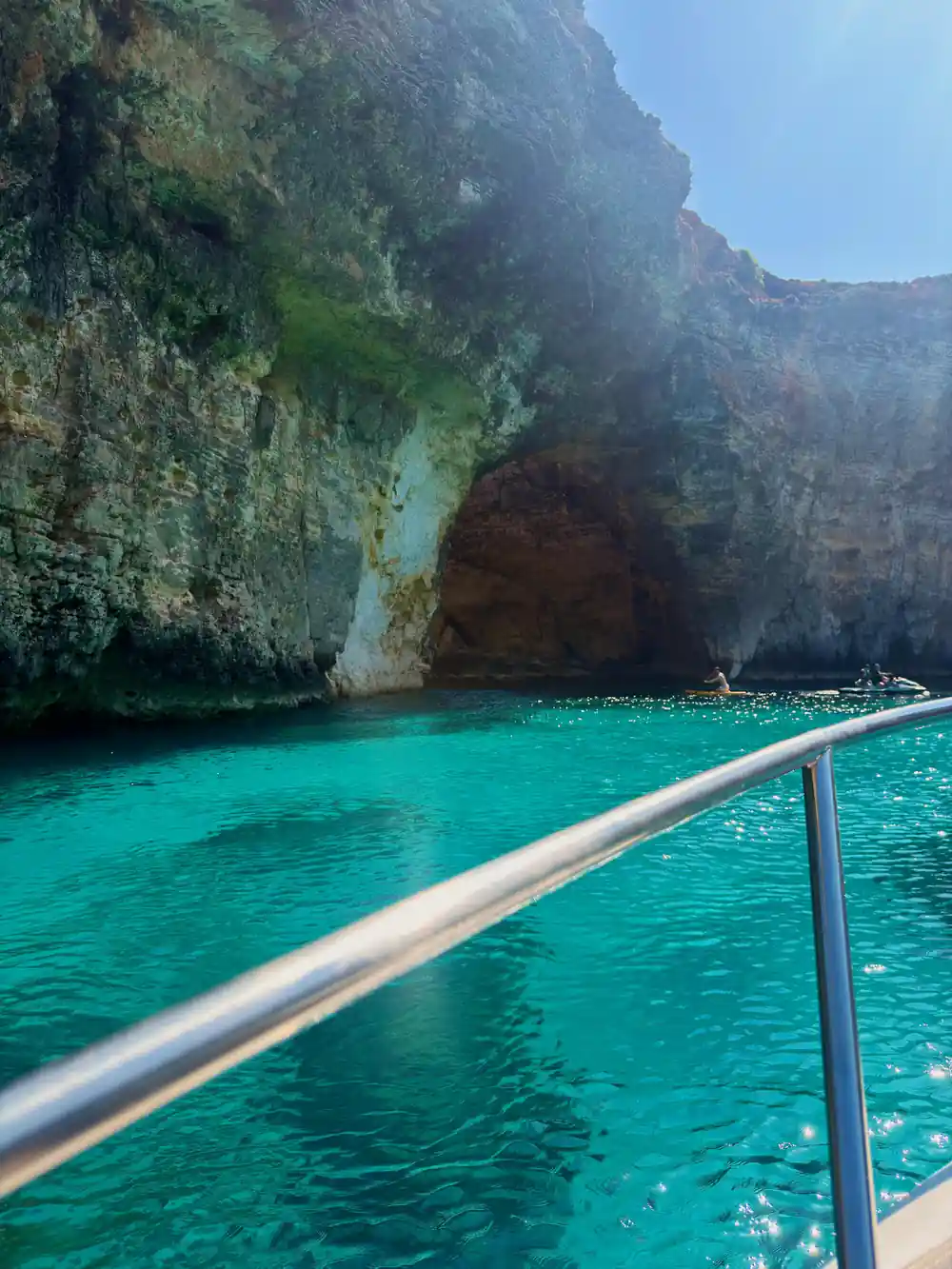
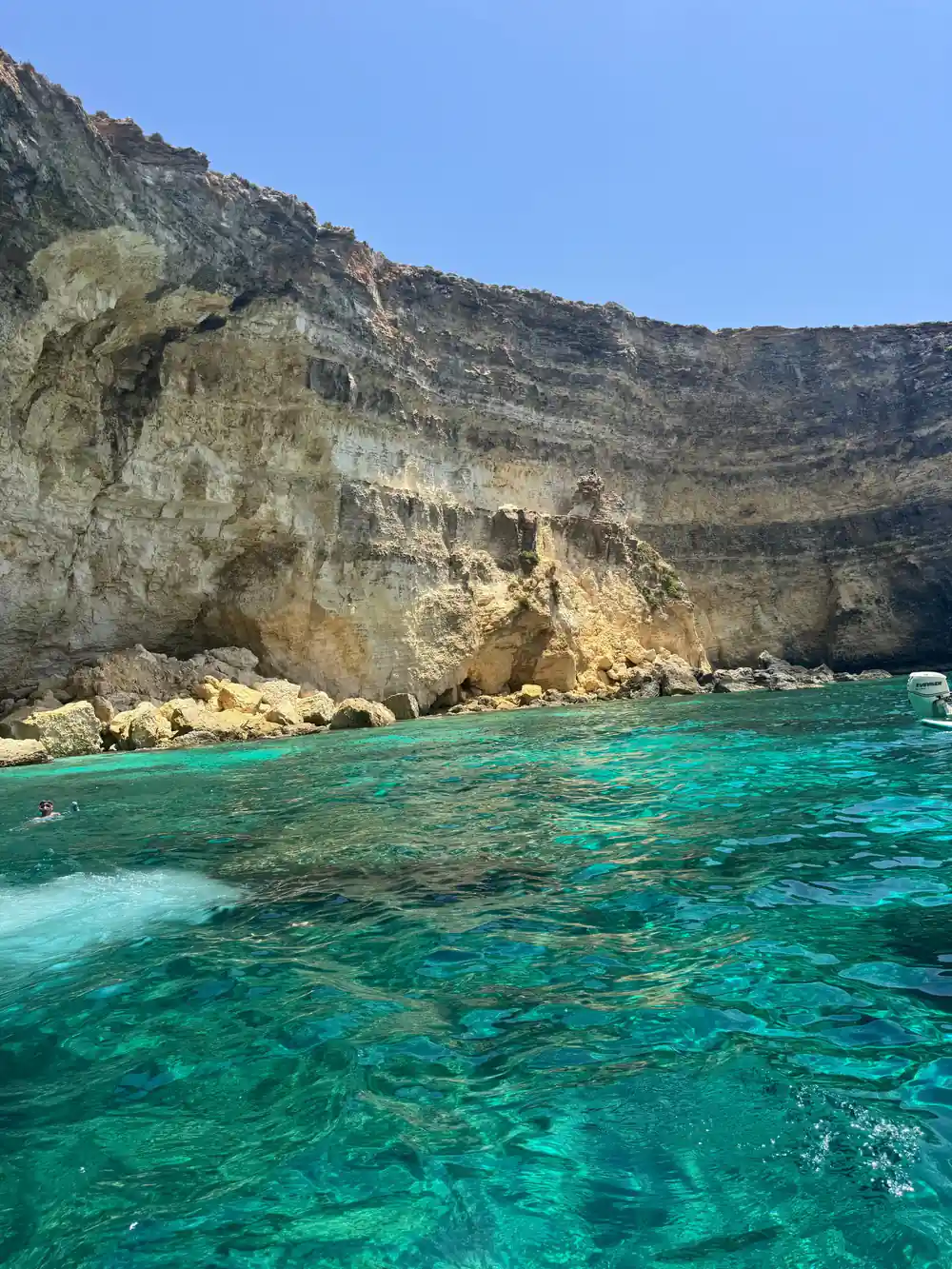
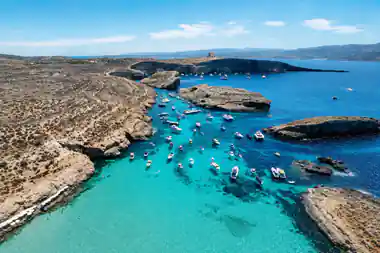
The water at the Blue Lagoon is the reason most people come to Comino. It is shallow over pale sand, and the turquoise colour comes from light reflecting back up through that shallow, clear water from the white sand below.[1] On a still morning you can see the seabed from the deck of a boat, and once your mask is on the whole lagoon turns into an easy, bright place to swim. The sand is broken up by darker patches of seagrass, and that is where most of the life sits.
Do not come expecting a coral reef. This is the Mediterranean, and the habitat is seagrass, sand and limestone rock, so the pleasure is in the clarity rather than in colour. You will see wrasse, bream, small shoals hovering over the weed and, if you are patient and still, an octopus tucked into a hole in the rock. In July and August the Blue Lagoon receives between 2,500 and 3,500 visitors per day, and the water feels completely different on those days.[2]
Where the life is
Look at the edges rather than the middle. Fish gather where sand meets seagrass, along rock walls and in the shadow under a cliff. At the Blue Lagoon the bright sandy middle is for swimming and for photographs; the interesting water is a short fin away, where the seabed turns darker and there is something to hide behind. Snorkel slowly, keep your fins still and let the fish come back to you.
Comino is a bird sanctuary and nature reserve, part of the Natura 2000 marine protected area.[9] Its cliffs hold the Yelkouan shearwater, a small seabird, with an estimated 150-220 pairs nesting on the island.[10] You are unlikely to meet one underwater. Keep a respectful distance from the cliff faces all the same, and leave the caves to the birds.
If you only have one snorkel in you, spend it on a slow lap of the rocky edge. Pick a landmark on shore, swim a line out, then turn and come back along the same route. You will see far more on the second pass, when everything has settled again behind you.
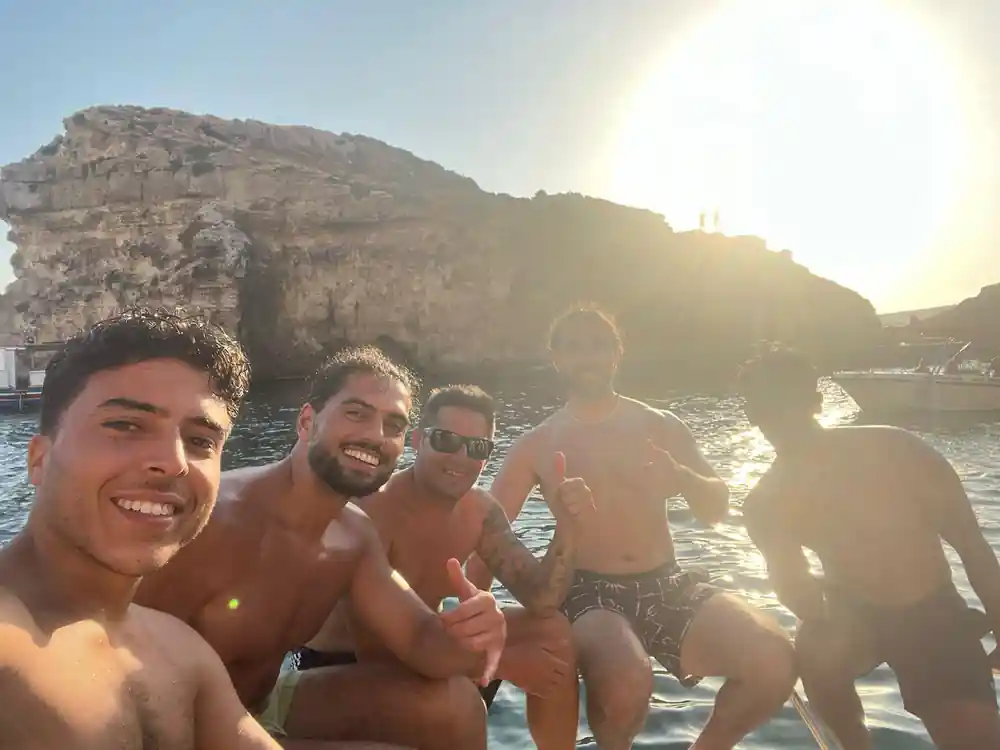
Morning light over the shallows, before the day boats arrive from Malta and Gozo.
Depth and getting in
The easiest entry is from the sand, where you can wade to waist depth and put your mask on without any pressure. The bottom shelves gently in some spots and drops away in others, so read the colour instead of guessing: pale sand means shallow, darker patches mean seagrass or deeper rock. From a boat, ask the skipper to stop where you can step off into clear water, and check that the ladder is down before you jump.
Fins make a real difference here. They let you cross the sandy gaps without tiring and give you power if a current pushes you sideways. A rash vest keeps the sun off your back and takes the chill off a long swim, and a mask that fits your face is worth more than any other piece of kit. Rinse everything in fresh water at the end of the day so the salt does not dry on the lenses.
Water temperature, wind and light
Average sea water temperature at Sliema is warmest in August at about 26.1°C and coldest in February at about 15.4°C.[4] Daily mean air temperature in Malta runs from 12.6°C in February to 27.5°C in August, with an annual average of 19.5°C.[11] In high summer the shallows feel like a bath. In spring and autumn you will be glad of a thin neoprene top, especially if you plan to stay in for an hour at a time.
Malta gets almost 3000 hours of sunshine a year and is the sunniest country in Europe.[12] That means strong light on your shoulders even when the air feels mild, and a lot of glare coming off the water. Wind matters more than sunshine for snorkelling. The lagoon is sheltered, but the channel around Comino can turn choppy and the surface gets messy at the mouth of the caves. If the forecast looks breezy, swim in the morning and stay inside the lagoon.
from US$195
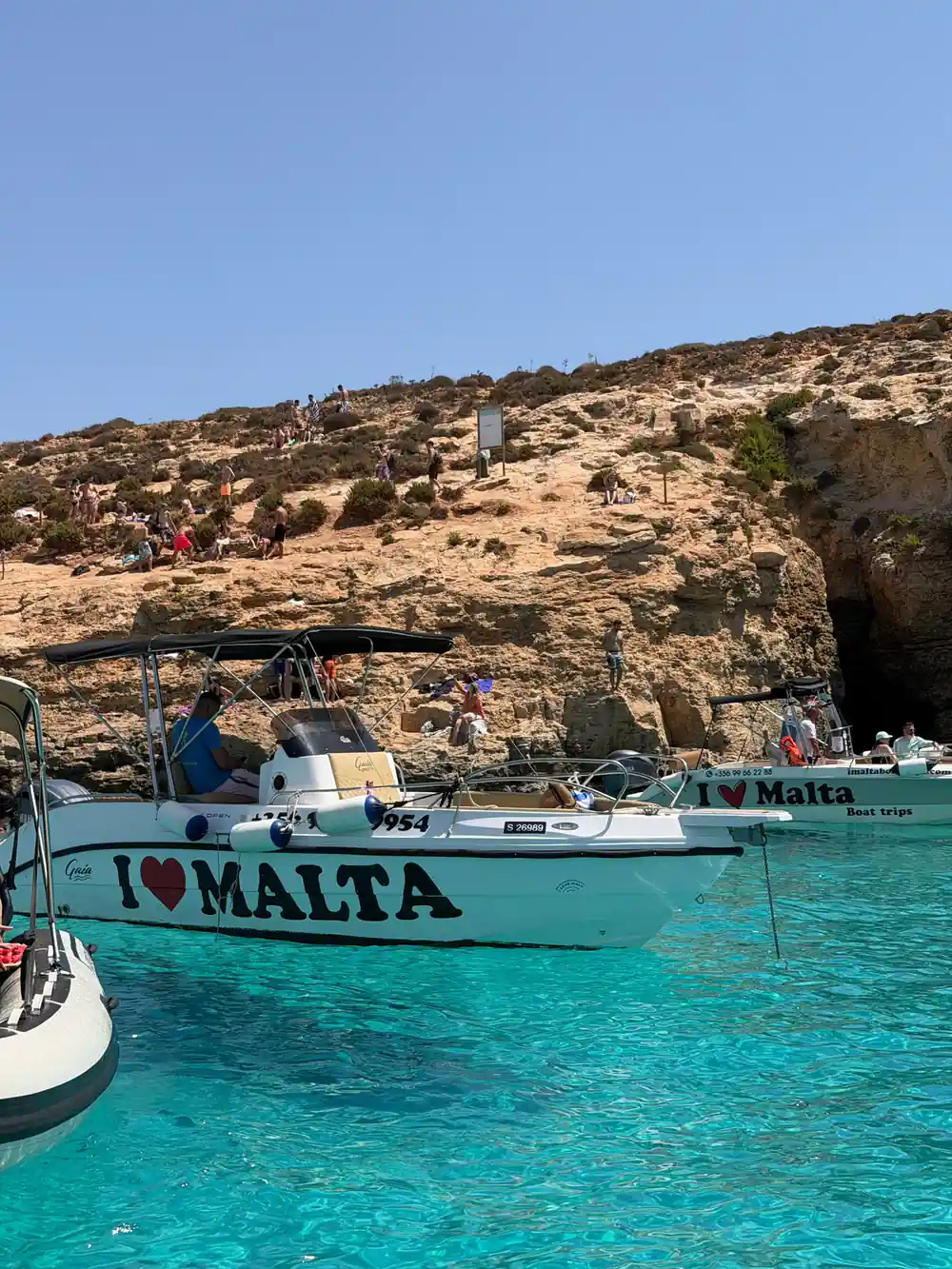
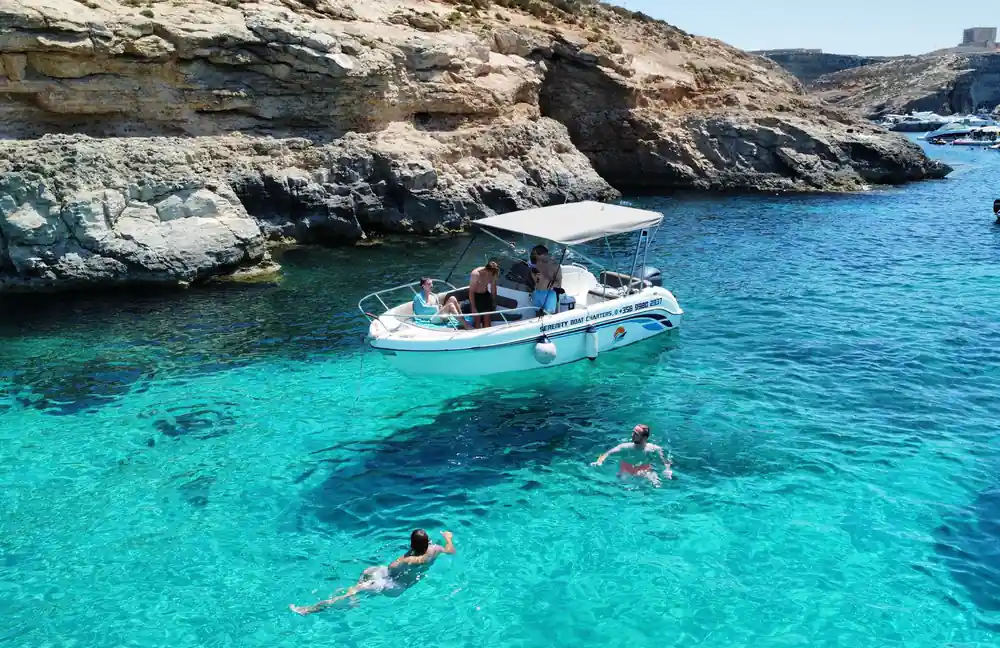
Private boat tour to the Blue Lagoon, Comino and Gozo, with sea caves, swim stops and a live English-speaking guide.[5]
Snorkelling with children
The Blue Lagoon suits children because the entry is gradual and the water is clear enough for them to see the bottom under their own feet. Take them in from the sand a step at a time, keep them on the shallow side of the crowd and put something brightly coloured on them so you can pick them out from a distance. A nervous child usually settles once they have floated over a patch of seagrass and spotted a fish.
A boat is a good base for families, because there is somewhere dry to sit, drink and warm up between swims, and you can move on when the little ones have had enough. The private boat tour to the Blue Lagoon, Comino and Gozo runs for 2 - 4 hours and is wheelchair accessible.[5]
Snorkelling around the sea caves
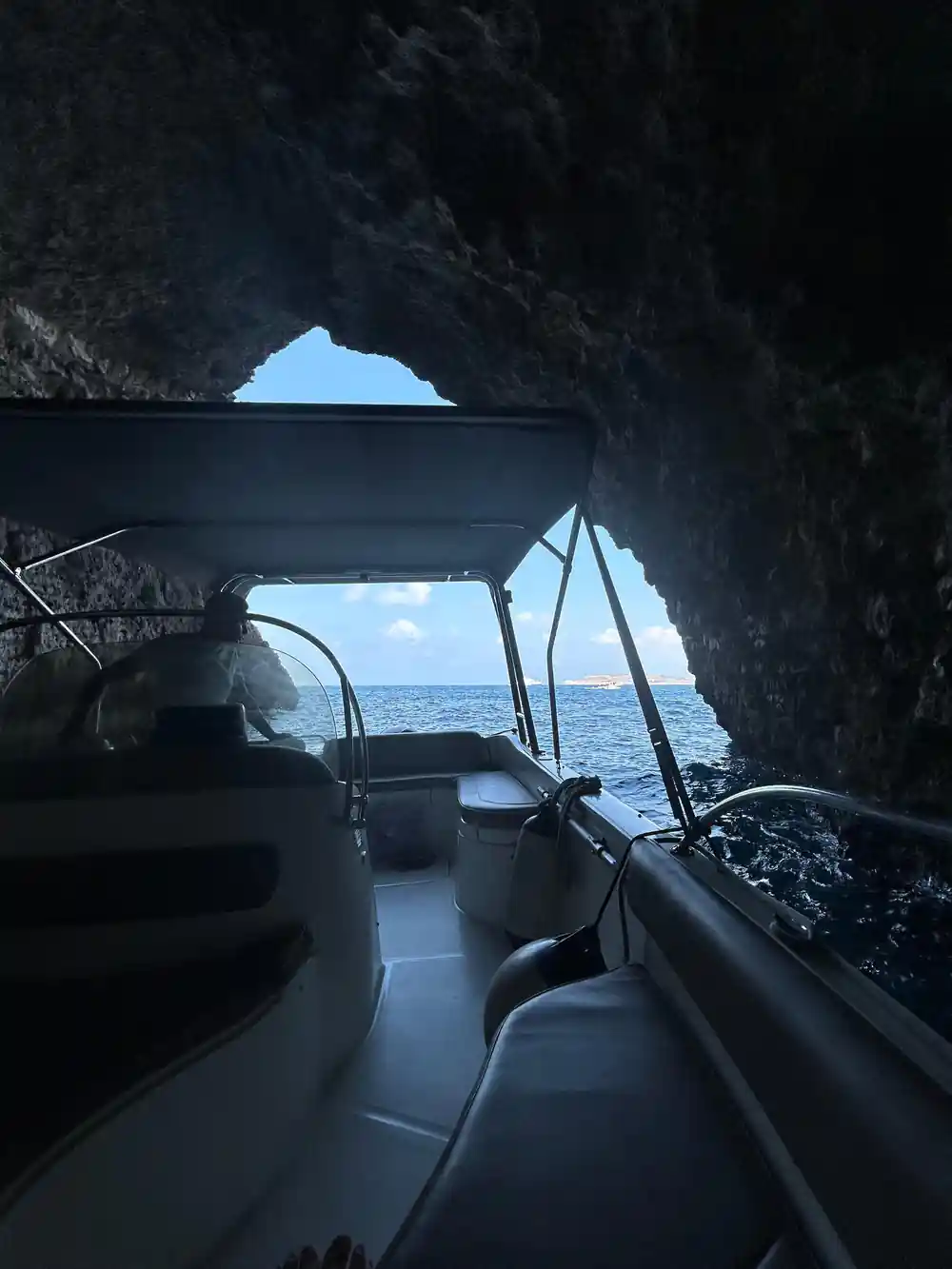
The Santa Maria Caves consist of five caves on the island of Comino.[13] They open in the cliffs at the waterline, which makes them a favourite stop on boat trips when the sea is calm, and the light bouncing off the water inside is what people remember. Hover at the mouth and look in rather than swimming deep into the dark, both for your own safety and for the sake of the rock and the birds.
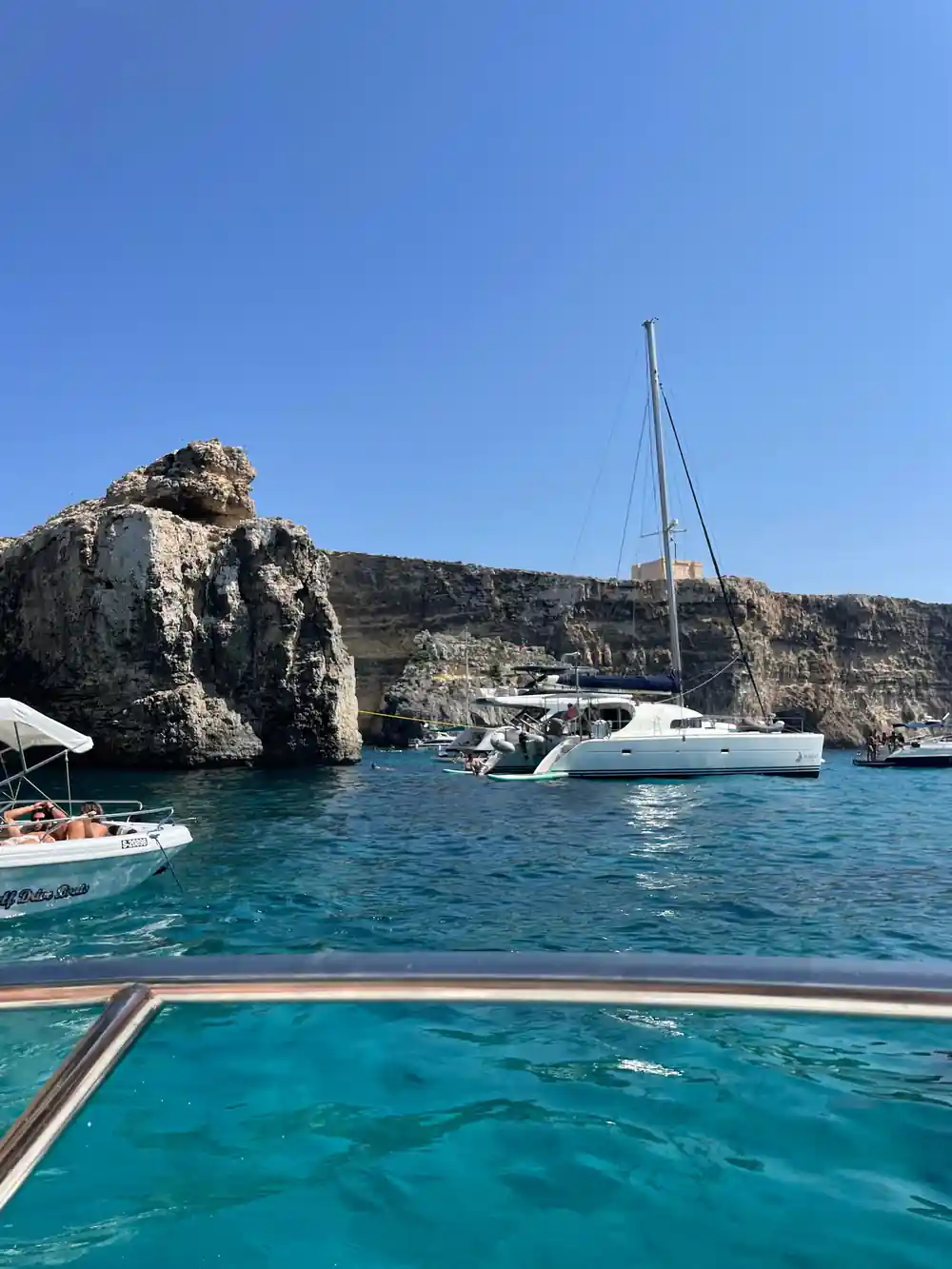
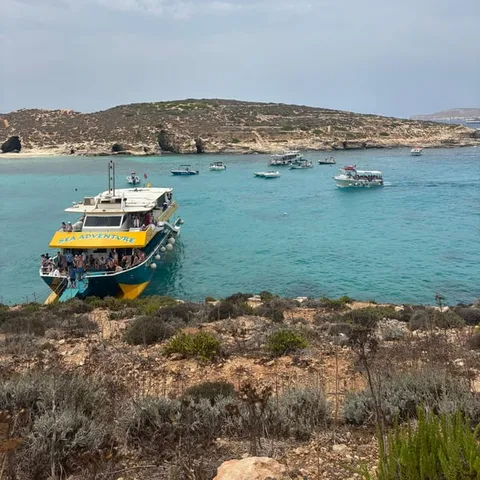
Above the water, Santa Marija Tower is a defensive structure completed in 1618 during the reign of Grand Master Alof de Wignacourt.[14] The Blue Lagoon has appeared in several big-screen productions, which says something about how the colour reads from the water.[15] Round the corner, the Crystal Lagoon offers a second, quieter swim in a more enclosed bay, and most boat trips call at both.
Getting the most from the day
The Blue Lagoon is easy to reach without a tour. The Ebsons ferry crossing from Mġarr on Gozo or Ċirkewwa on Malta takes approximately 15 minutes each way, and you step off close to the water.[3] Once you are there, walk away from the landing point along the shore. A few minutes of walking usually buys a patch of water with far fewer people in it, and you can always drift back later when the day boats have gone.
A boat adds the sea caves, the Crystal Lagoon and the cliffs on the Gozo side in a single trip. The private boat tour to the Blue Lagoon, Comino and Gozo is a private group with a live English-speaking guide, skip-the-line entry through a separate entrance, and free cancellation up to 24 hours in advance for a full refund.[5]
It runs for 2 - 4 hours and you check availability to see starting times, so it can fit around a morning or an afternoon on the island.[5] Reserve now and pay later is part of the listing as well, which keeps the day flexible if the weather turns.
Daily mean air temperature in Malta by month
Daily mean air temperature for Valletta, Malta, from 1991-2020 climate data.[11]
What a Comino boat day costs
From prices in US dollars for these tour listings.[5][6][7]
When to snorkel the Blue Lagoon
How to plan a snorkel day
Check the forecast
Wind matters more than sun. A calm morning after a quiet night gives the clearest water at the Blue Lagoon.
Get there early
Aim to be in the water before the first tour boats. By late morning the lagoon fills with swimmers and the surface gets choppy.
Kit up
A well-fitting mask, fins and a rash vest. Water shoes help on rocky entries, and a dry bag keeps your things safe on the boat.
Work the edges
Swim away from the sand and follow the seagrass and rock line where the fish feed. Leave the busy middle to the crowds.
Watch the boats
Stay close to your own boat and look up often. A skipper cannot easily spot a snorkeller when the lagoon is busy.
Leave no trace
Comino is a bird sanctuary and nature reserve, part of the Natura 2000 marine protected area.[9] Take nothing out of the water.
Ready to snorkel the Blue Lagoon and its sea caves?
from US$195Reserve now & pay later