The essentials
- A ferry crossing from Mġarr or Ċirkewwa takes approximately 15 minutes each way[1]; a private charter runs 2 - 4 hours[2].
- The tour booked from this site starts from US$195[2], is sold as a private group and carries a 4.98 rating from 117 reviews[2].
- Catamaran trips start from US$63[3], a Sliema cruise from US$40[4] and a guided islands tour from US$35[5].
- The Santa Maria Caves consist of five caves[6], cut into cliffs that a ferry crossing passes without ever touring.
- In July and August the Blue Lagoon receives between 2,500 and 3,500 visitors per day[7], so an early departure changes the day.
- Top choice Private Blue Lagoon boat from US$195 Duration2 - 4 hours[2]Rating4.98 from 117 reviews[2]On boardLive tour guide: English[2]CancellationFree cancellation 24 hours ahead[2] Check availability
- Catamaran cruise from US$63 Duration5 - 6 hours[3]Rating4.68 from 6,838 reviews[3]On boardHost or greeter: English[3]CancellationFree cancellation 24 hours ahead[3] See this tour
- Shared boat cruise from US$40 Duration5.5 - 7.5 hours[4]Rating4.53 from 7,774 reviews[4]On boardDriver: English[4]CancellationFree cancellation 24 hours ahead[4] See this tour
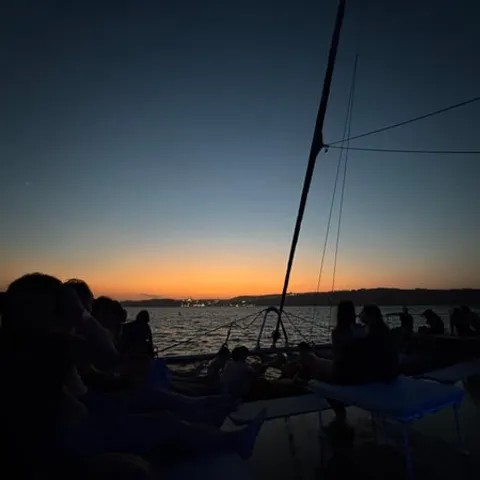
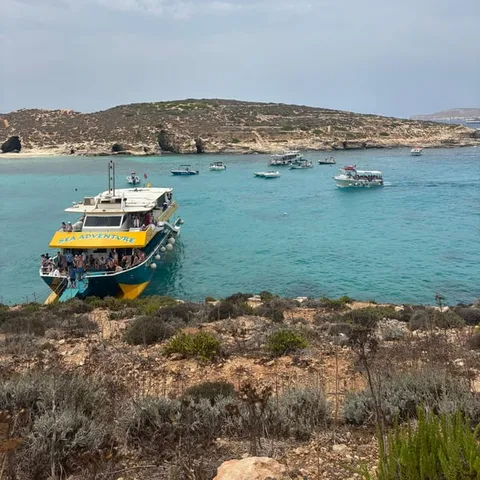
Ebsons provides a pick up and drop off ferry service from Mġarr (Gozo) and Ċirkewwa (Malta), to the Blue Lagoon, Comino every hour. The trip takes approximately 15 minutes each way.
Private boat or ferry for the Blue Lagoon?
Booking and prices
On the day
Two ways to reach the Blue Lagoon
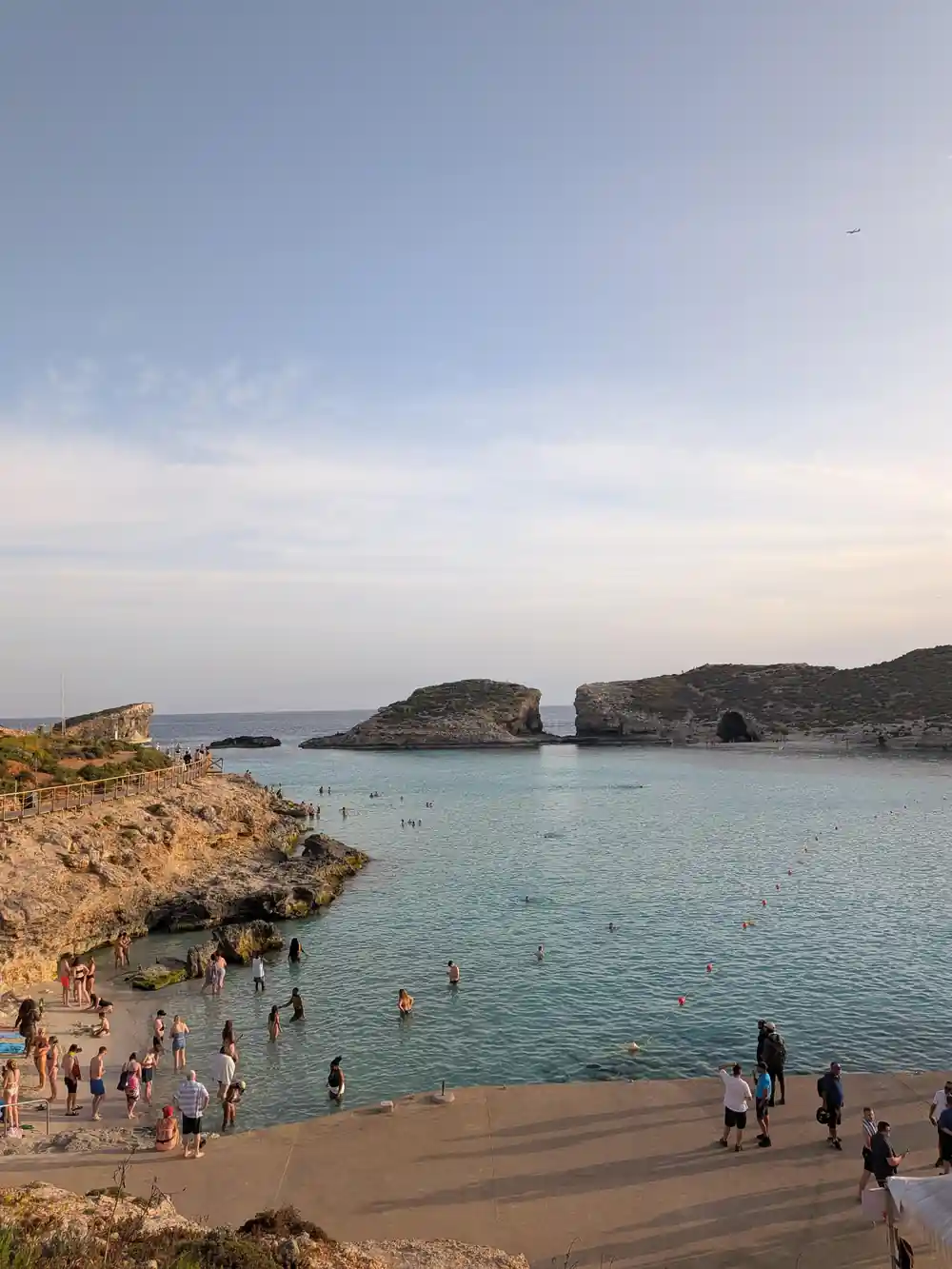
Comino sits between Malta and Gozo, a small island with an official population of 4.[9] Two very different products get you to its famous lagoon. The ferry from Mġarr on Gozo or Ċirkewwa on Malta takes approximately 15 minutes each way.[1] A private boat charter is a different kind of day out: the tour booked from this site runs 2 - 4 hours[2] and you travel as a private group[2]. One is transport. The other is a few hours on the water, shaped around swimming, sea caves and photographs. On a calm morning the channel between the islands is flat and bright. On a windy one it is short and bracing.
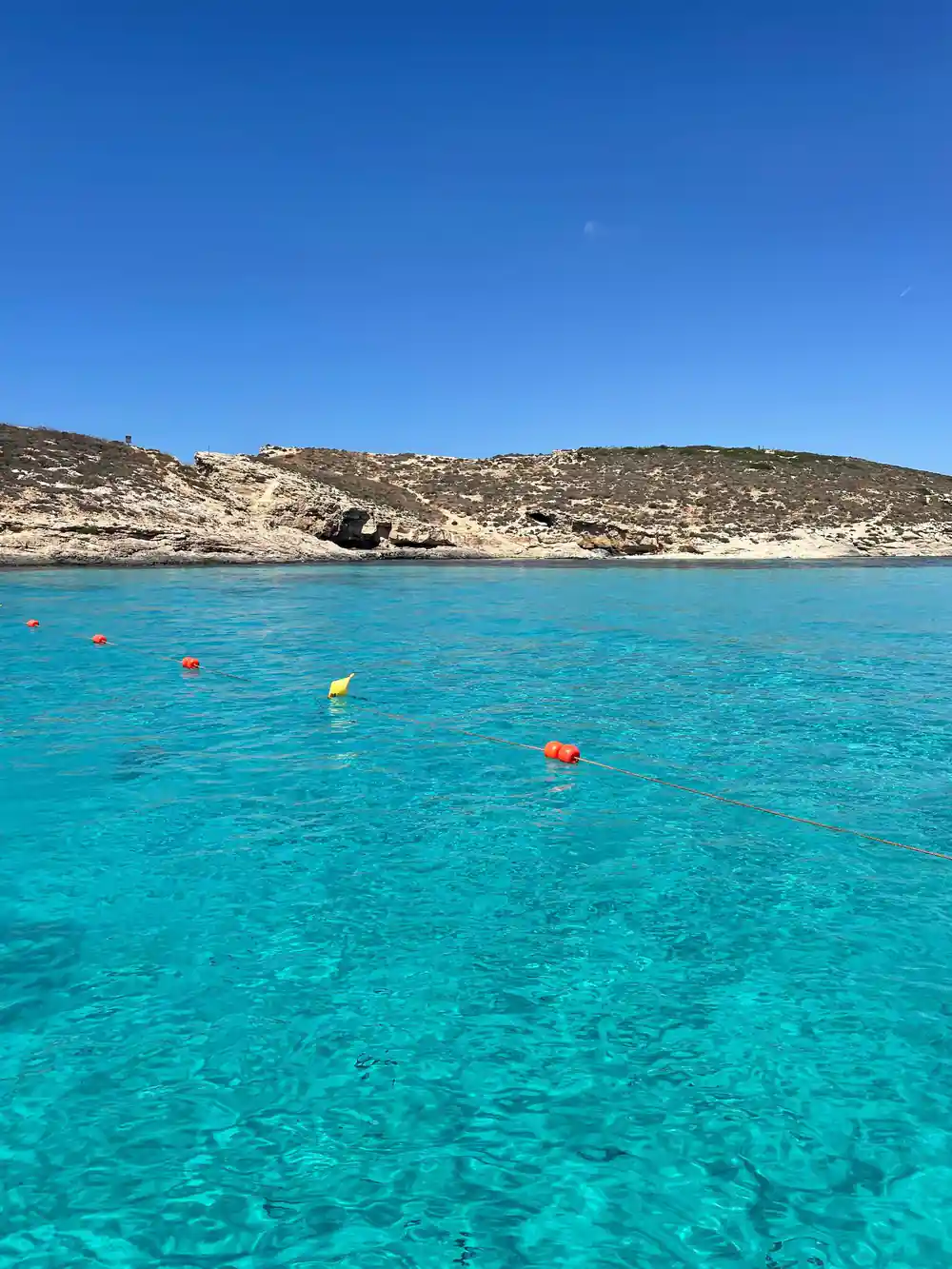
The lagoon itself is why people come. Its turquoise colour comes from light reflecting back up through the shallow, clear water from the white sand below.[10] It looks unreal in photographs and better in person. It is also busy. In peak summer, July and August, Comino's Blue Lagoon receives between 2,500 and 3,500 visitors per day.[7] That is the number worth keeping in mind when you choose between a ferry crossing and a private boat.
What the freedom actually buys
Book a Blue Lagoon Malta private boat and you are not sharing with strangers. The listing is sold as a private group[2], it comes with a live tour guide who speaks English[2], and it skips the line through a separate entrance[2]. The price starts from US$195[2] and the boat is rated 4.98 from 117 reviews[2]. It is wheelchair accessible as well[2]. A ferry cannot offer any of that. It has a timetable, a fixed route and a crowd.
Shared boat trips sit in the middle. A Blue Lagoon catamaran Malta trip starts from US$63[3], runs 5 - 6 hours[3] and has a host or greeter who speaks English[3]. A Sliema cruise covering Comino, Crystal Lagoon and the Blue Lagoon starts from US$40[4] with a driver who speaks English[4]. A Gozo and Comino islands tour with sea caves starts from US$35[5] and runs 7 hours[5]. All three cost less than the private charter. The real difference is who decides where the boat goes next.
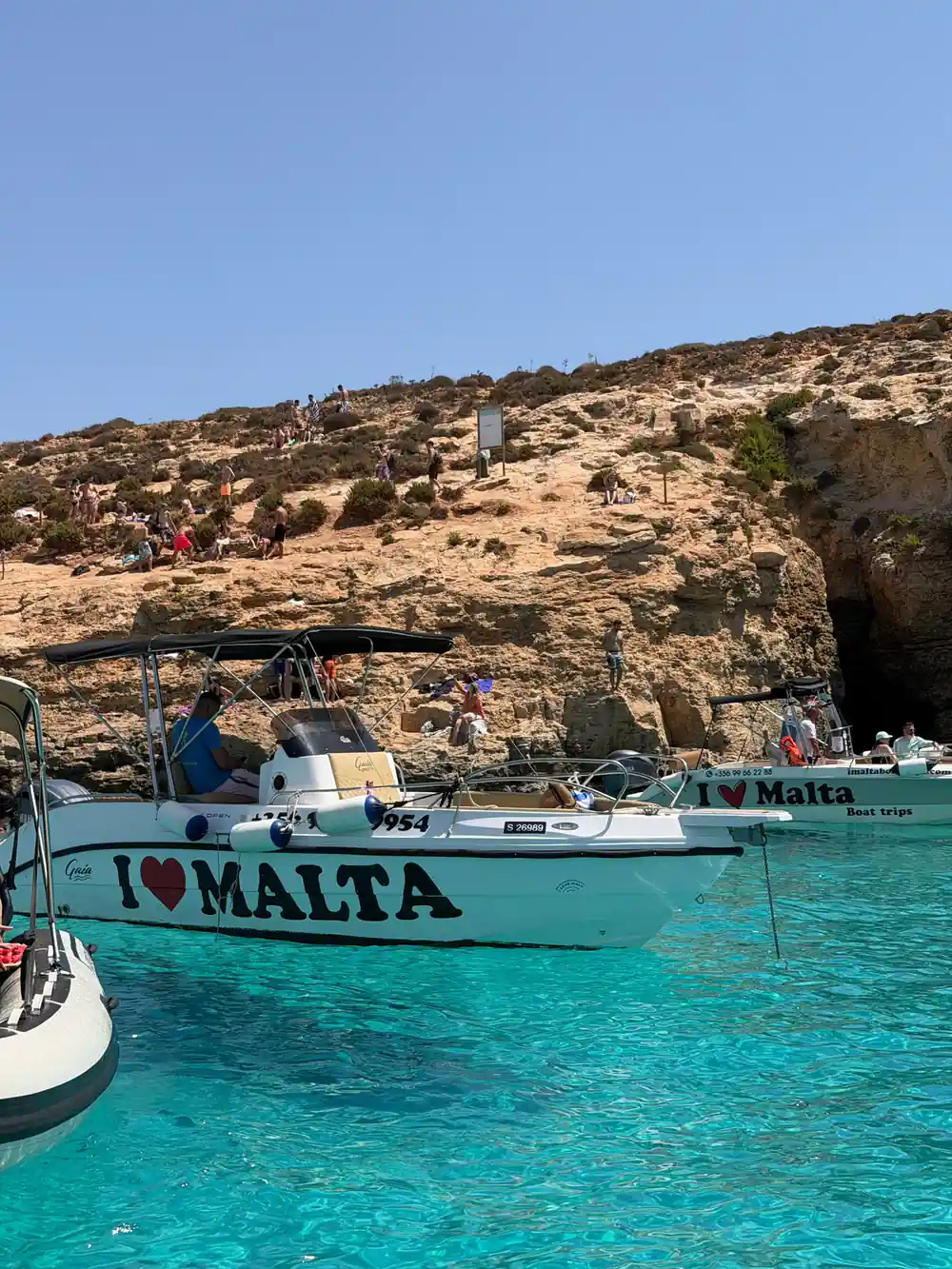
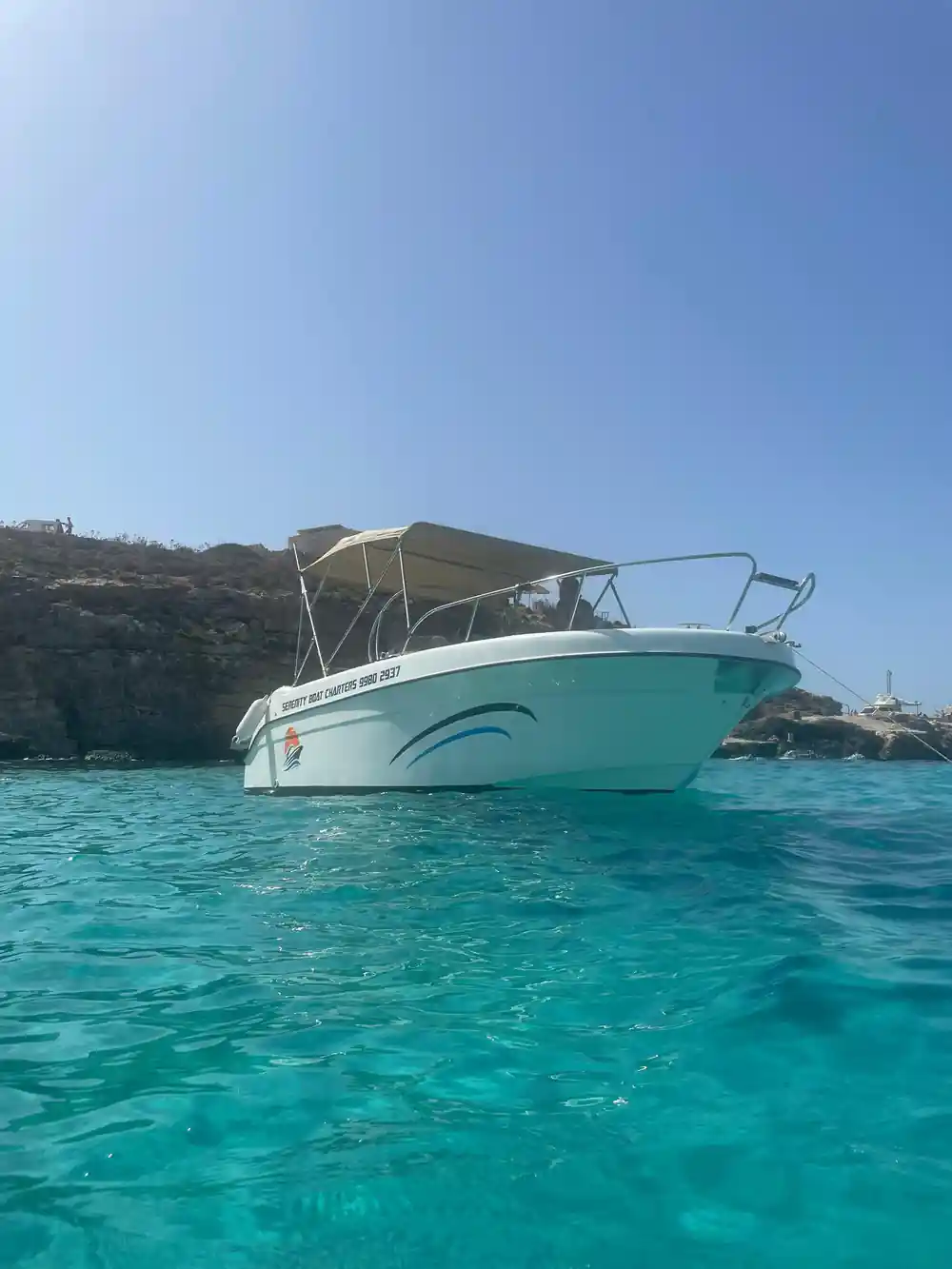
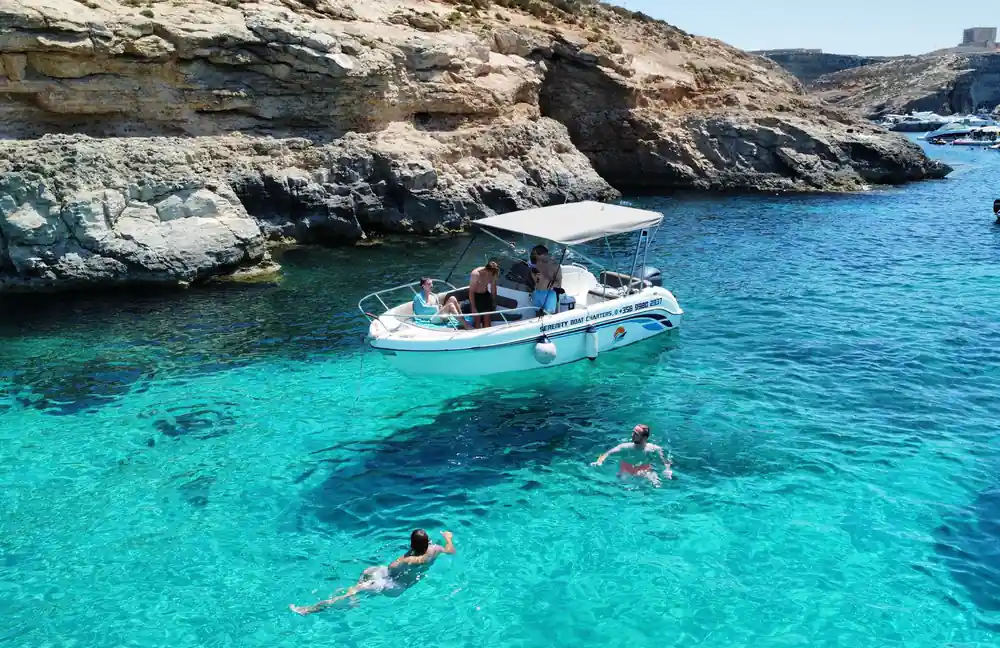
A private boat idles in clear water below the cliffs of Comino.
The caves, which are the clearest difference
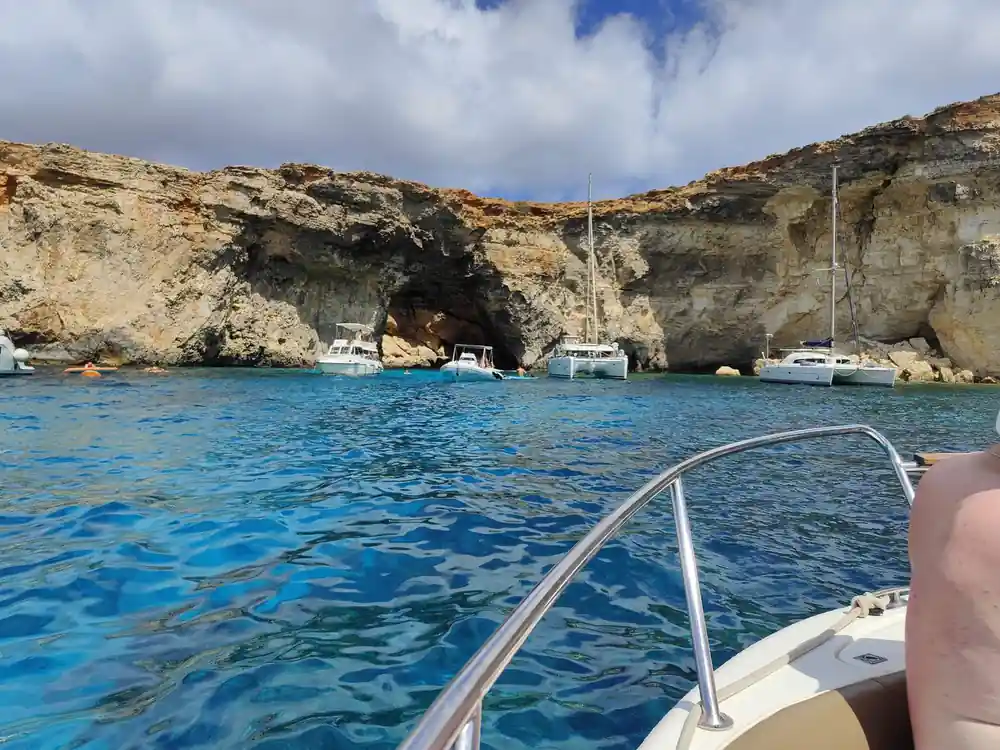
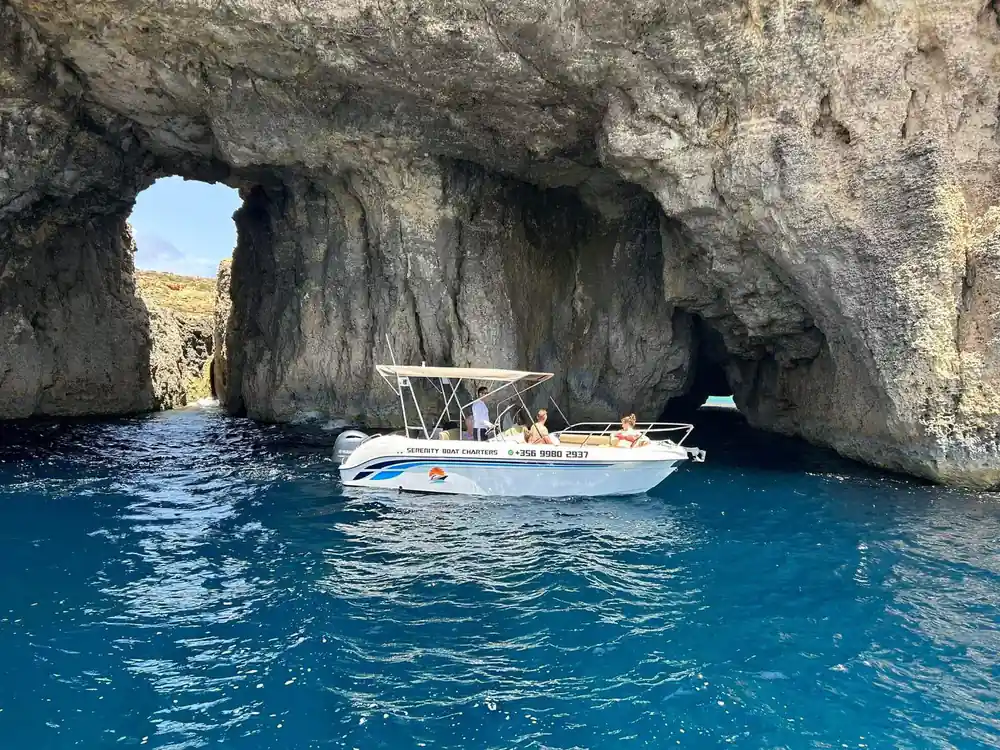
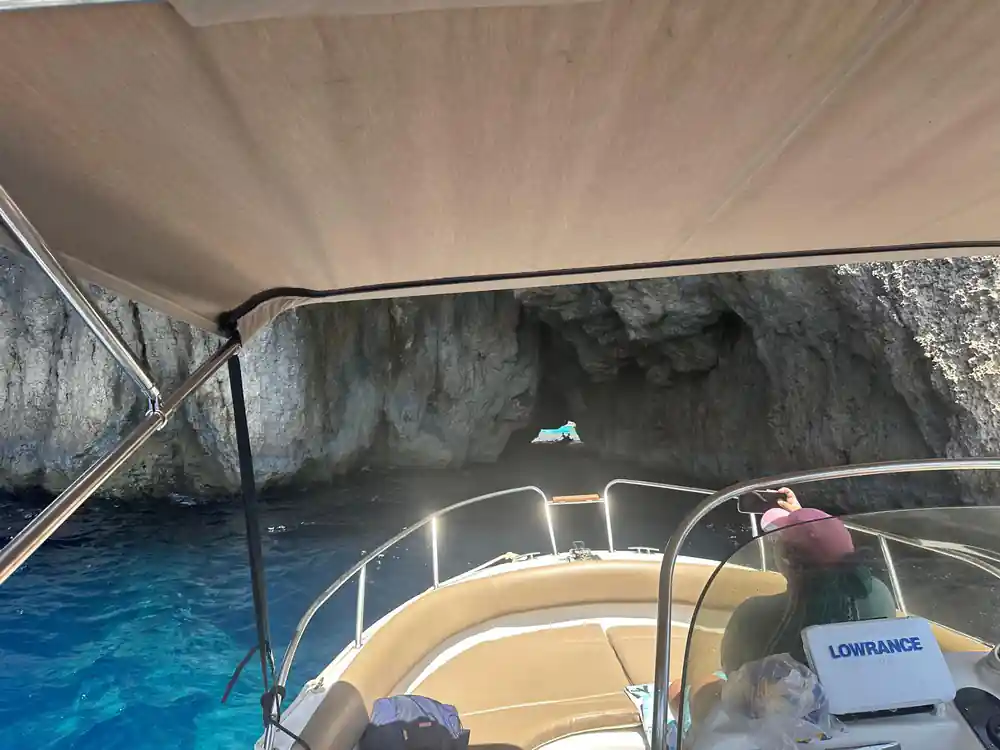
Sea caves are the part of Comino that a ferry cannot show you. The Santa Maria Caves consist of five caves[6], opening straight out of the cliffs along the island's coast. A small boat can edge close enough for you to see inside, and on a calm day a swim stop in the deep blue water outside them is the best moment of the trip. A scheduled ferry crossing does the crossing. It does not tour the coastline, wait while you take photographs or stop for a swim.
The island above the water is worth knowing too. Santa Marija Tower is a defensive structure built in the 17th century and completed in 1618[11], and it still stands on the ridge above the channel, visible for much of the crossing between the two islands. Comino is a bird sanctuary and nature reserve, a Natura 2000 marine protected area[12], and the Yelkouan shearwater breeds on Kemmuna, with an estimated 150-220 pairs nesting there[13]. The Blue Lagoon has also appeared as a film location in several big-screen productions[14]. Caves, cliffs and seabirds are things you notice from a small boat moving slowly.
Group size and who else is aboard
This is where the difference is felt rather than explained. In July and August the Blue Lagoon receives between 2,500 and 3,500 visitors per day[7], and Malta as a whole received roughly 3.6 million international tourists in 2024[15]. On a ferry, or on a big cruise boat, you arrive with everybody else and leave when the timetable says so. On a private charter the group is whoever you invited, and there is room to move to the quiet side of a bay when the main lagoon fills up.
Volume shows in the review counts. Catamaran Blue Lagoon Malta trips carry 6,838 reviews and a 4.68 rating[3], the Sliema cruise has 7,774 reviews and 4.53[4], and the audio-guided islands tour has 20,111 reviews and 4.45[5]. The private boat booked from this site has 117 reviews and a 4.98 rating[2]. Fewer people have booked it, and the ones who have rate it very highly.
from US$195
A private group charter with a live English-speaking guide and swim stops, taking in Comino, Gozo and the sea caves.[2]
What you give up on a private boat
Cost is the obvious one. From US$195 for the private charter[2] against from US$35 for an islands tour by coach and boat[5] or from US$40 for the Sliema cruise[4] is a real gap. You also give up deck space. A catamaran has room to walk around, and that trip lasts 5 - 6 hours[3]. A smaller private boat is more intimate and less roomy, so dress for a day of sitting close together and getting wet. Deck space and shade are the things people miss most when they move down in size.
You take on the logistics as well. The ferry is a hop of approximately 15 minutes each way[1] from two fixed departure points, and it runs to a schedule. A private charter has to be booked in advance, and the listing says to check availability to see starting times for its 2 - 4 hour duration[2]. The booking terms are forgiving: reserve now and pay later, with free cancellation up to 24 hours in advance[2].
Which to choose, ferry or private boat
Choose the ferry if the Blue Lagoon is the only destination and you plan to stay on the sand, swim from the shore and come back later. Choose a Blue Lagoon Malta catamaran or a shared cruise if you want a full day on the water at a low price and do not mind company. Choose the private boat if the sea caves, the swim stops and the freedom to change the plan are the point of the day. There is no wrong answer, only a wrong day for the answer you picked.
Season matters as much as the boat. Average sea temperature in Sliema is warmest in August at about 26.1°C and coldest in February at about 15.4°C[8], and daily mean air temperatures in Malta run from 12.6°C in February to 27.5°C in August, with an annual average of 19.5°C[16]. Malta also gets almost 3000 hours of sunshine a year, making it the sunniest country in Europe[17]. Warm water and long light make a late swim stop easy to plan.
A note on skippers and pick-ups
A private boat is only as good as the person driving it. The tour booked from this site comes with a live tour guide who speaks English[2], and the value of that shows in small decisions: which cave is calmest when the wind is up, where the swell makes a swim stop uncomfortable, and how to reach the lagoon before the day boats arrive. The listing is wheelchair accessible[2]. Ask the operator about your own needs when you book.
For pick-ups and timing, check availability to see starting times[2] before you plan the rest of the day. Bring swimwear, a towel, sun cream, a hat and a light layer for the ride back when the wind picks up on wet skin, plus a dry bag for your phone. Sea conditions are the one thing nobody controls, and a good skipper will tell you honestly whether the caves are worth the trip on the day. If the wind gets up and the route changes, that is a good sign rather than a bad one.
From price by boat option
From prices for Blue Lagoon boat options
Amounts are listing from prices. No separate child rate is given in the listings, so child figures mirror the adult from price. Ids:[2][3][4][5]
When to go and what to book
Plan your Blue Lagoon day
Choose your boat
Decide between a ferry crossing, a shared cruise and the private charter booked from this site, then check what each one includes.
Fix your date and time
The warmest weeks of the year fill up fast, so book well ahead if your dates are fixed, and check availability for starting times.
Pack for the water
Swimwear, towel, sun cream, hat, dry bag and a light windproof layer. Sea caves and swim stops are wet, breezy business.
Sort the meeting point
Ferries leave from Mġarr and Ċirkewwa[1], and the private charter shows starting times when you check availability[2].
Keep the evening free
Sunshine and warm water make a late swim tempting, so leave room in the plan for one more stop on the way back.
Skip the ferry queue and see the sea caves by boat
from US$195Reserve now & pay later