The essentials
- The public ferry from Ċirkewwa or Mġarr takes approximately 15 minutes each way and runs every hour.[1]
- Day cruises leave from Sliema, St Julian's, Bugibba, Qawra and St Paul's Bay, and several also stop at the Crystal Lagoon and the sea caves.
- The private boat tour booked from this site runs 2 - 4 hours from US$195 for a private group, with a live guide in English.[2]
- In July and August the Blue Lagoon receives between 2,500 and 3,500 visitors per day, so early boats are calmer.[3]
- Water shoes, a hat, sun cream and a dry bag. The shore is rough rock and the boats carry very little shade.
- Top choice Private boat and sea caves from US$195 Duration2 - 4 hours[2]Rated4.98 from 117 reviews[2]GuideLive tour guide: English[2]CancellationFree up to 24 hours before[2] Check availability
- Gozo and Comino day trip from US$35 Duration7 hours[4]Rated4.45 from 20,111 reviews[4]GuideAudio guide included[4]CancellationFree up to 24 hours before[4] See this tour
- Blue Lagoon catamaran trip from US$63 Duration5 - 6 hours[5]Rated4.68 from 6,838 reviews[5]GuideHost or greeter: English[5]CancellationFree up to 24 hours before[5] See this tour
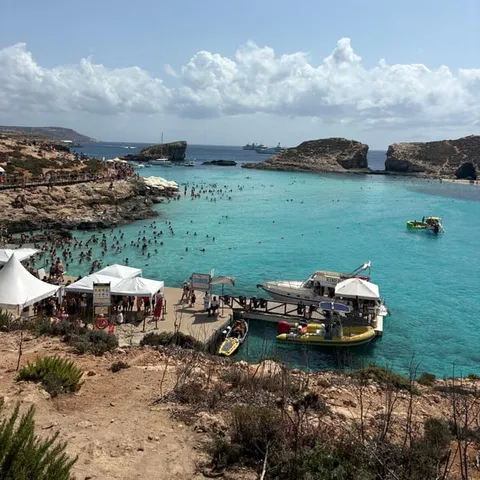
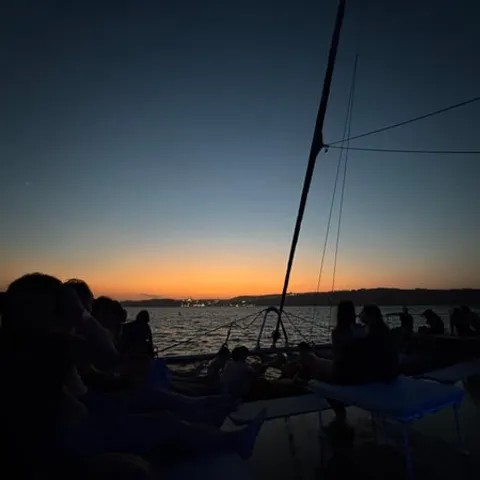
Ebsons provides a pick up and drop off ferry service from Mġarr (Gozo) and Ċirkewwa (Malta), to the Blue Lagoon, Comino every hour. The trip takes approximately 15 minutes each way.
Ferry, cruise or private boat: how to choose
Booking tips
- Ferries to Comino run every hour, so the return leg is easy to plan[1]
- The private boat tour can be reserved now and paid later, with free cancellation up to 24 hours ahead[2]
- Malta gets almost 3000 hours of sunshine a year, so sun cover matters all season[6]
- The private boat tour booked from this site starts from US$195[2]
On the day
- The crossing from Ċirkewwa or Mġarr takes approximately 15 minutes each way[1]
- Sea temperature averages about 26.1°C in August and about 15.4°C in February[7]
- In July and August the lagoon receives between 2,500 and 3,500 visitors per day[3]
- Comino is a nature reserve and marine protected area, so take litter home[8]
Blue Lagoon Malta ferry or boat: your choices
The Blue Lagoon sits on Comino, the small island in the channel between Malta and Gozo. Comino has an official population of 4.[9] The island is a bird sanctuary and nature reserve, and a Natura 2000 marine protected area.[8] There is no bridge and no tunnel, so every visit starts on the water, and the crossing is part of the day rather than a chore before it.
Two routes cover almost everybody. The first is the public ferry that hops across from the northern tip of Malta or from Gozo, which suits anyone happy to spend a few hours on the rocks and in the sea. The second is a boat trip to Comino Malta, meaning a scheduled cruise from one of the resort harbours or a private charter, usually taking in the Crystal Lagoon, the Santa Maria Caves and a stretch of Gozo's coast as well. If you are planning a trip to Blue Lagoon Malta for the day, the second option takes the ferry timetable out of your morning, though you trade some freedom for that.
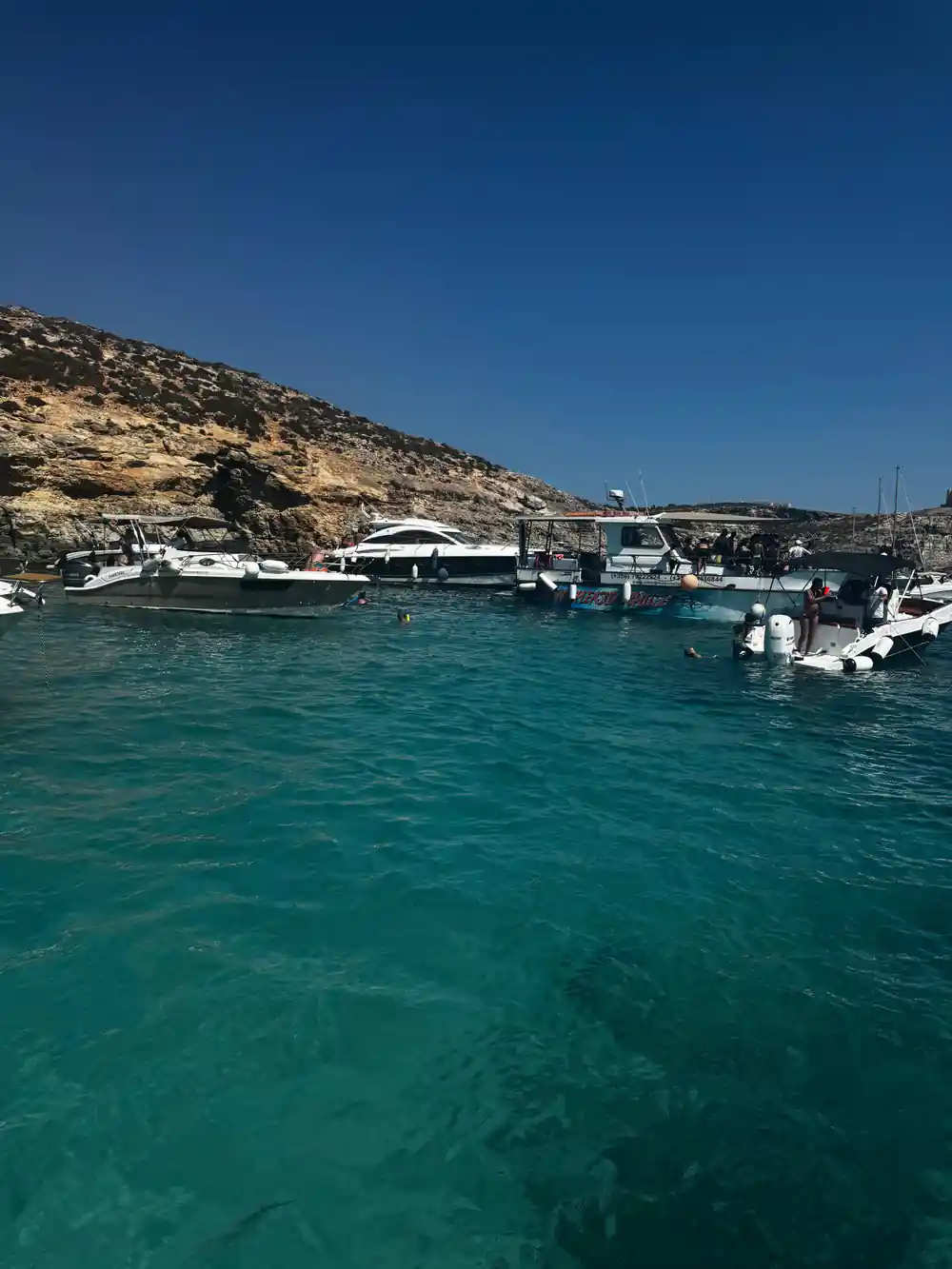
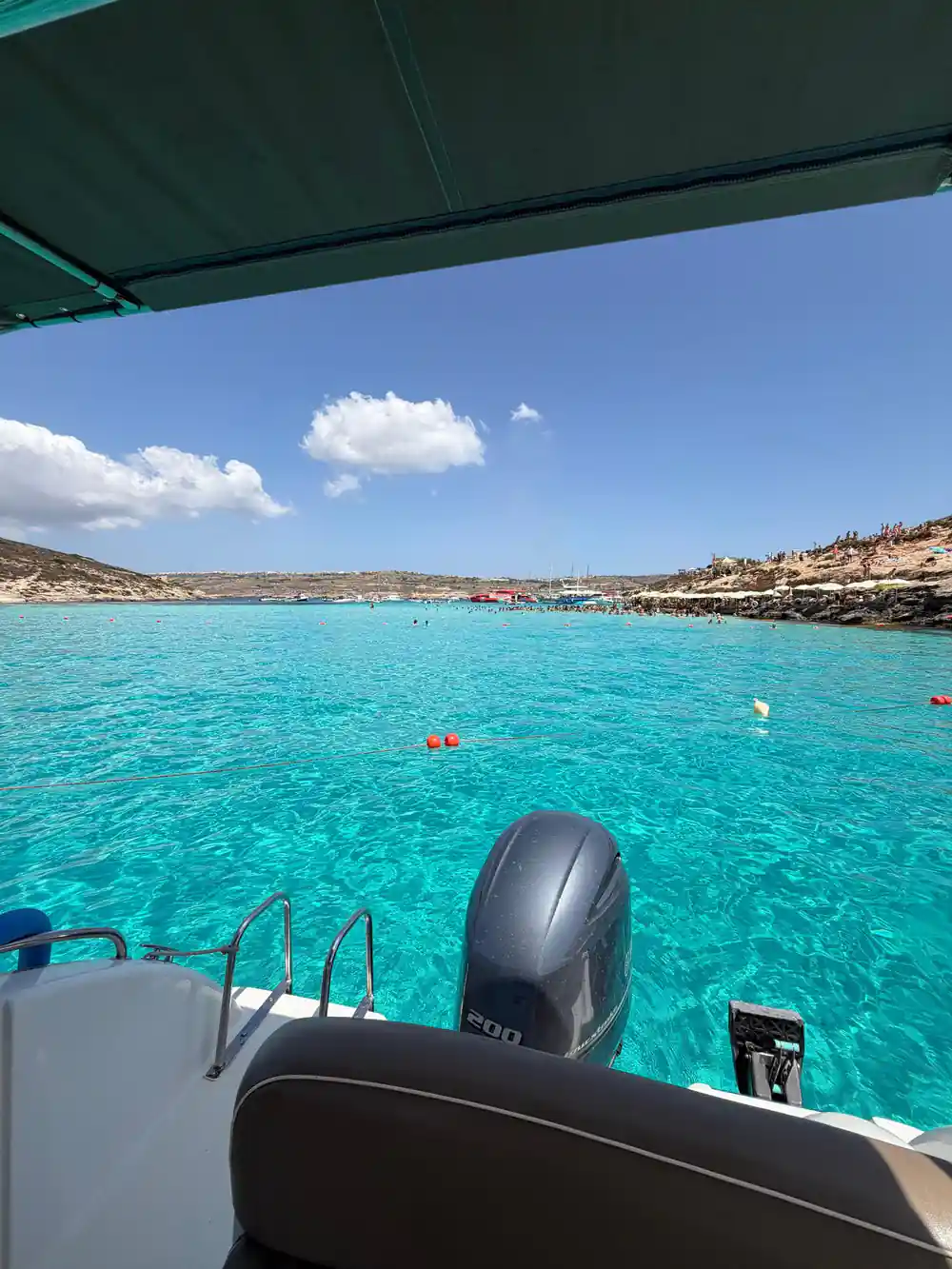
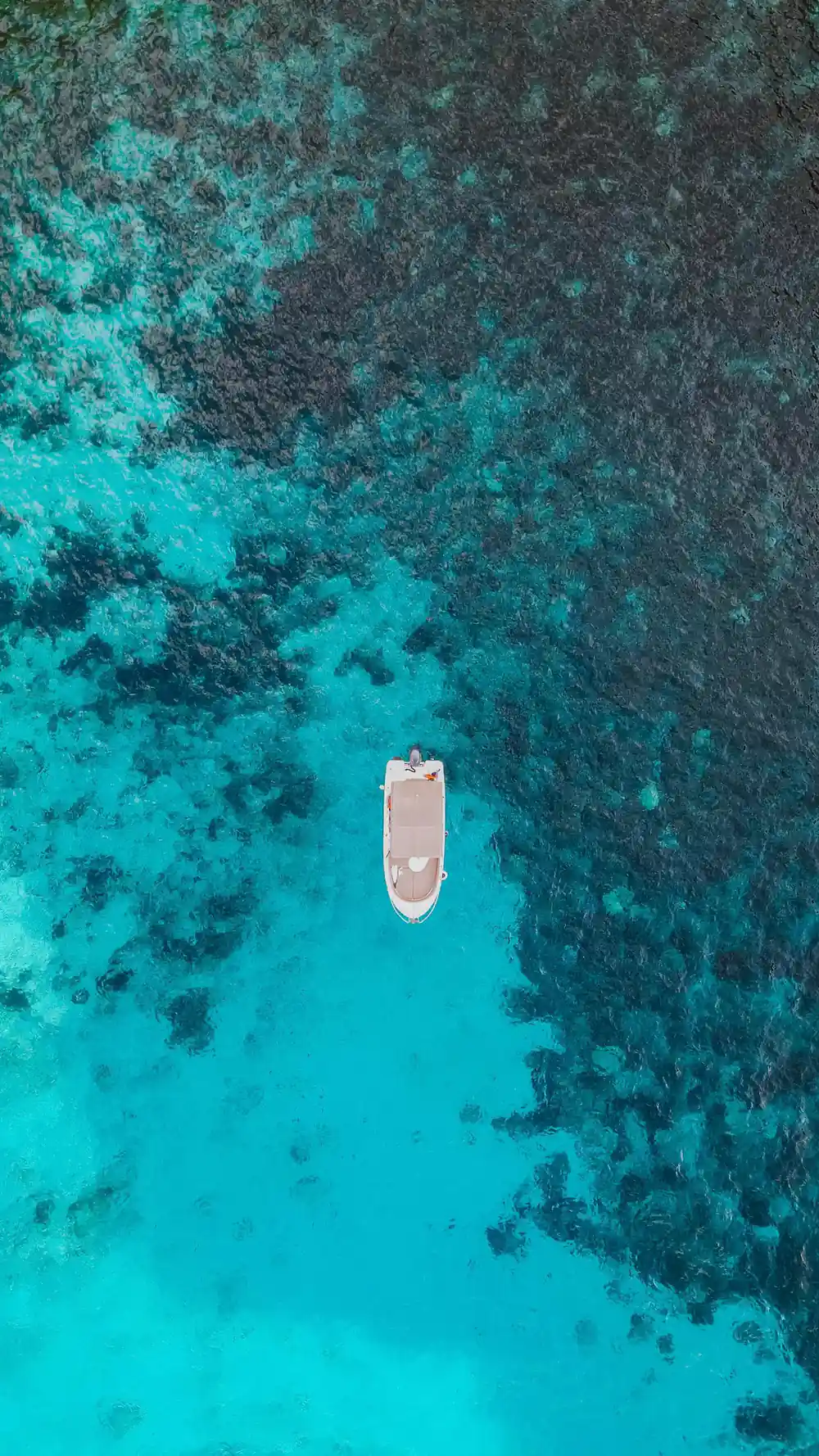
Whichever you pick, the water is the point. The sandy sections of the bay give it the famous turquoise colour, light reflecting back up through the shallow, clear water from the white sand below.[10] From the deck of an approaching boat the colour is the first thing you notice, often before you can make out the people on the shore.
The short crossing from Ċirkewwa and Mġarr
The quickest way across is the Ebsons ferry. It runs from Mġarr on Gozo and from Ċirkewwa on Malta to the Blue Lagoon on Comino, and the trip takes approximately 15 minutes each way.[1] Boats leave every hour, so you do not have to build the whole day around a single departure.[1]
Ċirkewwa is the northern tip of Malta, the headland where the Gozo ferries dock, and Mġarr is Gozo's main harbour. Both are working quays rather than resorts, which keeps the crossing simple: you turn up, step aboard, and watch Comino rise out of the haze. The boat sets you down at the Blue Lagoon itself, so there is nothing to arrange at the other end and no bus to find.
Go light. Comino is rock, scrub and low cliffs, so a bag you can carry, plenty of water and shoes that cope with rough stone will do more for your day than anything else. Ferries to Comino on this route run every hour, so you can settle on a return time once you see how busy the bay is and how long everyone lasts in the water.[1]
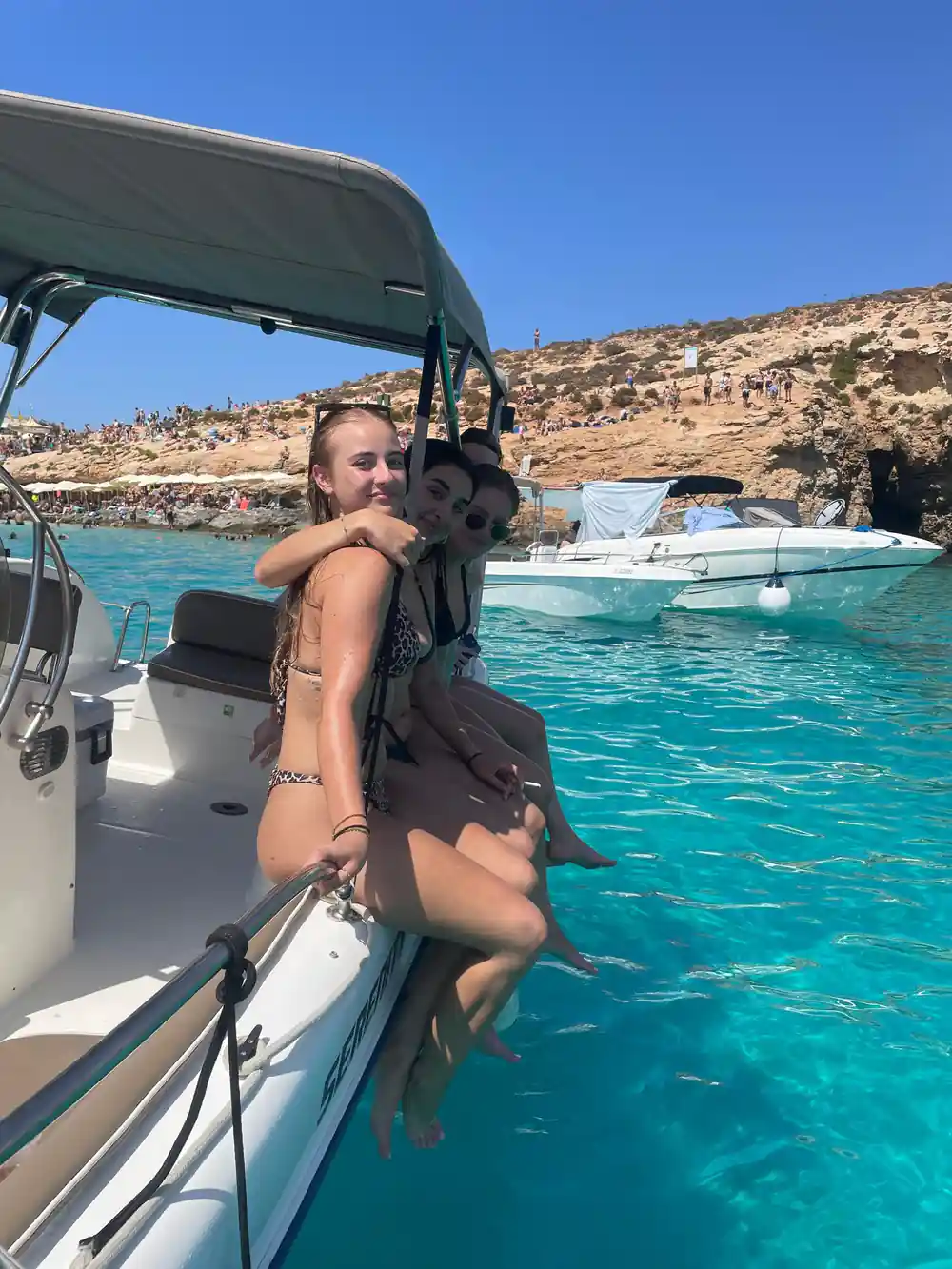
A private boat waits off the rocky shore while swimmers cross the shallows.
Day boats and cruises from the resort harbours
Plenty of people reach the lagoon on a boat that starts near their hotel. Departures run from Sliema, St Julian's, Bugibba, Qawra and St Paul's Bay, and the route north follows the coast. One cruise takes in St Julian's and Qawra, St Paul's Bay, St Paul's Island and Mellieha Bay before the Crystal Lagoon, the Blue Lagoon and the Santa Maria Caves.[11] It runs 5.5 - 7.5 hours from US$40.[11]
These trips vary a lot in length and comfort, so compare the timings before you compare the photos. The Gozo and Comino islands tour with sea caves runs 7 hours from US$35 and includes an audio guide in English, French, German, Italian and Polish.[4] The catamaran trip from Bugibba runs 5 - 6 hours from US$63.[5] Both have been reviewed many times over: 4.45 from 20,111 reviews for the first, 4.68 from 6,838 reviews for the catamaran.[4][5]
Duration is the main thing to weigh up. A catamaran cruise with lunch and an open bar runs 7 hours from US$102.[12] The Blue Lagoon sunset cruise runs 3.5 hours from US$29, for travellers who would rather be on the water in softer light.[13] A shorter trip leaves more of the day for Gozo, Mdina or an afternoon on the sand.
A private boat trip to the Blue Lagoon
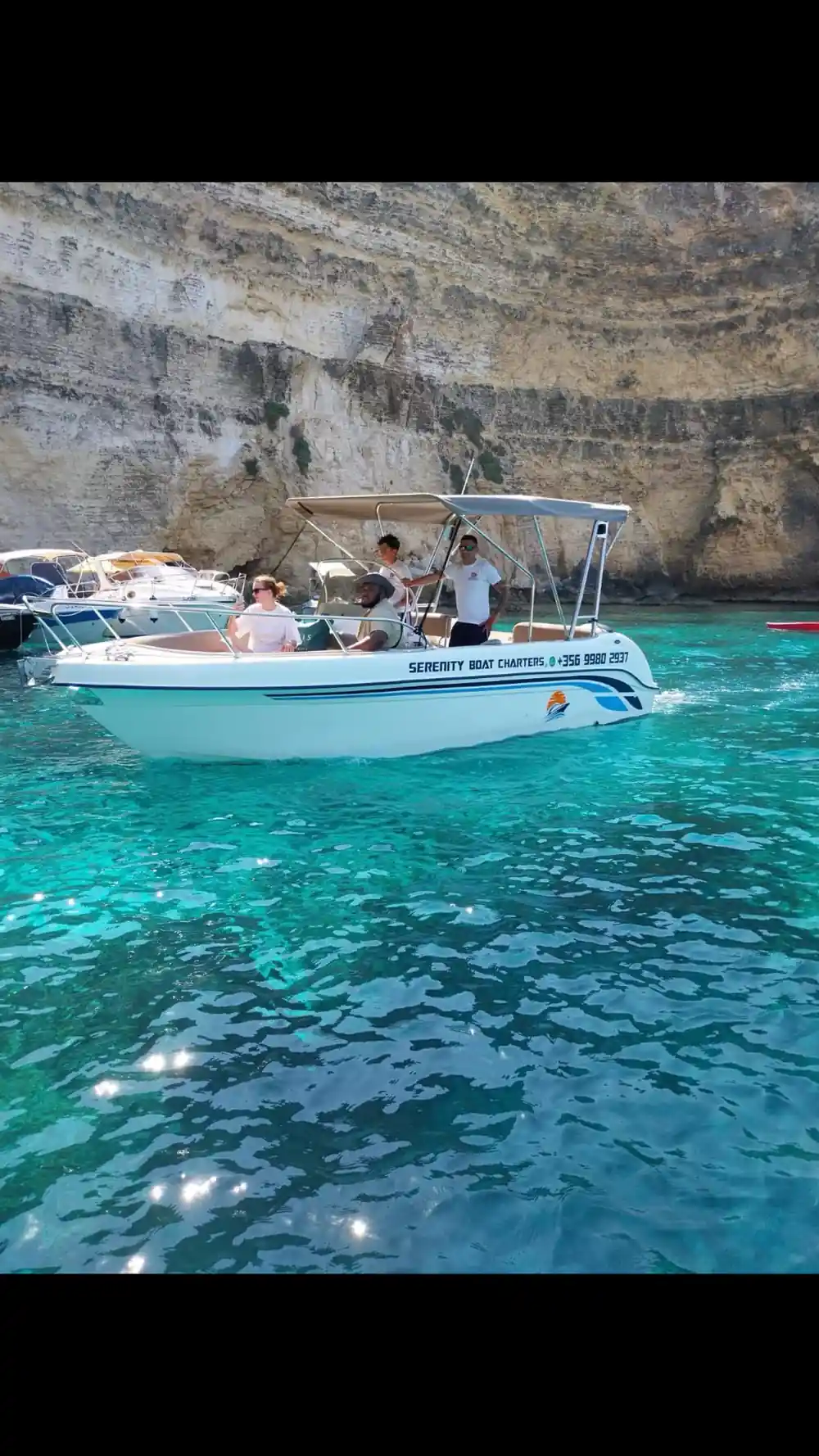
If you want the boat to yourselves, start with the private boat tour booked from this site. It covers the Blue Lagoon, Comino, Gozo and the sea caves with swim stops, runs 2 - 4 hours from US$195 for a private group, and comes with a live tour guide in English.[2] The boat is wheelchair accessible, and entry uses skip the line access through a separate entrance.[2]
It is rated 4.98 from 117 reviews, and you can reserve now and pay later, with free cancellation up to 24 hours in advance for a full refund.[2] Other private charters follow the same idea at different prices: a 4 hour charter from US$413 rated 4.97 from 98 reviews[14], and a 3 - 4 hour private trip from US$248 rated 5.00 from 80 reviews.[15]
On a private boat the schedule belongs to you. You can linger in the shallows, ask the skipper to edge close to the Santa Maria Caves, and leave when the day boats arrive rather than when a whistle blows. Take a snorkel mask if you own one, and a towel that dries quickly.
from US$195
The private boat tour booked from this site runs 2 - 4 hours with a live guide in English and free cancellation up to 24 hours ahead.[2]
Where you land on Comino
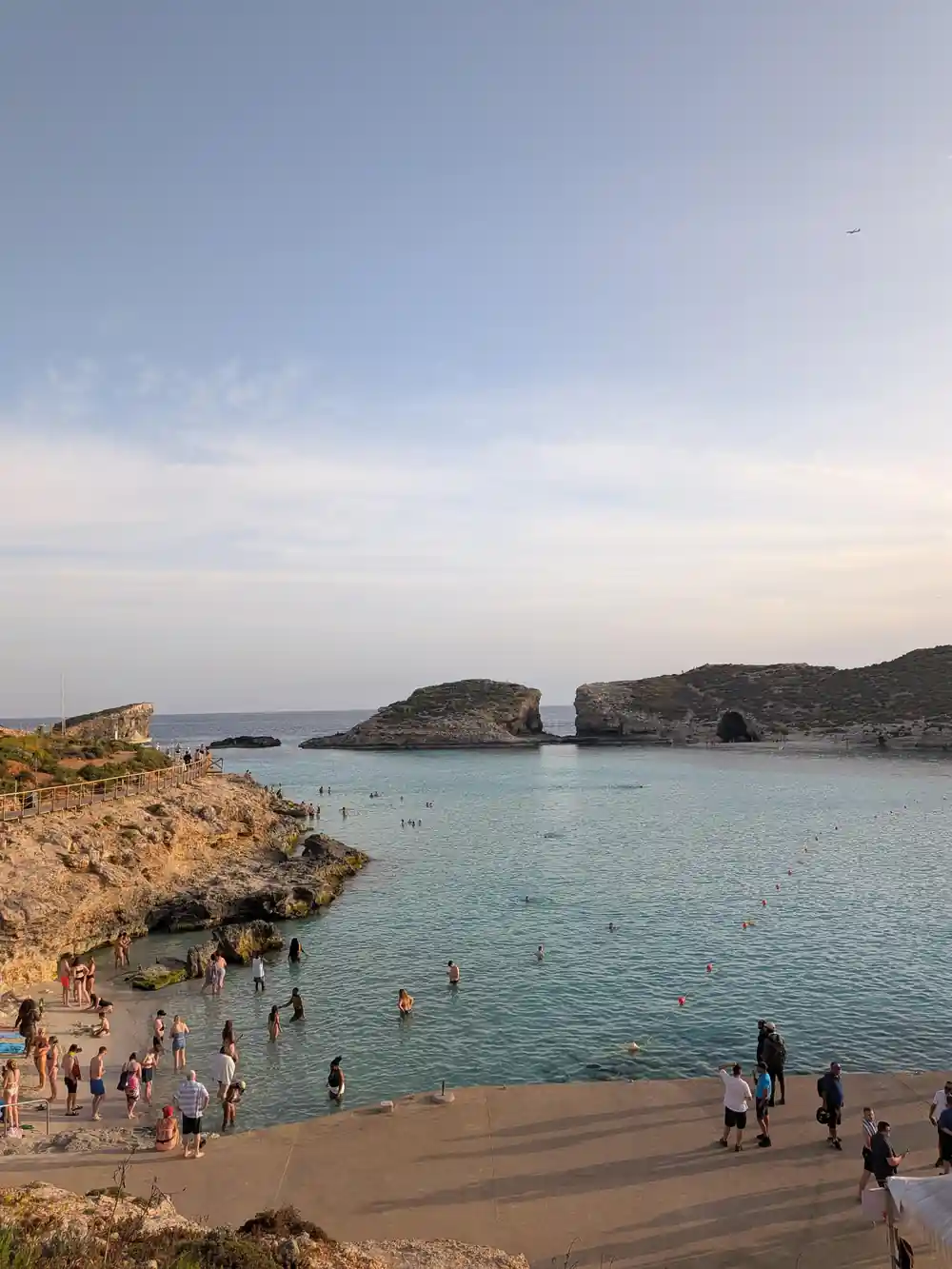
The Blue Lagoon opens off the sheltered side of Comino, facing the islet of Cominotto. The bay is shallow and pale, which is why the colour reads so brightly from the deck of an approaching boat, and it stays calm when the water outside the headland is choppy.
Boats moor offshore and you step down into shallow water or onto the rocky shelf. Water shoes beat flip flops on the stone, a bag you can keep clear of the sand is worth having, and the rock gets hot in the middle of the day.
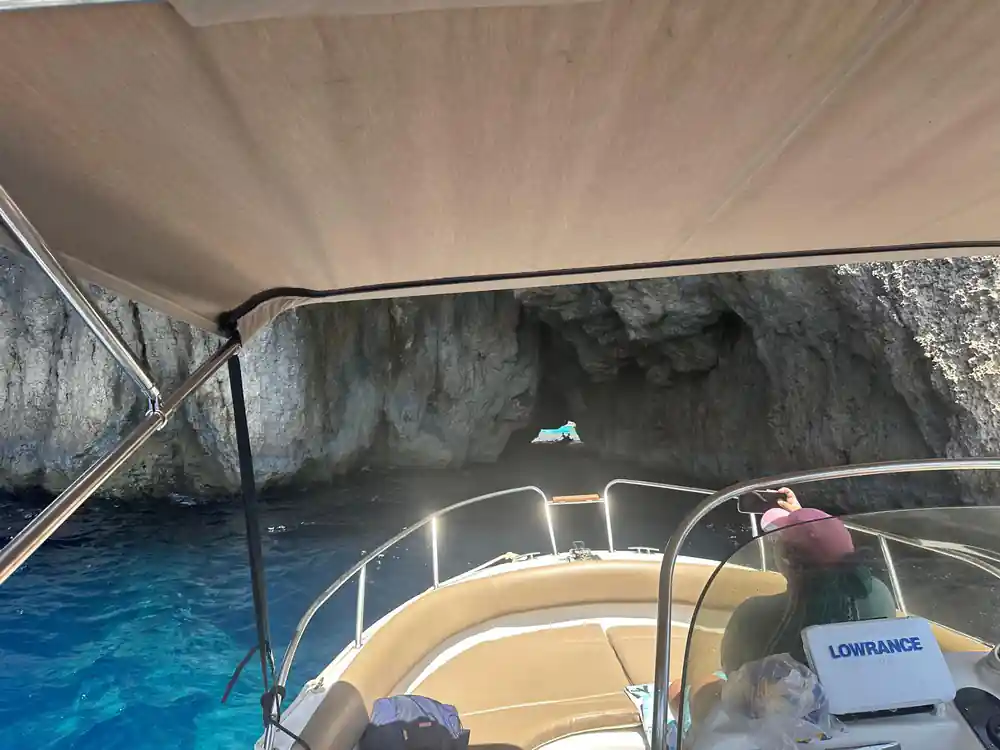
There is more to see once you have had enough of the lagoon. The Santa Maria Caves consist of five caves.[16] The Yelkouan shearwater breeds on the island's cliffs, with around 150-220 pairs estimated on Kemmuna.[17] Santa Marija Tower was completed in 1618, during the reign of Grand Master Alof de Wignacourt.[18] The Blue Lagoon also stars in several big-screen productions.[19]
Timing your trip and parking
Summer is busy. In peak summer, in July and August, the Blue Lagoon receives between 2,500 and 3,500 visitors per day.[3] Malta received roughly 3.6 million international tourists in 2024.[20] Even so, early boats and late afternoons are the calmest window on Comino, and a private trip lets you choose your own hours.
Weather decides the rest of your plans. Malta gets almost 3000 hours of sunshine a year, making it the sunniest country in Europe.[6] Daily mean air temperatures run from 12.6°C in February to 27.5°C in August, with an annual average of 19.5°C.[21] Sea temperatures around Sliema average about 26.1°C in August and about 15.4°C in February.[7]
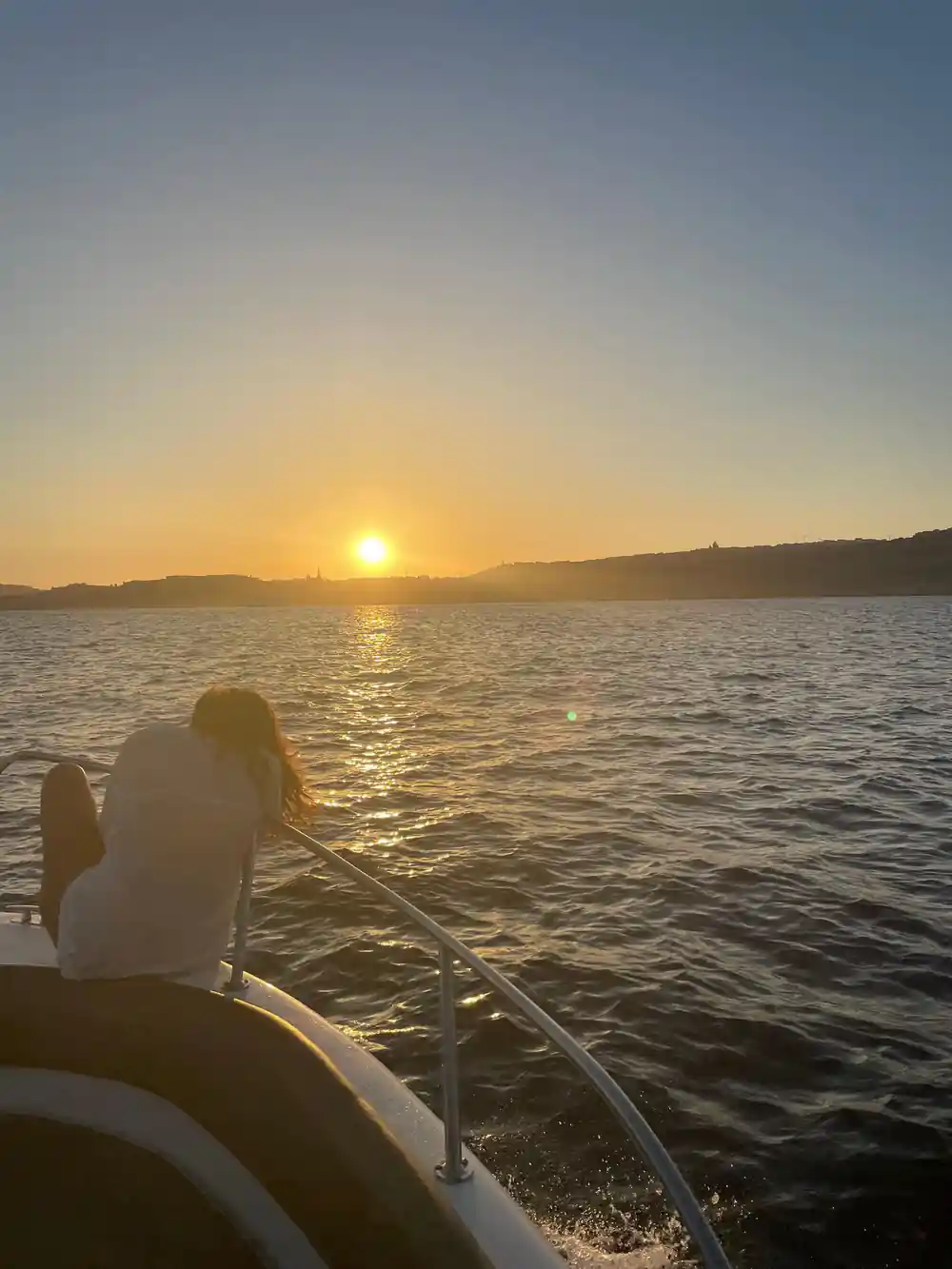
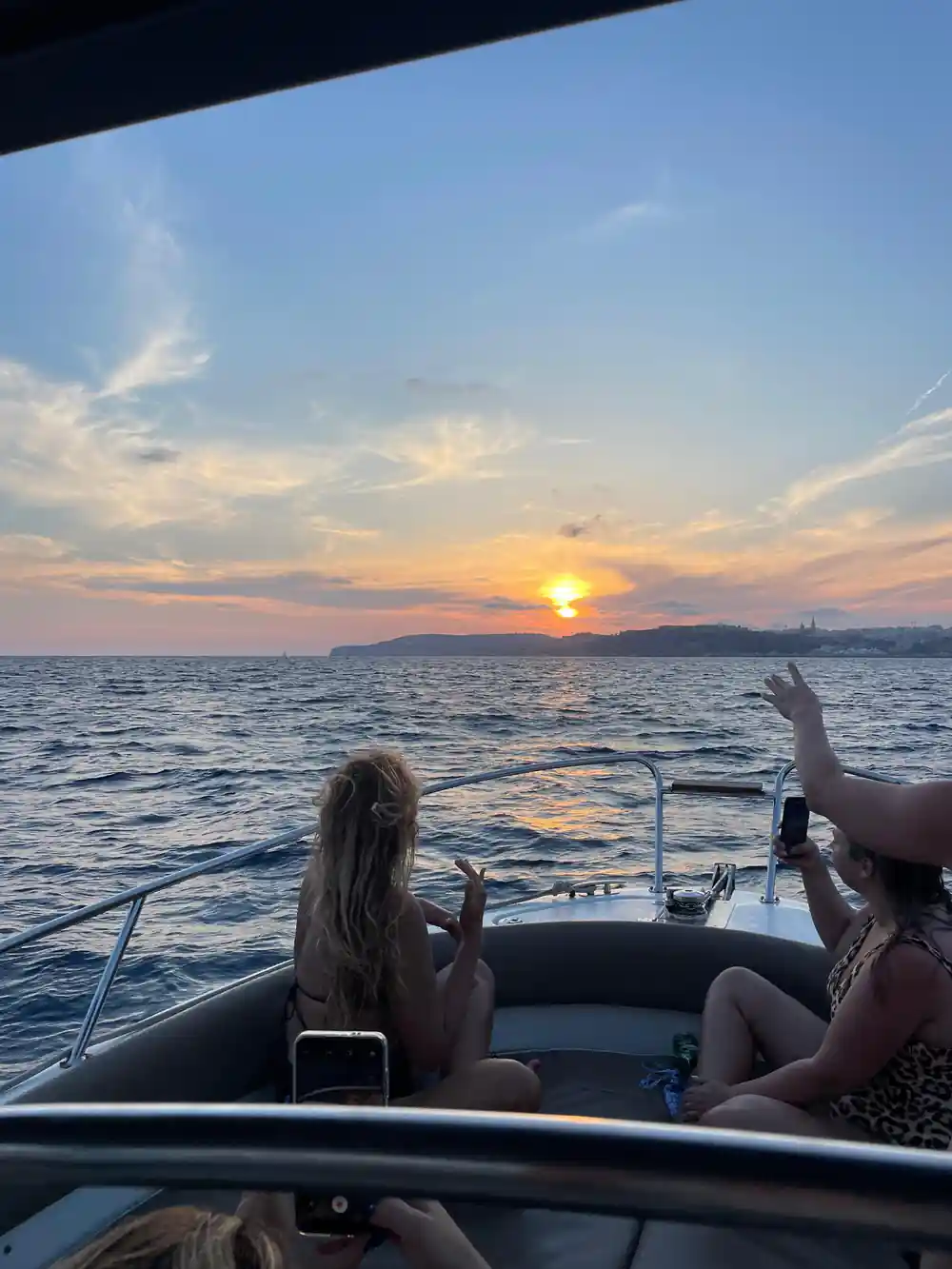
If you are driving to the ferry points, allow extra time on summer mornings and note the last return boat before you walk away from the car. Ċirkewwa and Mġarr are both small quays, and both get tight when the island is full. Sunsets over Comino are worth staying for, but only if you are sure of your ride home.
What to expect on the water
Boats are open and shade is scarce, both on deck and on the shore, so a hat, high factor sun cream and a litre of water each earn their place in your bag. A dry bag or a zip pouch keeps phones and keys safe, and a light long sleeved top is welcome on the ride back when the wind picks up.
The shallows over the white sand are gentle and clear, which makes them good for children and nervous swimmers. Further out the bottom drops away, so keep an eye on anyone who is not a confident swimmer and stay within sight of your boat. Boat traffic moves through the bay all day, so look around before you swim across.
Finally, pick the crossing that matches the day you want. If the Blue Lagoon is the whole point, choose a trip with a long stop there and treat the caves and the Crystal Lagoon as extras. If you would rather see the island properly, a Gozo and Comino day trip puts the lagoon in the middle of a longer loop.
Daily mean air temperature in Malta
Values are daily mean air temperatures for Valletta from 1991 to 2020 climate data.[21]
What the main boat options cost
From prices in US dollars for these listings: private boat[2], day tour[4], catamaran[5] and cruise[11].
When to head for the Blue Lagoon
Getting to the Blue Lagoon
Pick your departure point
Ċirkewwa and Mġarr are the ferry quays. Sliema, St Julian's, Bugibba, Qawra and St Paul's Bay are the cruise harbours.
Decide ferry, cruise or charter
The ferry is quick and simple, a day cruise adds shade and a seat, and a private boat gives you the schedule and the swim stops.
Book ahead in summer
In July and August the lagoon receives between 2,500 and 3,500 visitors per day, so reserve a place rather than turning up.[3]
Pack for rock and water
Water shoes, a hat, high factor sun cream, drinking water and a dry bag for phones. There is very little shade at the lagoon itself.
Plan your return
Ferries from Ċirkewwa and Mġarr take approximately 15 minutes each way, so a late start still leaves time for a swim.[1]
Book the private boat tour to the Blue Lagoon and Comino
from US$195Reserve now & pay later