The essentials
- In peak summer, July and August, the Blue Lagoon receives between 2,500 and 3,500 visitors per day.[1]
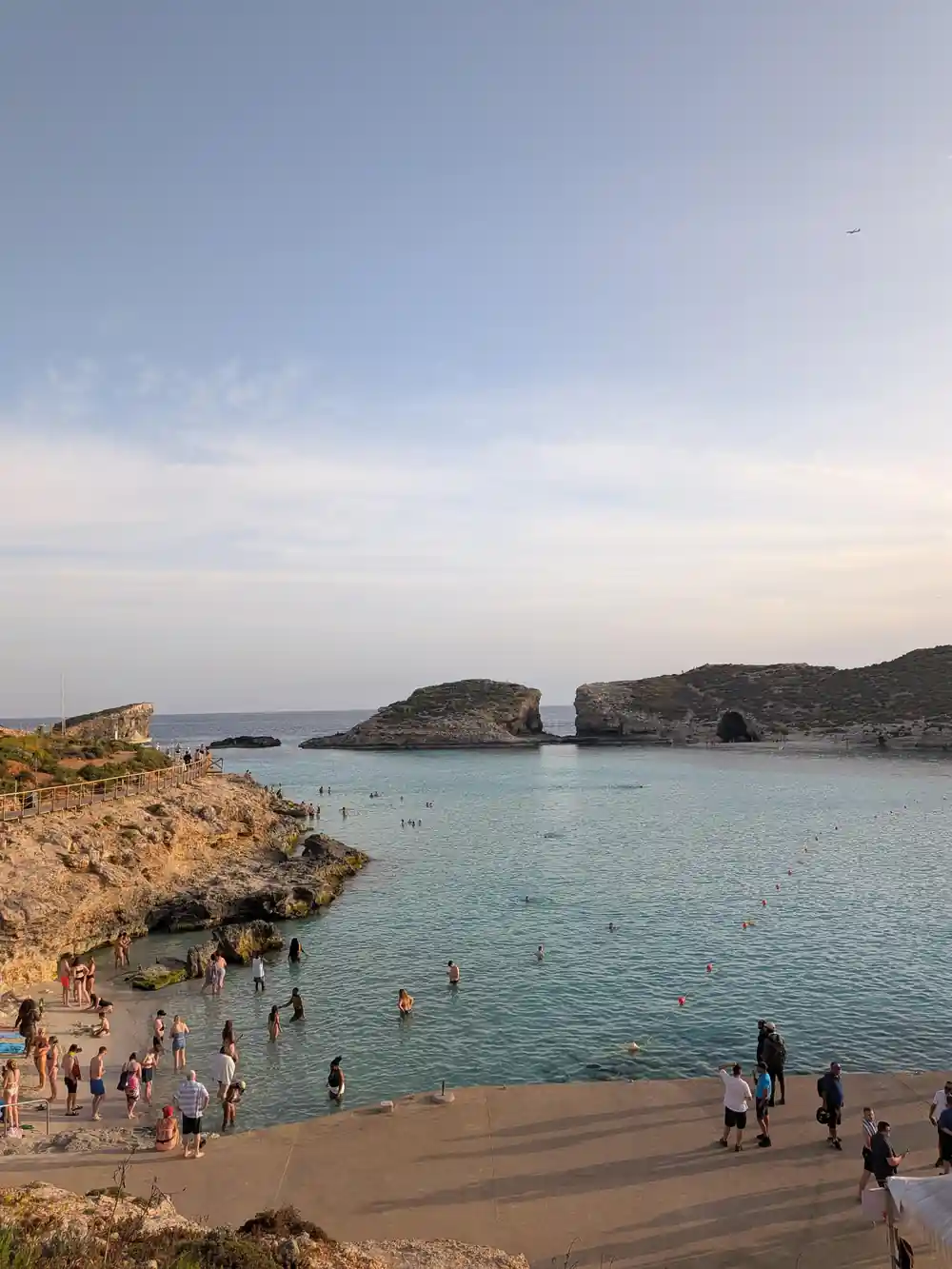
- Crowding photos of the Blue Lagoon are usually shot from the same small stretch of sand.
- The crowded hours are predictable: mid-morning arrivals, the post-lunch wave, then a steady thinning from mid-afternoon.
- A private boat tour runs 2 - 4 hours for a private group, from US$195, with swim stops and a live English speaking guide.[2]
- Average sea temperature in Sliema is about 26.1°C in August and about 15.4°C in February, so swimming comfort shifts through the year.[3]
- Top choice Private boat tour from US$195 Duration2 - 4 hours[2]Rating4.98 from 117 reviews[2]GuideLive tour guide: English[2]CancellationFree cancellation up to 24 hours[2] Check availability
- Catamaran trip from US$63 Duration5 - 6 hours[4]Rating4.68 from 6,838 reviews[4]GuideHost or greeter: English[4]CancellationFree cancellation up to 24 hours[4] See this tour
- Gozo and Comino tour from US$35 Duration7 hours[5]Rating4.45 from 20,111 reviews[5]GuideAudio guide included[5]CancellationFree cancellation up to 24 hours[5] See this tour
With an official population of 4, the island is a nature reserve and bird sanctuary.
Is the Blue Lagoon still worth it in high season?
Booking tips
Comino Blue Lagoon overcrowding: how bad is it?
In peak summer, July and August, the Blue Lagoon receives between 2,500 and 3,500 visitors per day.[1] Malta received roughly 3.6 million international tourists in 2024, and Comino itself has an official population of 4.[6][7] Read those together and you have a tiny island absorbing a small town every morning. The lagoon is not spoiled, but it is busy, and the busy hours are entirely predictable.
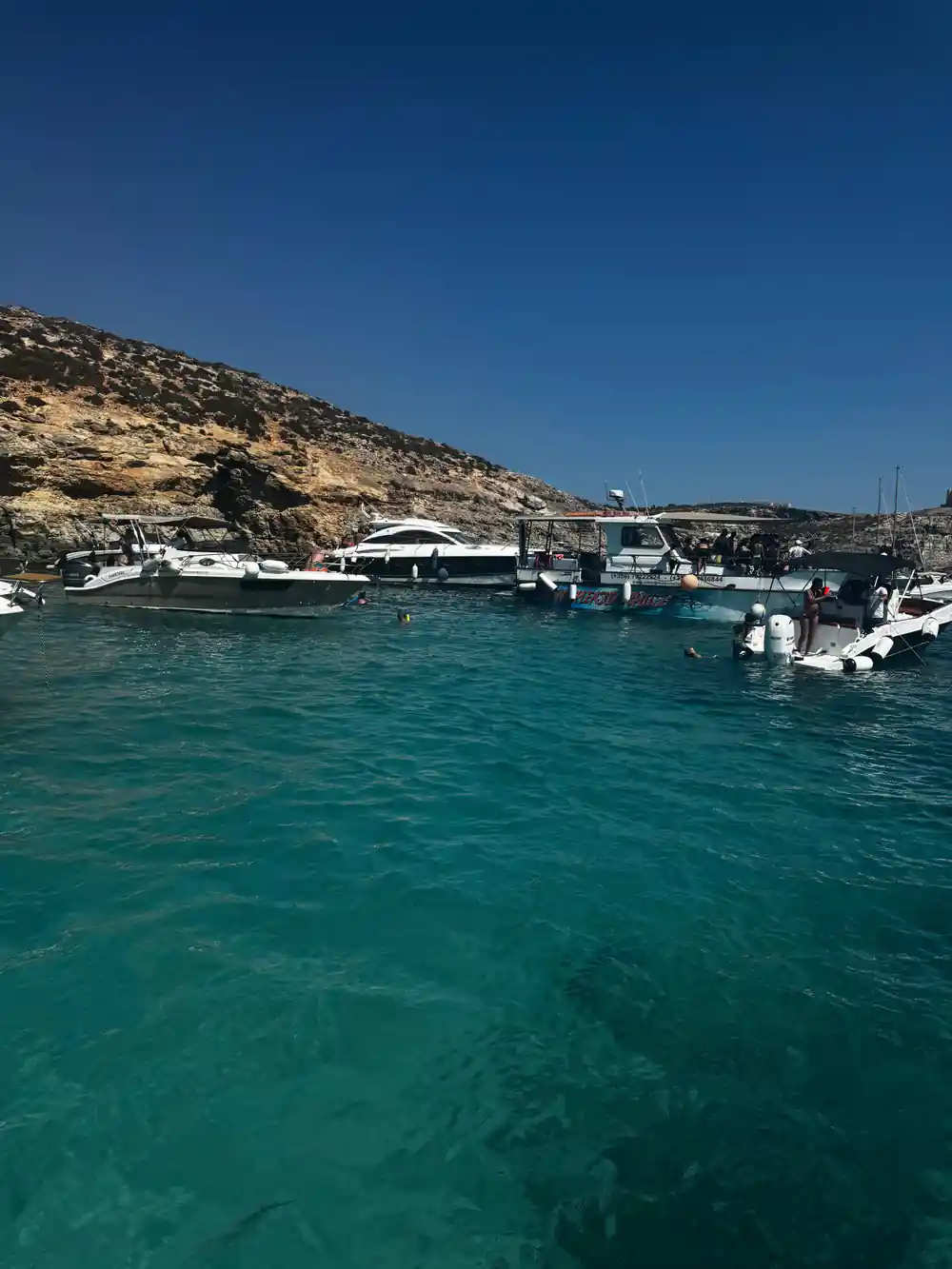
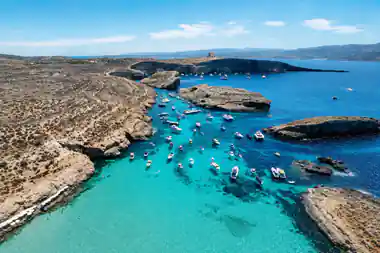
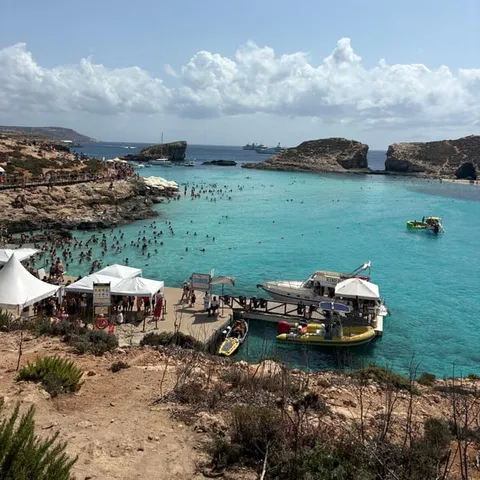
The shape of the place explains the pattern. The Blue Lagoon sits in the channel between Comino and the little islet of Cominotto, a shallow sandy bowl ringed by low limestone. Boats arrive from Ċirkewwa and Mġarr, from Sliema, Bugibba and St Paul's Bay, and from moorings around Gozo. The sand is what makes the water glow, the channel is what funnels the traffic, and the two meet in a small area of open water. Midday is the crush. Early morning and late afternoon feel like somewhere else.
You do not need your own boat to enjoy the quieter version of the lagoon, but you do need a plan: which crossing, which hour, which side of the channel to swim on, and where to put your towel when every flat rock is taken. A little ordering of the day changes more than any amount of complaining about the crowds.
The rhythm of a day at the Blue Lagoon
Ebsons ferries run to the Blue Lagoon from Mġarr on Gozo and from Ċirkewwa on Malta, and the crossing takes approximately 15 minutes each way.[8] That is a short hop, and it sets the tempo: the lagoon fills in waves rather than a gradual trickle, and it empties in waves too. Watch the channel for a few minutes and you can see the next load coming.
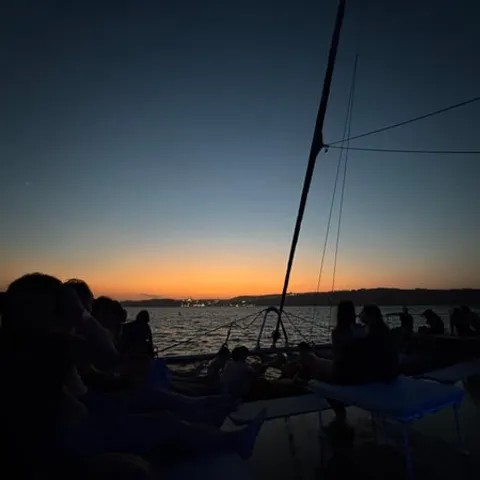
A typical summer day runs roughly like this. The first swimmers are in the water soon after the early ferries and small boats arrive. The big day cruises land mid-morning and again after lunch, when the sand is at its fullest and the swimming area near the boat channel is shoulder to shoulder. From mid-afternoon the channel begins to clear, and the evening crowd, if there is one, is much smaller. Sunset departures carry a lighter load out to the same water.
So if you can only visit in July or August, aim to be in the water before the main wave and somewhere else, such as Santa Maria Bay or the caves, when it peaks.[1] With a boat and a skipper the calculation is simpler: swim early, cruise the cliffs and caves at midday, and come back to the lagoon when the day trippers start heading for harbour.
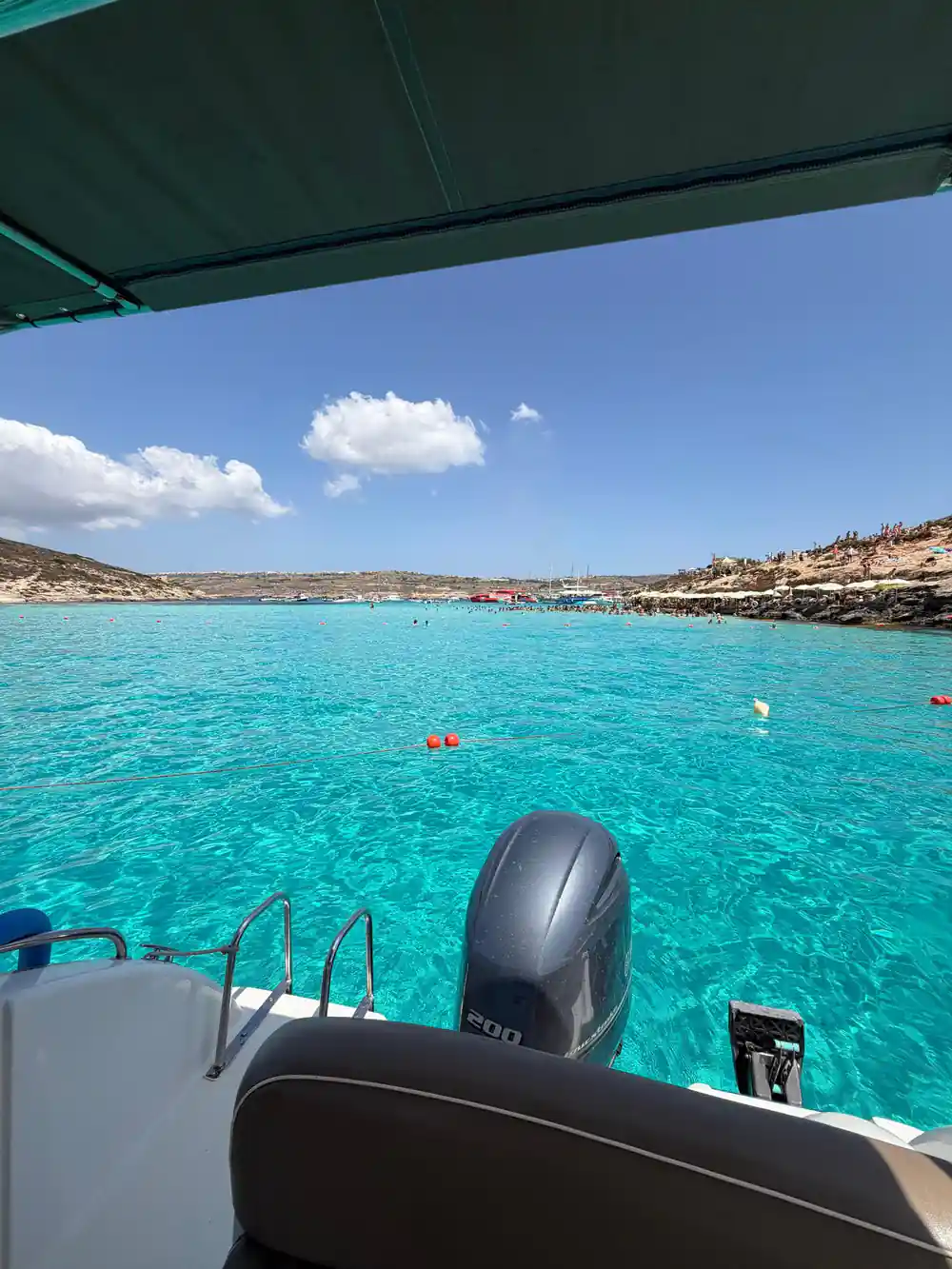
Morning on the Blue Lagoon, before the day boats arrive
Why a private boat is the actual mechanism
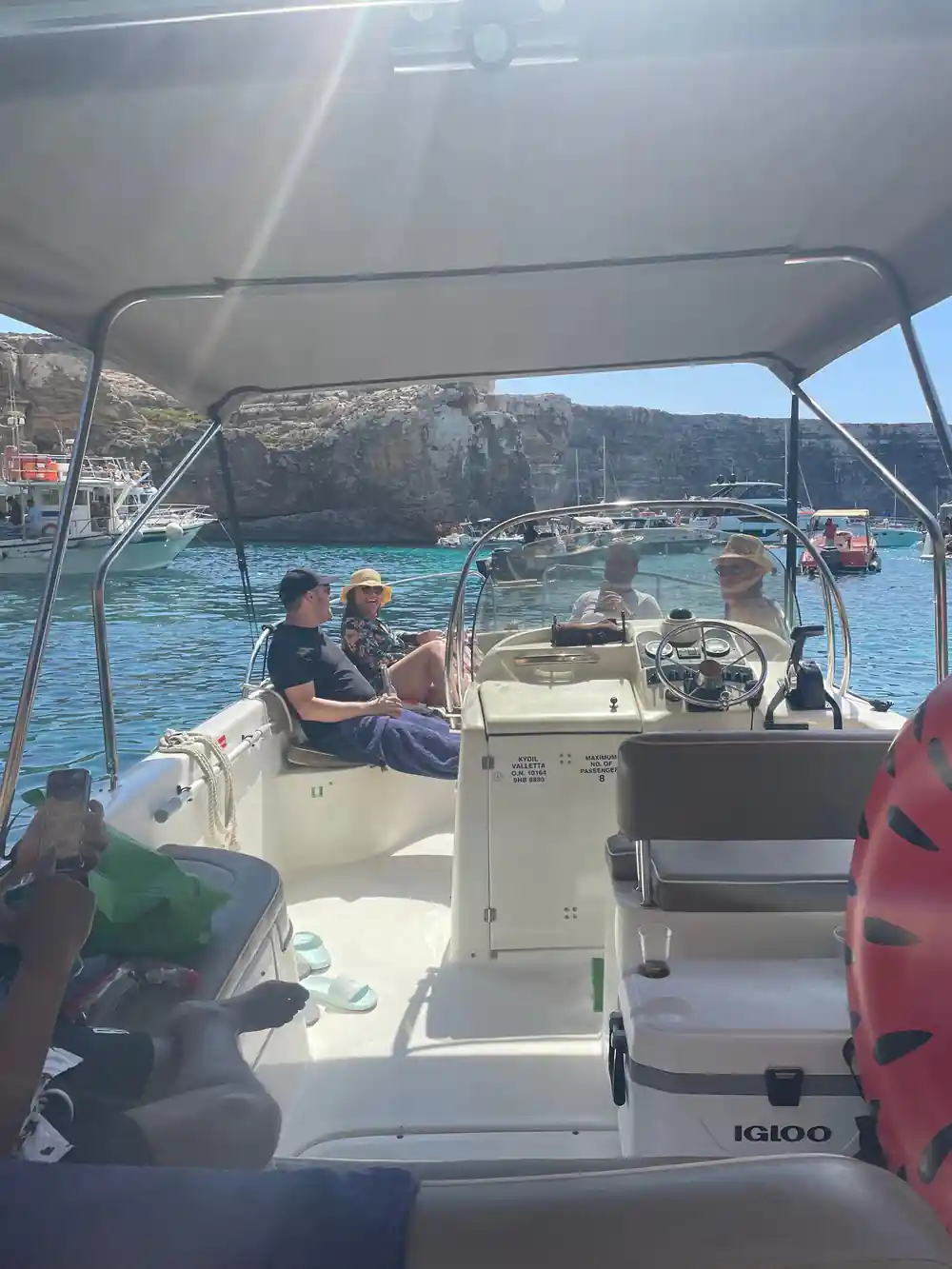
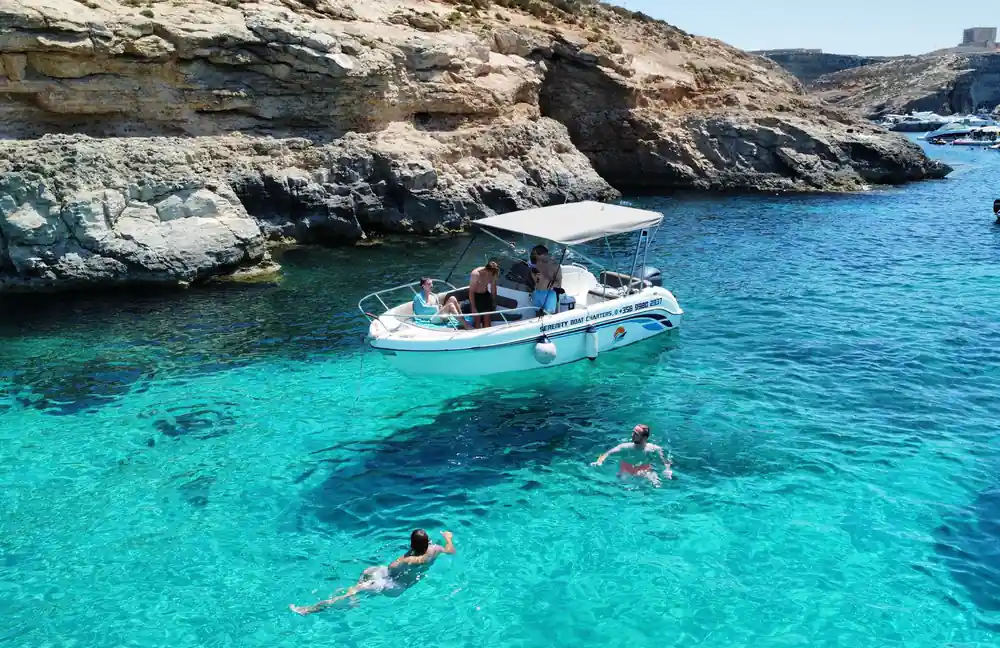
The private boat tour covering the Blue Lagoon, Comino, Gozo and the sea caves, with swim stops, runs 2 - 4 hours with a private group and a live tour guide who speaks English, from US$195.[2] It is wheelchair accessible, it skips the line through a separate entrance, and it is rated 4.98 from 117 reviews.[2] You reserve now and pay later, and you can cancel up to 24 hours in advance for a full refund.[2]
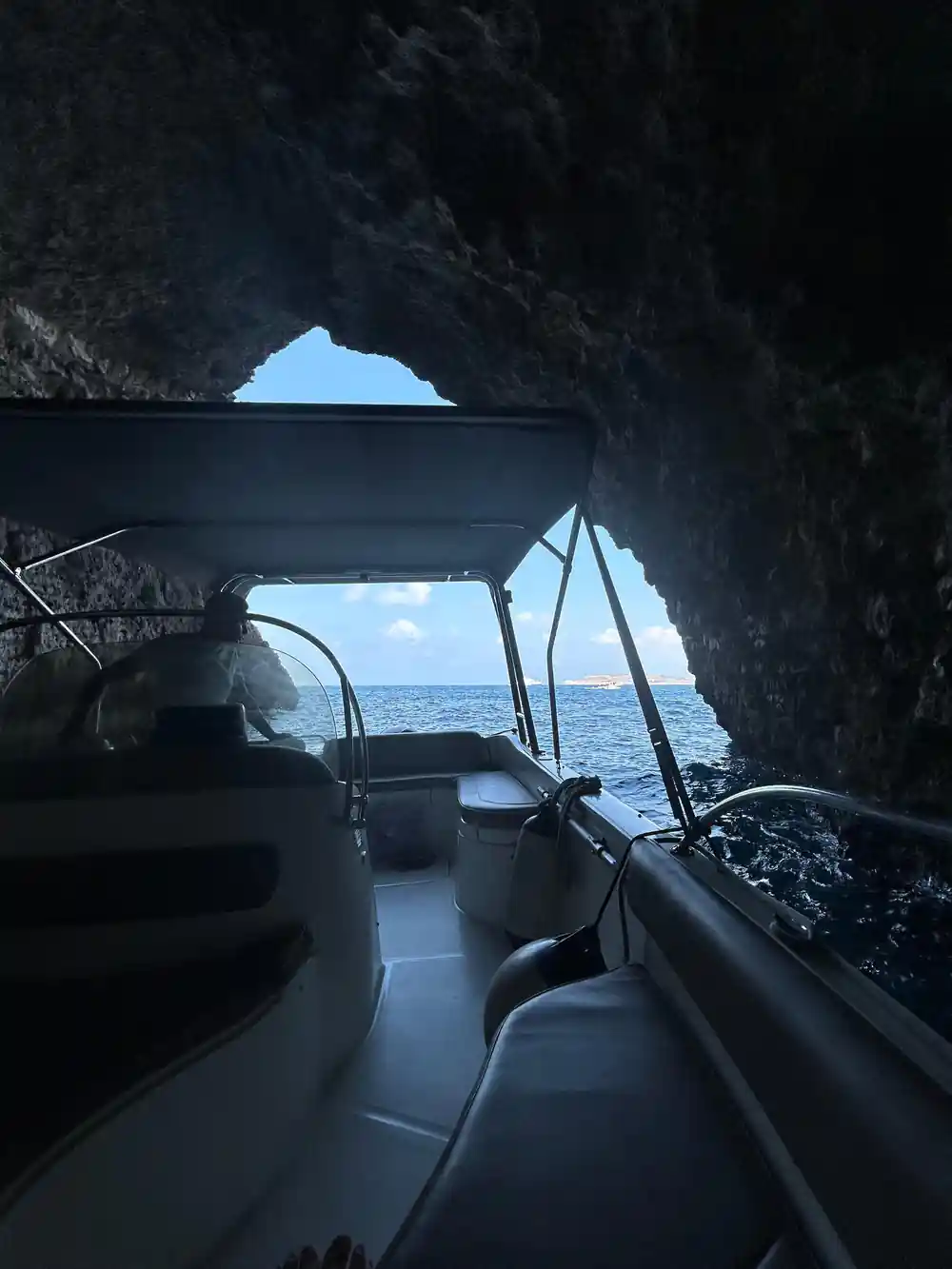
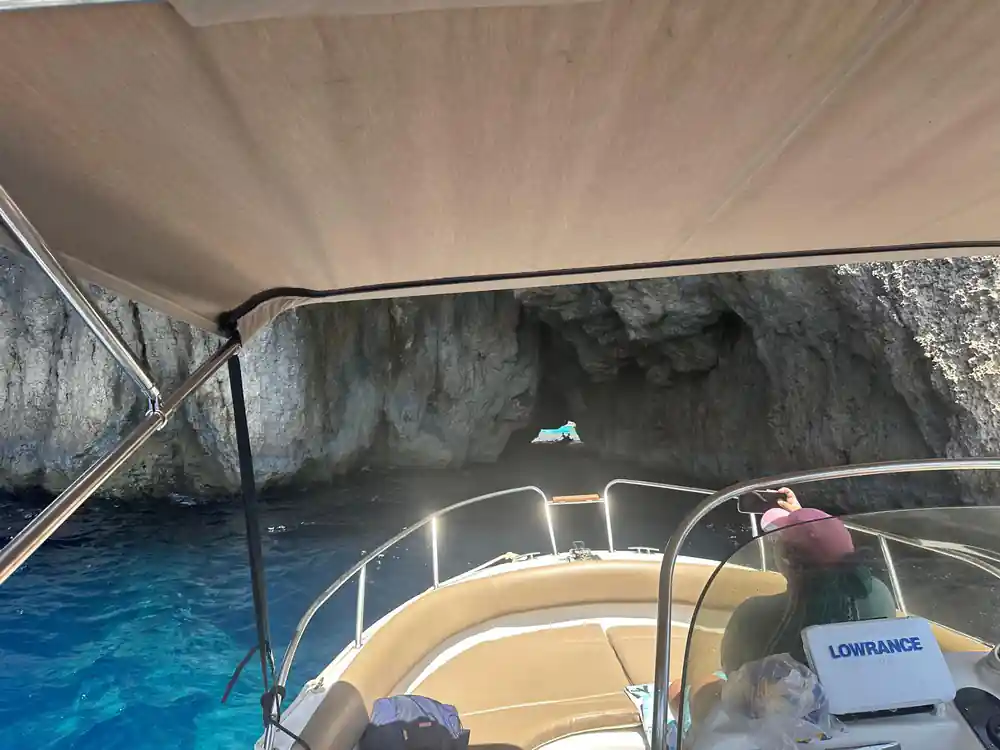
The point of a private boat is not the cushions. It is the schedule. You leave when you want, you sit off a quiet stretch of cliff while the lagoon is packed, and you swim into the Santa Maria Caves or across Crystal Lagoon while the bigger boats are still queuing for space. Skipping the line through a separate entrance matters more than it sounds on a hot morning.
A private boat also solves the awkward geometry of the lagoon. The clearest swimming is rarely where the boats moor and the caves are never where the crowd is. With your own skipper you can move the group in a few minutes and come back when the sand thins out. If a full private charter is beyond your budget, the shared cruises that work the same water start far lower, and the late departures are the quietest of them.
Where to go when the channel is full
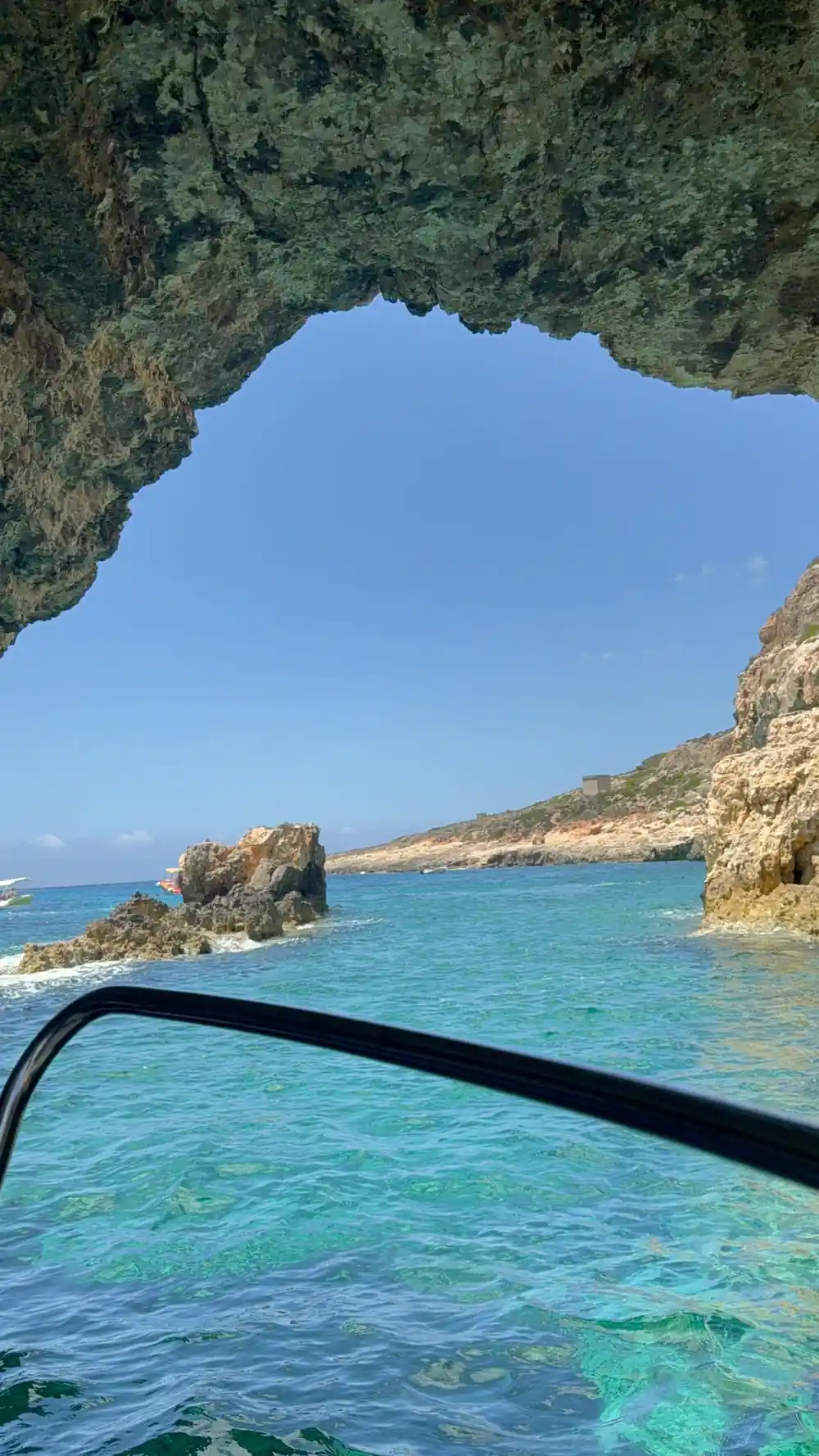
The Santa Maria Caves consist of five caves on Comino, and a small boat can nose into them one after another.[9] Above the cliffs, Santa Marija Tower is a defensive structure built in the 17th century as part of the Knights of St John's fortifications, and it was completed in 1618.[10] Both sit within a short ride of the lagoon.
Other escapes are close by: Crystal Lagoon, the sheltered water under Cominotto, the long curve of Santa Maria Bay, and rock formations such as Elephant Rock and Ħalfa Rock. The pattern is always the same. The crowd concentrates on one small piece of sand, and a few minutes of boat travel puts you somewhere calm with the same clear water.
On land, walking helps too. Comino is small and the paths are short, so a walk away from the landing point usually buys you a stretch of coast with almost nobody on it. Take water, take your rubbish back with you, and remember that this is a nature reserve before it is a beach.
from US$195
The private boat tour with swim stops runs 2 - 4 hours for a private group, rated 4.98 from 117 reviews.[2]
Is Blue Lagoon Malta busy in October?
The shoulder season sits at the edge of the swimming window. In Sliema, the average sea water temperature is warmest in August at about 26.1°C and coldest in February at about 15.4°C.[3] Air temperatures tell a similar story: on 1991-2020 climate data for Valletta, the daily mean runs from 12.6°C in February to 27.5°C in August, with an annual average of 19.5°C.[11]
Malta gets almost 3000 hours of sunshine a year, so a shoulder-week trip is a reasonable bet for bright weather even when the sea is cooling.[12] In practice the lagoon is at its most comfortable for swimming in high summer and at its most relaxed outside it. Late spring and early autumn give you cooler water with far more space on the sand, and the caves are often yours alone.
If your dates fall in peak summer and cannot move, do not despair. Go early, stay flexible, and treat the lagoon as one stop on a boat day rather than the whole event. The coast around it is the reason the trip works even on the busiest morning.
What the crowding does to the water
The turquoise is a trick of light rather than anything in the water itself. Light reflects back up through shallow, clear water from the white sand below, which is why the lagoon reads pale blue while the deeper water outside it goes navy.[13]
That same shallow water is part of why Comino is protected. The island is a bird sanctuary and nature reserve and a Natura 2000 marine protected area, and the Yelkouan shearwater breeds on its cliffs, with an estimated 150-220 pairs nesting there.[14][15] The bay carries most of the visitor traffic, while the rest of the island stays surprisingly wild.
Crowding does not turn the water green. What changes it is what people leave behind and how boats anchor, so a few habits help: use reef-safe sun cream, take everything back to the boat, and keep clear of the sandy shallows where swimmers are concentrated, both for their sake and for your propeller.
Is it still worth visiting in high season?
The Blue Lagoon has starred in several big-screen productions, and it is easy to see why a film crew would want it.[16] The colour is real and the setting is extraordinary. High season does not change any of that; it just changes how many people are standing in the frame with you.
On balance, yes, it is worth it, provided you treat the day as a route rather than a destination. Arrive early, swim, move to the caves or around the headland when the crowd peaks, and return to the lagoon in the late afternoon. A private boat makes that easy; a well-timed ferry and a walk work nearly as well.
The alternative, a quiet day in the shoulder months, is lovely and much emptier. If you have the choice, take it. If you do not, take the early ferry, book a boat with a flexible cancellation policy, and enjoy the lagoon in the hours when it belongs to the people who got up early.
Malta daily mean air temperature by month
Daily mean air temperature by month for Valletta, Malta, from 1991-2020 climate data.[11]
Boat options for the Blue Lagoon, from prices
From prices in US dollars for the listings with these ids:[2][4][5][17]
When to go, and what to expect
Plan a quieter lagoon day
Book an early window
The private boat tour runs 2 - 4 hours, and starting times show when you check availability.[2]
Do the caves first
Head for the Santa Maria Caves and the cliffs while the lagoon is at its fullest, then return later.
Swim away from the channel
The outer edges of the lagoon and the water off Cominotto are calmer and clearer than the boat lane.
Carry shade and water
The limestone throws heat back at you and natural shade is scarce, so a hat and a full bottle earn their place.
Keep the return flexible
Free cancellation up to 24 hours in advance for a full refund means a change in the forecast need not cost you the day.[2]
See times and reserve the private boat tour
from US$195Reserve now & pay later